Marko and Millennium both will cut slab blanks to your rocker specs. Consider a glue line. Even a simple glue line at center will hold rocker better than foam. I learned the hard way about losing rocker recently. I shaped a board with two 5 inch off center Bass stringers. That’s 10” total. The flip in the nose drooped. Still OK but not what I wanted. We used to shape glue lines all the time in 68–70. They were fine rocker wise. Also gives a shaper a point of reference. I just picked up six of them for a series I am doing.
Yeah without the top layer of glass over the cork it won’t act like a sandwich structure so you’d lose a lot of stiffness. The cork is a lot denser than the EPS so it should be far more resistant to buckling. I’m not really surfing waves too often that make me concerned about breaking boards but that may be more likely with a board with more flex and no stringer.
I would think sealing the cork would be the way to go but using the least amount of resin possible. That’s a good idea to use test panels, I’ll have to try some different options. I would think adding some thickener and microballoons would help prevent it from seeping into the cork too quick and allow you to squeegee it further.
I usually hotwire my blanks so I figured I would just bag the blank on the block where my blank had been cut but makes sense to set the rocker by glassing one side. How come you do the deck not the bottom? Are you using veneers on both the top and bottom?
Glue line is a good idea, I’ve been thinking I’ll have a tough time keeping reference lines with a stringerless blank. A tinted glue line would serve a few purposes.
Breaking boards can be related to lots of pressure dings also. The tougher skin and impact absorption of cork will help minimize that with the lower minimum compressive strength of 1.5-pcf foam.
1 Like
For easier of build i would go with stringer blank with cork deck. I am not really objective, it’ what i do for long except not a “old school” vertical stringer but horizontal ribs springers.
I’ve thought about asking for a glue line as I am aware of the stiffness added. But I figured it would add to cost as it entail a couple extra steps. And I do not want to add stiffness to the final product.
Top- one layer of 4 under, one layer of 4 over veneer. Bottom- one layer of 4 over veneer. So the deck layer under the veneer goes first. It also wraps the rails. I have not had problems with rocker in the vac bag (with 2lb foam). The rails end up with 3 layers of 4 oz which is plenty and adds strength. The boards are very durable. There will be slight deck denting. More a generalized area compressed than the baseball dents of a normal board. If I put deck patches on there is really no visible denting. I’m doing a board now for a customer who wants a really durable build and is not concerned about weight so that first lam will be 6oz.
Oh, and I continually pencil in the center line as I’m shaping.
My epoxy pre-seal stiffened the foam of a BB prior to adding FG.
I’m thinking pre-sealing both sides of the blank with epoxy — before laminating — should help preserve rockers. However, I suspect adding one layer of 6-oz FG tape, after pre-seal, to rails on both sides but before lamination will prevent rocker change. Creates a channel beam of sorts on the rails.
Blank placement on glassing racks and distance between glassing racks will affect rocker change ( droop or flattening).
Get creative with the rest…
Normally when you order a stringered blank there is an up charge for the stringer (wood, pvc, thickness and number of). When you order a glue line they charge a minimal charge for the cut. Usually $5–$10 or less. A glue line will hold the rocker in place until the board is laminated. Then the lamination takes over and holds it in place. I assume the idea of glassing deck first is that the deck lam will pull and hold the rocker. A glue line has more flex than wood or pvc, but still stiffens the blank to some degree.
Do you have any pictures of this technique that you would be willing to post?
You can see it, more or less, in most of my build post. I don’t have details photos. I route a profiled groove, lam in UD fibers then cap with foam.
OK. I know what you are referring to now.
What I like about compsand builds is the strength of the skin. If you use a lighter core, you can use a strong skin and it won’t get pressure dents. I prefer 1/8” or 1/16” thick Balsa for the skin depending on the core density. You can use 1lb EPS with 1/8” Balsa and 4oz glass under and over the Balsa and get a strong board. If you use 1.5lb or 2lb EPS 1/16” Balsa would be enough.
I found that the thin veneers get pressure dents much easier. HD foam like divinycell foam tends to soak up resin. Same for fabrics like Bamboo and Flax (linen).
You mention bending on rails. I’m not sure of you mean wrapping the wood around the rails or not. I have done boards with 1/8” Balsa wrapped completely around the rails. You need to select very flexible pieces for the rails. The area where the wood wraps over the other side of wood can be an issue, but it can easily be patched with small pieces of wood. I think this is why most people switched to Balsa perimeter rails.
I stopped doing top and bottom skins and just do top skins with 1.5lb EPS. I would glass the bottom of the board and either do a Balsa deck the same way you do an inlay, but with one layer of 4 oz or even 2 oz glass under the Balsa. Then do a deck lam after cleaning up the edge of the Balsa. I have also laminated the deck before doing the Balsa layer and then lam over the deck after cleaning up the edge.
These days, I have been using Flax cloth hand laminated onto the EPS, but it ends up heavier than my Balsa deck compsands. I think just putting it on the deck would be enough to have a dent resistant deck.
I think the concept for the current Balsa Compsand board Bert Burger created was to be able to use the lighter EPS core, put the stringer out on the rail, and have a strong external skin.
I don’t care about flex characteristics, I want a stronger deck. I’ve found that the best dent resistant skin is the Balsa, but I haven’t used my Flax boards enough for a good comparison. If you want to get strength and keeping it light Flax vacuum laminated should be a good combination. I don’t do vac laminations.
I don’t know who is selling Balsa anymore. I used to get it from https://www.nationalbalsa.com/, and another company that closed up long ago. Years ago, I bought Balsa from a widow who’s husband built beautiful model airplanes. After nearly 15 years I still have enough wood.
So I have been building Compsand boards almost 15 years now.I still do regular builds, but I prefer compsand even though I think it’s the hardest possible way to build a board. I buy 1# EPS foam in giant blocks then cut my own blanks with a hot wire. After cutting out the board outline, I shape the bottom contours. Then vac on a bottom skin with one layer of 4oz under. The reason I do it this way is the 1# foam is so flimsy it needs the bottom skin to give it some rigidity. I then cut off1/2” around the outline and vac on my rails. I make rail pieces in combinations of redwood and or balsa, cork, Divinycel(sheet pvc) all 1/8” thick 4 layers per rail. After that I do foiling to the deck side and crown. Shape rails. Then vac deck on with a layer of 4oz under. Feather the edges. Glass exterior.
There are a ton of different factors involved in the strategic use of outer skin materials and the combination of materials in the rails. Also the inner laminate of cloth and outer lamination make a difference. I have tried a handful of variations. I will never again do a full wood skin on top and bottom ( not even balsa). They are just too stiff. There is almost no flex. I do mixtures of wood and cork or wood and Divinycel to allow for some flex. Then tailor the rail mix to compliment the skin flex.
This is just my way of doing them. When I started there were a handful of guys doing compsand. Not so much anymore. I am my only test pilot these days so my structural philosophies are not as thoroughly tested as I would like. But I feel like the right combination of materials can really work well.
Feel free to ask questions, I like to pass on knowledge whenever possible.
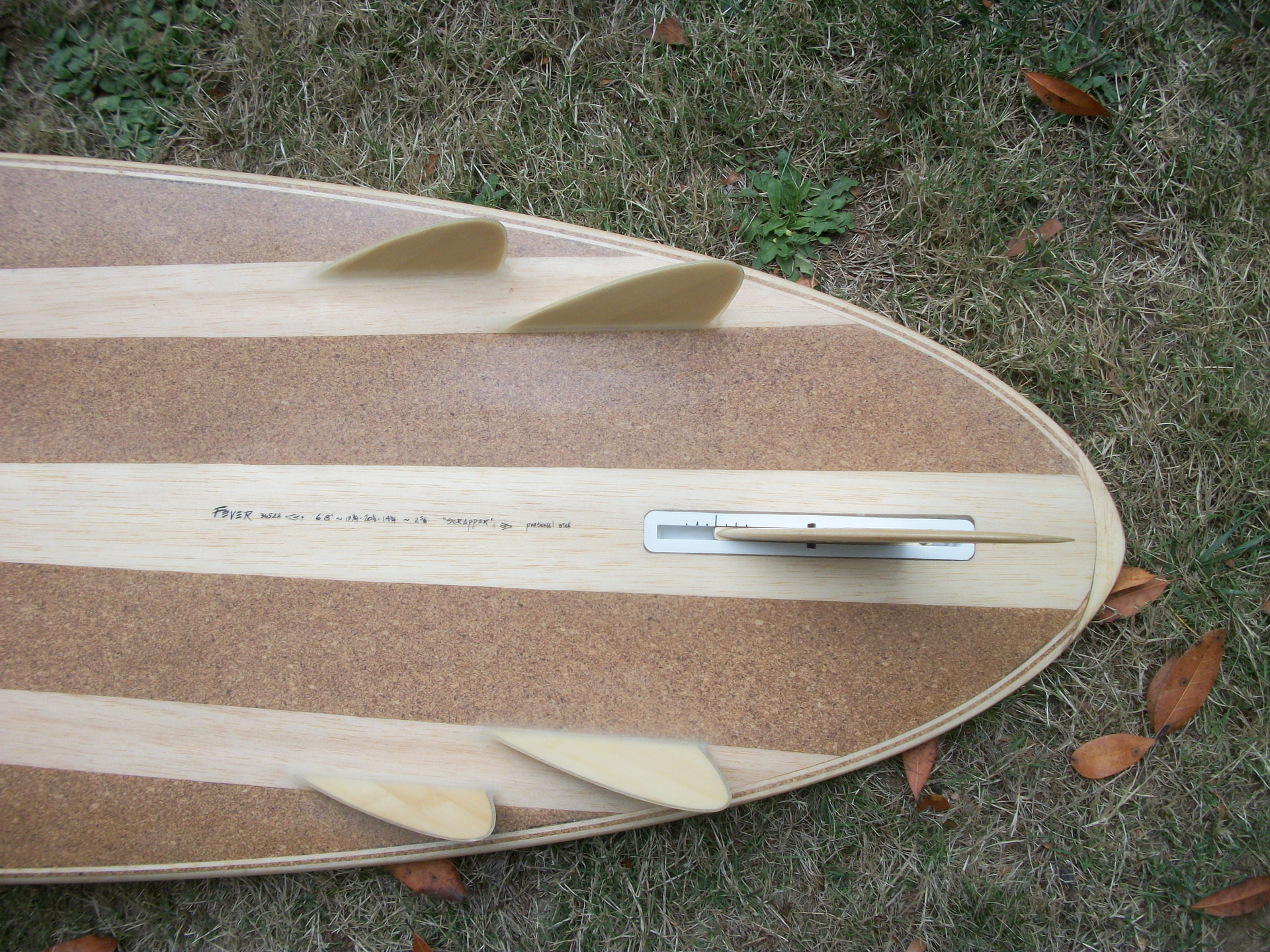
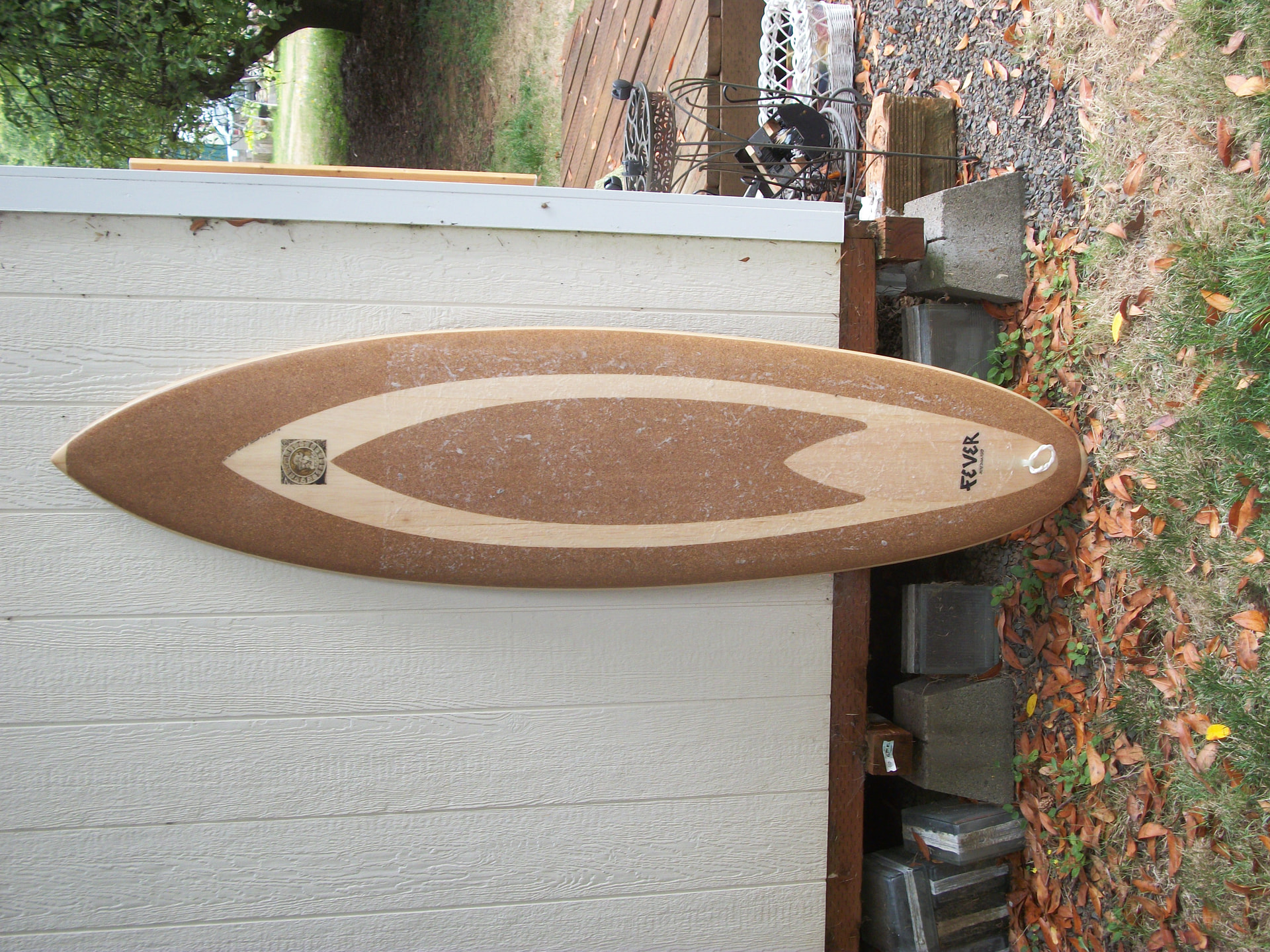
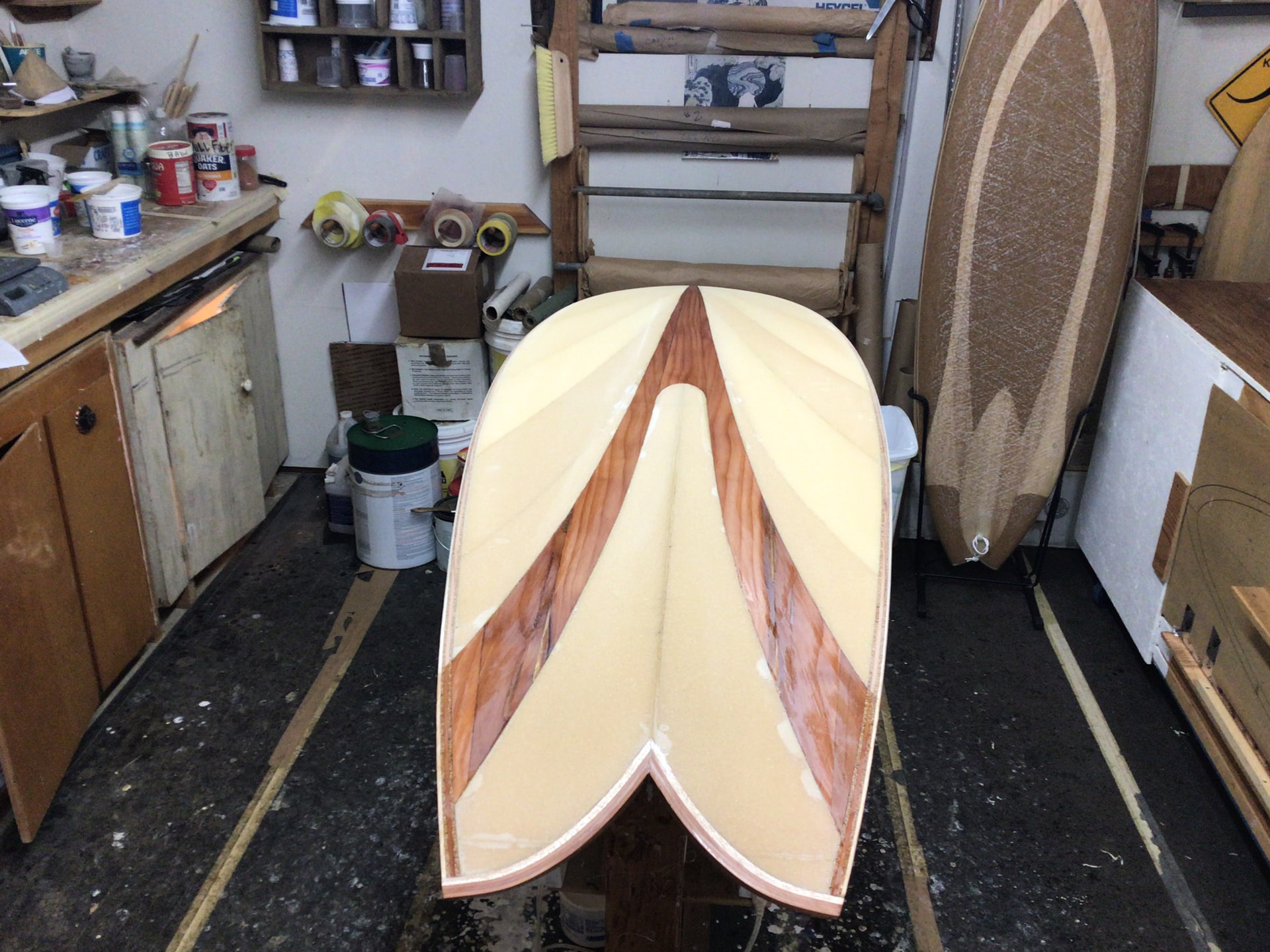
2 Likes
My brother and I found that with light EPS you can use a rocker table and contour maps to create complex bottom designs. We’ve done spiral vees and deep channels this way. My brother got sensitized to epoxy a while ago and had to stop messing with it.
Would you please specify exactly what your criteria is for “Improved flex“? To me the flex is easy to obtain, the key to performance is the flex return, a snappy rebound. I was using carbon fiber tape on the rails before any of the major brands did that I am aware of.
1 Like
So many variables affect flex.
Core material properties.
Foam density.
Board thickness/foil — stiffness is directly proportional to the cube of thickness.
Composite skin technology.
Stringer and stringer alternatives.
I like, mathematician and engineer, George Gall’s comments to me (stoneburner) about flex in this post;
And again here;
1 Like
In addition to the factors mentioned in my last post, flex is also affected by rider weight, velocity/speed (wave size & type), turn/cutback radius and circular acceleration;
Long time ago there was a guy that make post about his research work on surfboard vibration. For me it’s the key of “flex feeling” of surfboard . As an mechanical engineer passionate by board building i read a lot and do lot of search about this i found that while surfing hard build boards flex is small in relation to vibrational distortion at resonance. With frriends, we try to surf very flexy foamy board, stiffeners remove, to experiment turn projection, the way a prone bodyboard work, but it don’t work standup riding, because the position and sequence of effort don’t make board flex right time to have projection, it increase rocker just behind front foot at start of turn slowing board that push water, then reverse board rocker flex between feet slowing again and kill rebound when stop pushing back foot. We find that there is not only zero projection at end of turn but disipation of energy of turn. We find that increase lengtwise stiffness enough to reduce flex to mini make it work better.