I figured you were long gone. I appreciate your words. I love this thread. I do however take issue with the flat notion area is the main thing. Clearly if a fin had @ 8" sq. - just to make a point - as a standard looking 4" x 4" - then if one made a fin 1" deep x 8" long…
My last personal observation: moving fins has made way more difference in effect on a given board, than changes in similar fin outlines…
Had a few surfs in average surf over the past two weeks due to the cyclonic weather here, (but thats the standard at the moment ) and the new fins…or… "Floating Fins " are so different I don’t know how to explain the feeling.
Light ? Free-ish ? Directional but not standard tracking ? I suppose it’s only sensible to work out that a fin without a base is going to be looser than a fin with a base. But the more distant fin area is like a kite,
like a flag,
like holding a towel in the breeze where you direct it without force but it still does what you want it to do.
Quite amazing.
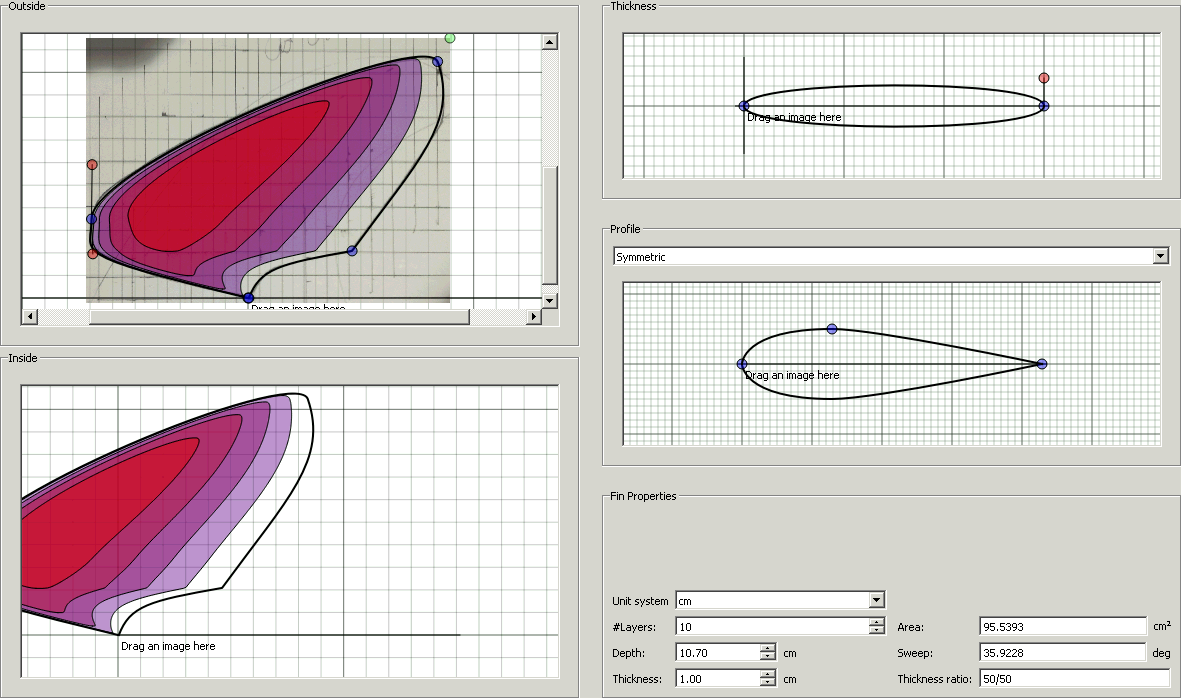
I will make a full set of Floating Fins and maybe I can get Rohan ( RDM) to do the 3-D program and get a few dozen sets of fins 3-D printed and test them over the next year.
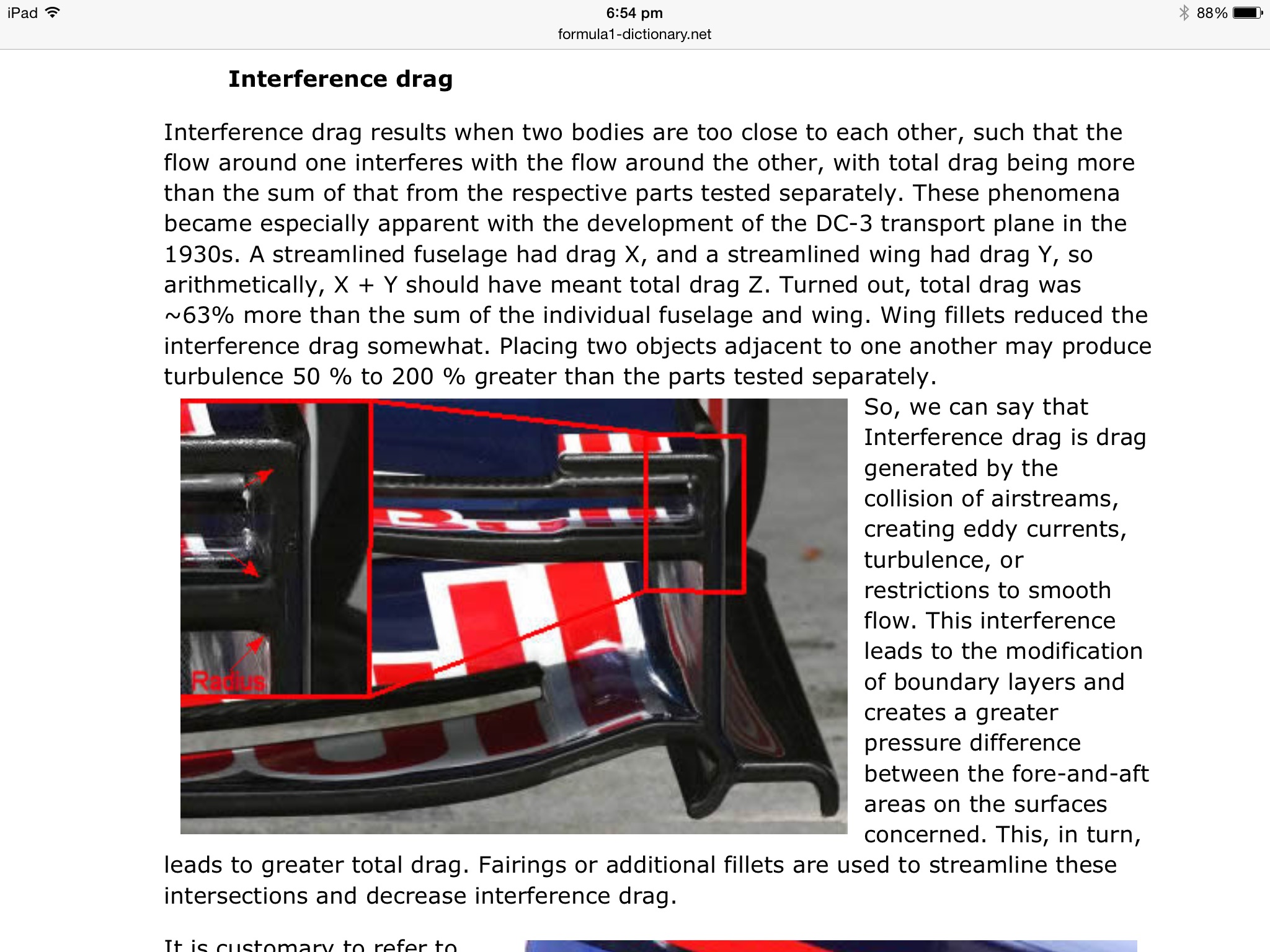
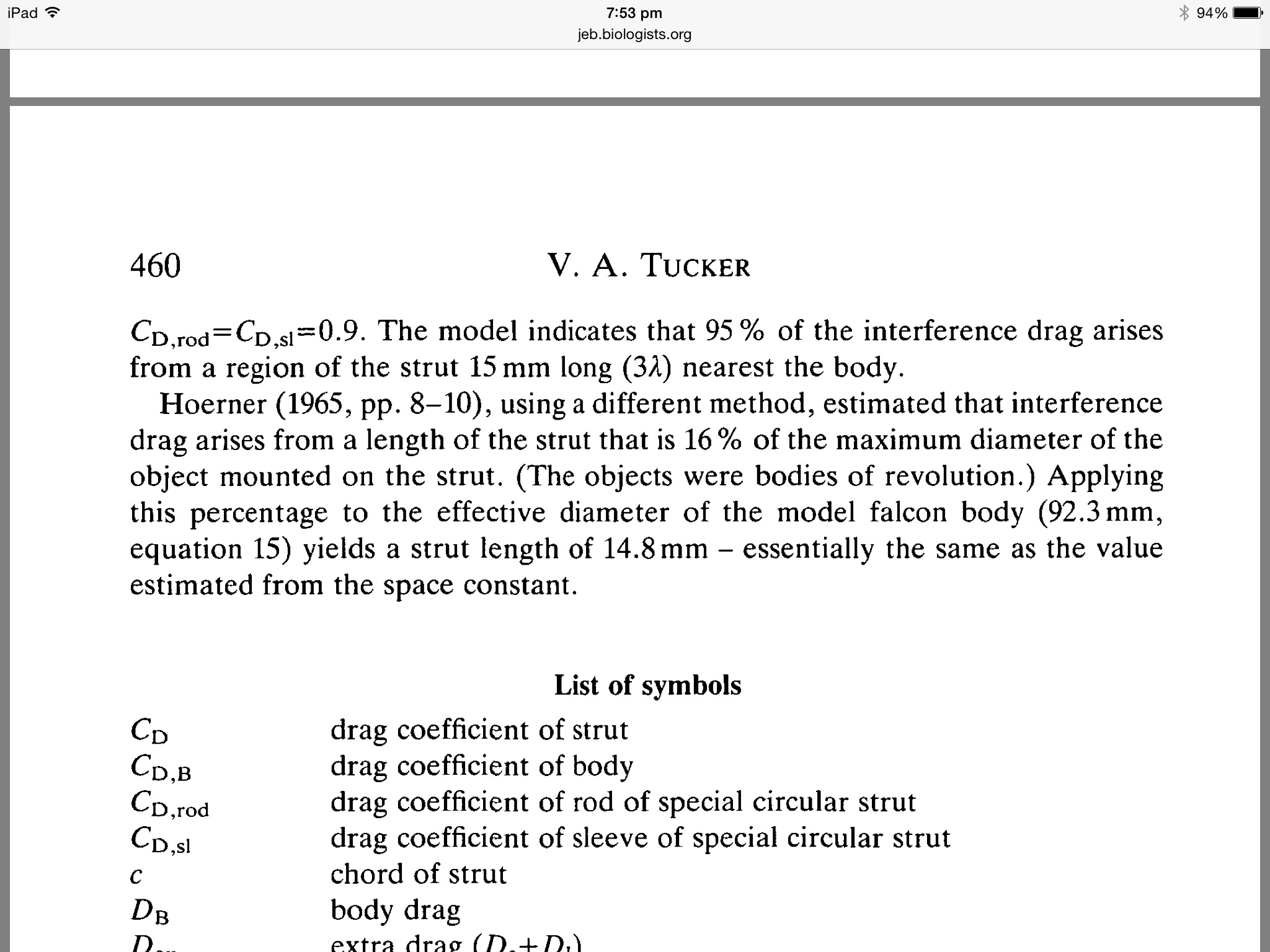
Here’s a bit of theory about the depth of the turbulent layer and Inteference Drag.
If you understand the 200% Interference Drag increase, then Floating Fins won’t increase lift at all but will reduce fin drag by 66% for each fin.
Huck, straight through your feet it’s a different feeling.
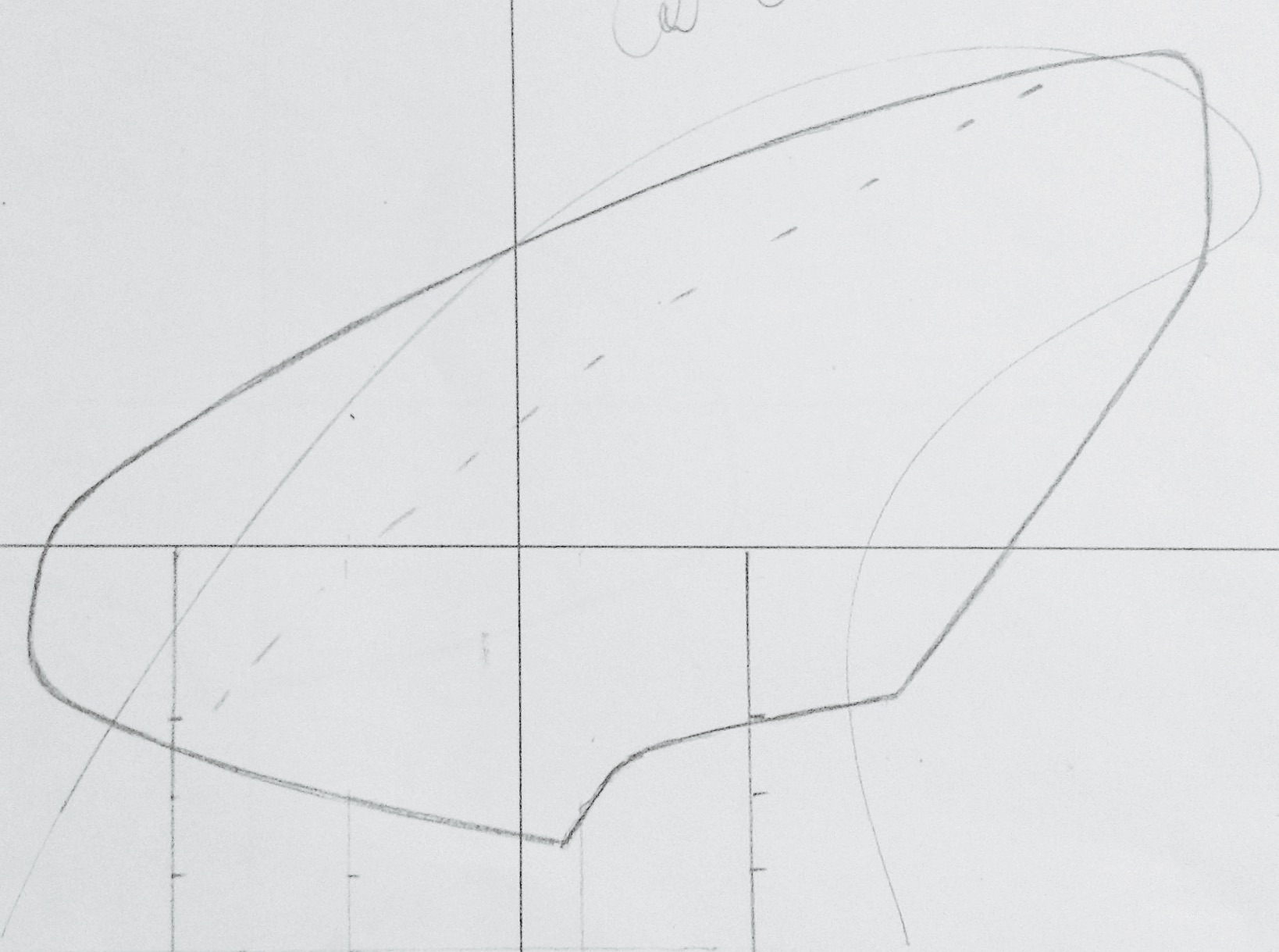
There’s 50% more leading edge than a standard fin of the same area so the fin is engaging with the wave with a different balance.
The foil apex runs more horizontally.
The whole fin is foiled in all directions, there’s no mandatory thick end.
The greatest chord is in the middle of the fin.
Changed template for better water entry and exit. The squarer nose makes for a slightly quicker pickup into a turn and the squared tail gives a crisper exit than a rounded tail.
I’m quite convinced that the drag induced by the connecting rods is bigger than the interference drag of traditional fins. However, I like your experiments and I’m enjoying this thread.
We have talked about titanIium rods, maybe even carbon rods, But I cannot think of anything that would give you the 3mm profile and strength superior to stainless steel.
What is the blue contraption hooked up to your vacuum line?
That if you take average dimensions of the base of an average fin… And put them up against the average dims of the Floating Fins struts. …
1/. The Floating Fins struts ( or connecting rods ) are 3mm ( thick) X 10 mm ( long) X 20 mm ( high) that equals… 600 mm 3 ( cubed) so the combined maximum volume of 2 struts for one fin is 1200 mm 3.
2/. A standard fin base ( say a G-2) is 10 mm ( thick ) X 120 mm ( long) X 20 mm ( high) that equals… 24 000 mm 3…
So as a volume comparison between my struts of 1200 mm3 And 24000 mm3 for a standard fin base. Youre saying that my fin with 5 % of the base volume of a standard fin is going to create more drag than a standard base with 20 times its volume ? Have you done the math on that or haven’t I ? I’m the first to accept I’ve got something wrong so please show me where I’ve missed the math. <\p>
Even with foiling and taking into account averages of generic fin base areas and outlines, it’s still comes out in my favour by a country mile.
First I’d like to point out that the drag force is proporional to the frontal area and not the volume.
So if your struts are 1/3th of the thickness, that would only reduce the drag to 1/3. And since there are two struts, the drag force would be 2/3 of the traditional fin.
But the calculation above assumes an equal drag coefficient. And this coefficient will be a lot higher for the struts than for the traditional fin base. Making me assume that the struts aren’t improving the fin at all.
Unfortunately, I can’t put any numbers to back my assumptions, since this would involve complex CFD calculations with solid validation testing. Which would take too much of my time. Fluid dynamics are way more complex than what we are calculating here. (My master thesis involved CFD calculation of wind turbine farms)
It was/is my original grasp of this discussion and concept that the hull/planing surface generates a 20-35 mm turbulence layer over its entire surface. This turbulence layer renders the foil of the fin base ineffective/pointless and this area of the base contributes little more than drag. It is my perception that the advantage of these mounting posts or struts was/is placing a known foil surface area and shape above the hull turbulence layer.
I may have misunderstood earlier discussions here and on another thread…
Good question. I assumed Brett was experimenting to see how strut-raised fins affected performance.
To me, this means fin foils should be designed with the idea that fin foil shape/area should be designed with the hull turbulence layer in mind. The idea being that effects of fin design performance are 20-35 mm above point of attachment to the board.
Attention theorists…above is the voice of experience. I made that same ‘‘discovery’’ in late 1960, when I stopped using glass rope to mount glass on fins, and went to multi layers of bias cut glass cloth. A very sharp junction with the board, reduced drag significantly. Greg is SPOT ON in his comment. Remember, the surfboard is planing at the air/water boundry layer, and is additionaly affected by surface tension.