@jrandy not too far off the original dims
But I wouldn’t want too much nose or tail rocker for a beginner longboard.
1 Like
@OSS1 the shaper reckoned Burford, but you could well be right. He did say “likely”
And would you say that this has too much @stoneburner?
For a 10-1 LB I would be only guessing. But 6” seems like too much to me — IMO 5.9” NR would be for a 10-1 HP LB.
As Lemat says, anticipated wave size would affect desired NR.
1 Like
Thanks @stoneburner
Maybe a visit to the board is needed.
Also, that board “looks” like it has continuous rather than staged rocker.
IMO continuous rocker is more for HP LBs. Just my $0.02.
1 Like
Might be why the Shaper was trying to put me off. Elsewhere I will look.
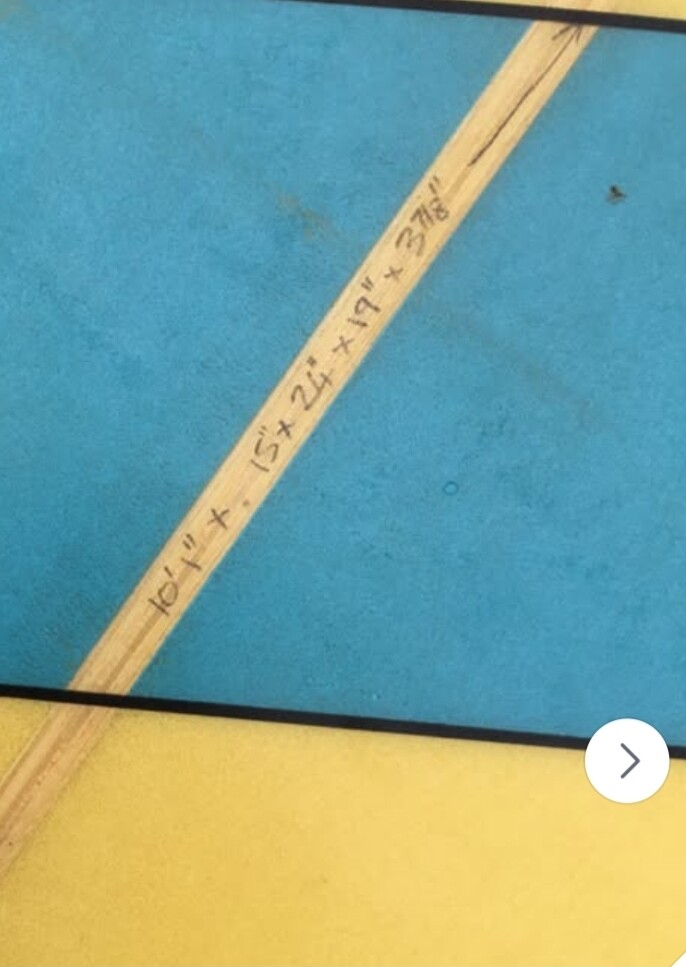
If the last number shown in the dimension string, 3 7/8”, is the thickness, the board will have significantly more liters volume than the original 3” screenshot, to the tune of 112 liters. Area would be closer to 16.9 sqft before any deductions.
2 Likes
@jrandy Can I ask, what would the figure be for a board at 9’6 x 23 x 3 (a relatively popular size I see come up for Longboards, and one I was first advised to aim for as a minimum).
Out of interest, how do you get from 16.82, to the 14.86 bit? Is there a website that you use to calculate that, or is that part of the board design software that you use? Always eager to learn more.
The software is in my brain. And I use it to operate my Casio calculator. 
Nothing to it. Divide your weight by surfboard bottom area. So for the numbers you just posted, 250 divided by 16.82 = 14.86.
The problem is you need somebody like @jrandy to use Board CAD software to determine an accurate estimate of the surfboard’s actual bottom surface area.
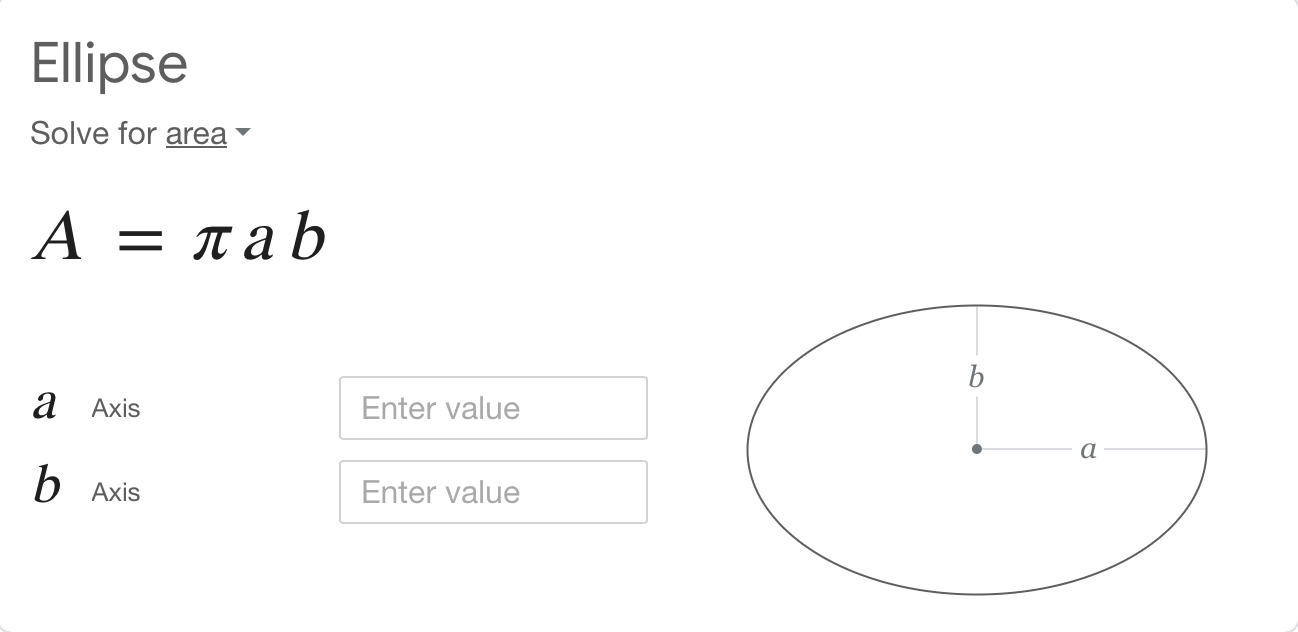
I do rough estimates of surfboard bottom surface area by assuming the SB is an ellipse. But ellipses underestimate bottom surface area for most longboard shapes. So when you divide your weight by the elliptical surface area estimate, the loading rate is going to be a little too high. Calculating elliptical surface area is fairly simple (below).
1 Like
@stoneburner I bet you have one of those calculator watches all the cool kids wear don’t you 
Thanks very much.
Nope. I use a Casio $10US solar, scientific calculator under my TV room lamp. LOL
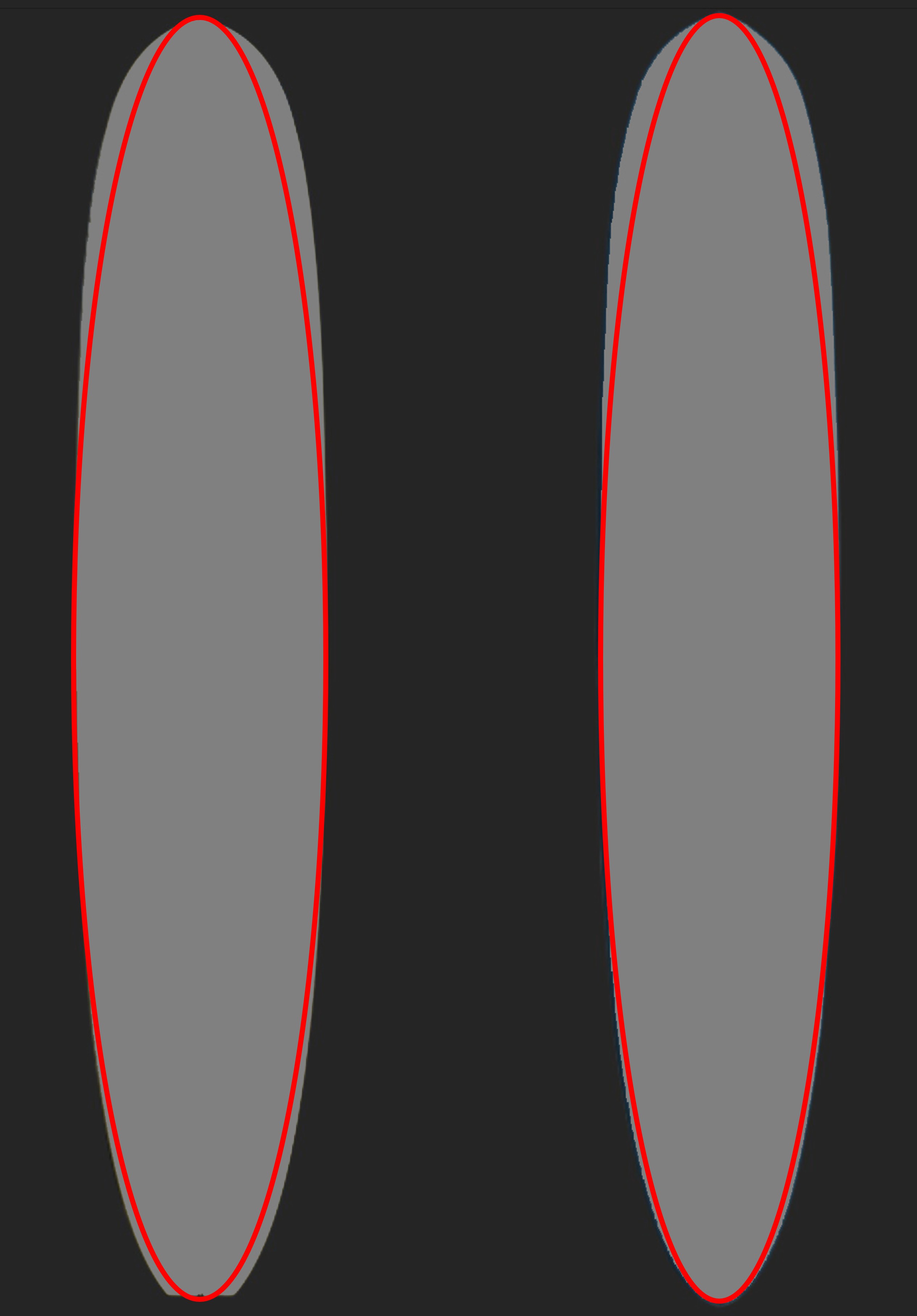
Below is a quick figure that demonstrates what my elliptical bottom area estimate looks like. It’s a good way to get you close to the bottom loading rate you would need — you just want loading rate to be a tad lighter.
Harbour SanO cruiser on left, their Rapier cruiser on right — overlaid with red ellipses.
1 Like
@stoneburner that works really well with a cruiser shape. I can see where classic logs and performance shapes would throw it out a bit more. Thanks for that graphic, it really helps.
So, with my question above about a relatively common size that comes up
9’6 x 23” x 3”
I get to what I think is the answer of …
17.48 lb/ft²
Does that sound right?
Going by your earlier post about me wanting to be aiming for about 15 or so, this would be too great a loading?
Would there be a point where there was too little loading? I’m thinking of some of the surf SUP sized boards out there.
14.36 lb/ft² as an example on the 9’6 x 28” “surfboard” that one of my other posts was about.
Yes. That would be the loading rate with your weight on it.
But I go to the Harbour weight recommendations for the Rapier cruiser. They recommend a 3.25” X 23” X 9-6 Rapier for a 170-lb to 175-lb rider.
So recommended loading rate for a 3.25” X 23” X 9-6 Rapier would be a little less than 11.89 lb/ft^2 to 12.24 lb/ft^2 rather than 17.48 lb/ft^2.
@stoneburner what do they recommend for my weight 
10’ 6 is a much bigger board at 23 1/2” than a 9’ 6 at 23…
Is this a point where just using the surface area as a determinant is a bit misleading? Because it doesn’t factor in thickness does it? Or at least that’s what my brain is shouting at the moment… #ButWhatAboutThickness 
Yes but no.
With bottom surface area held constant, thickness is the indicator of buoyancy/float. Average thickness times bottom surface area determines volume (buoyancy).
So if you want to use bottom loading (surface area) to determine what board size will work for you, you have to hold thickness constant.
As thickness/volume, in particular, increases; it gets harder to sink a rail while turning.
As width increases the board gets more stable. But sinking a rail can become more difficult. For example, it would likely be fairly difficult to lean turn a 28” wide SB.
These are general explanations. Rocker plays a big part in performance too.
1 Like