Build thread - First project: 6'4 from EPS blockfoam

the lightweight spackle tub will feel empty when you pick it up compared to standard spackle.

yes, spackle the whole board.

sand the finished board smooth.

the bond between the resin and the foam EPS is not the weak point.

the weak point is between the EPS beads and themselves.

Thanks for clearing that up for me chrisp, very helpfull

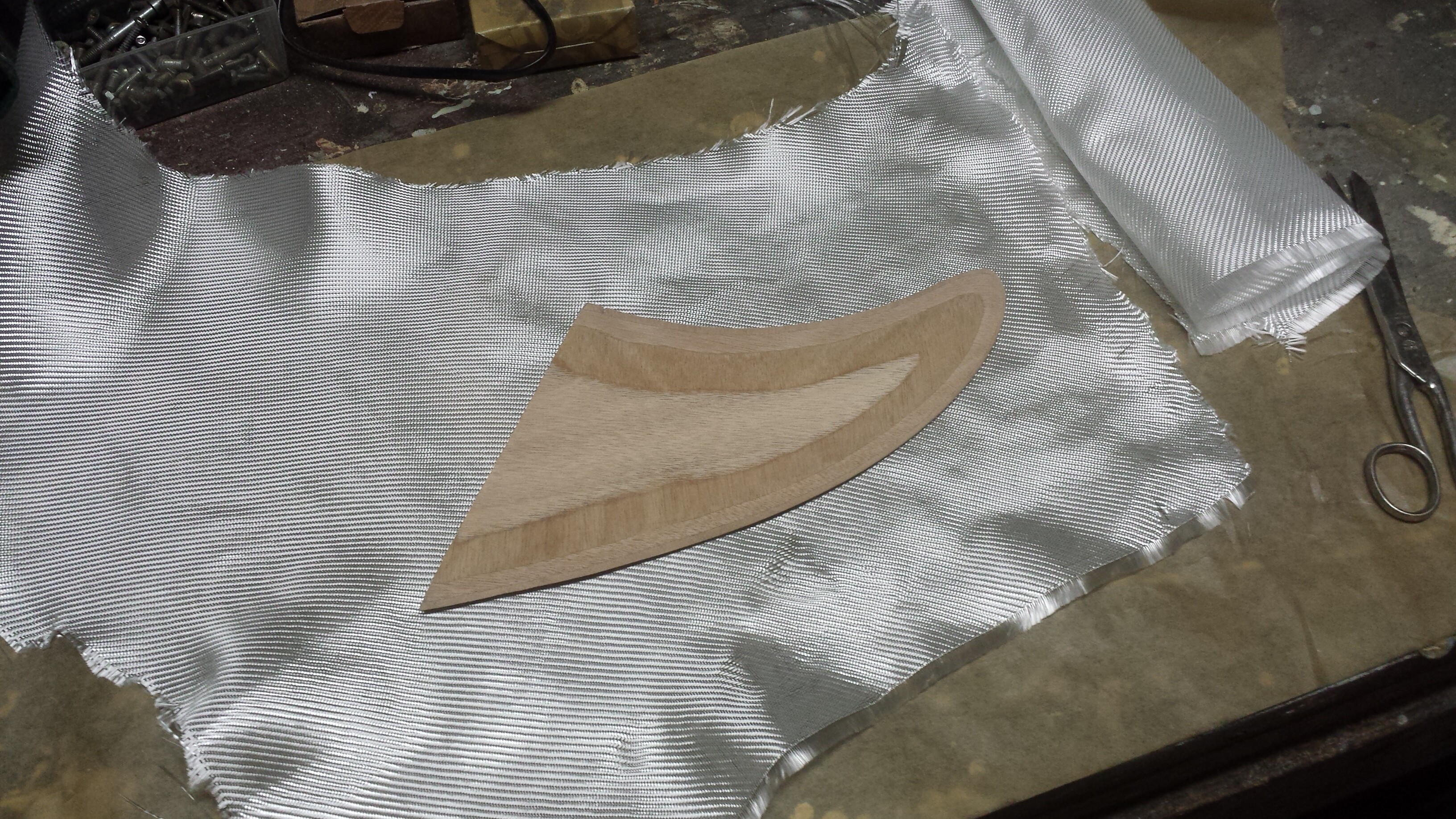
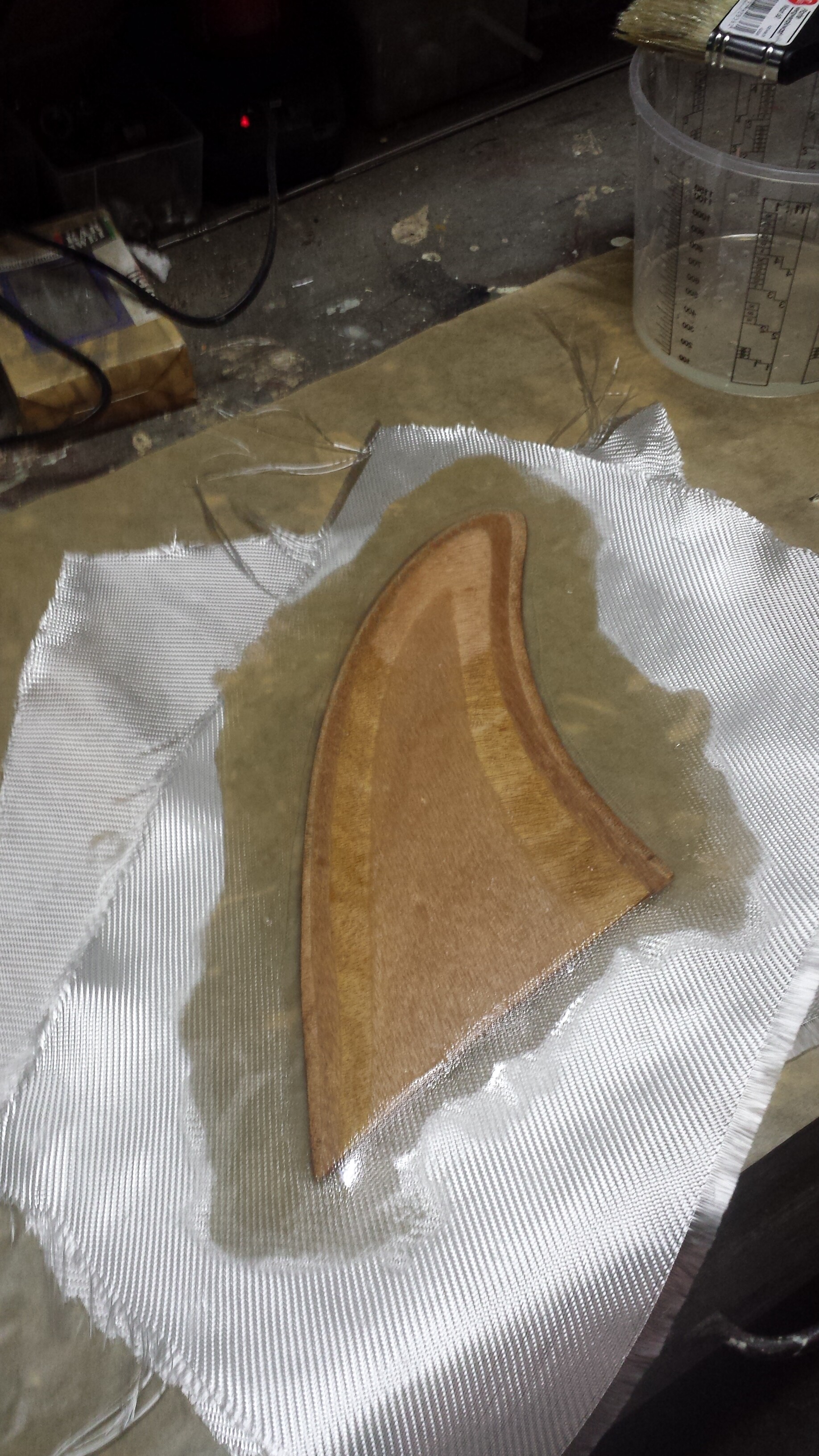
As for the fin, stoked as i am, grabbed some scrap piece of plywood at work (custom build yacht shipyard) and have a go with it!

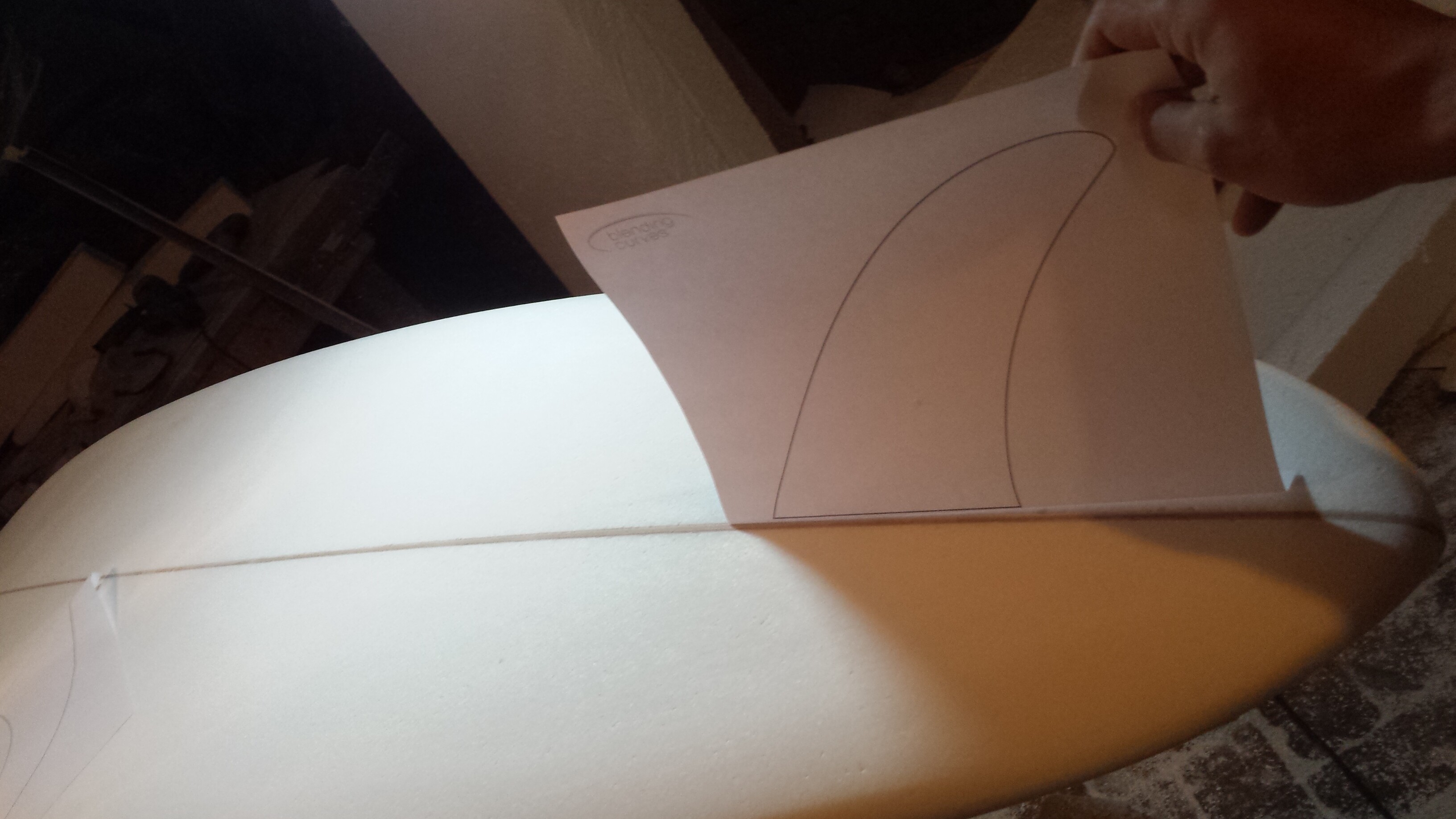
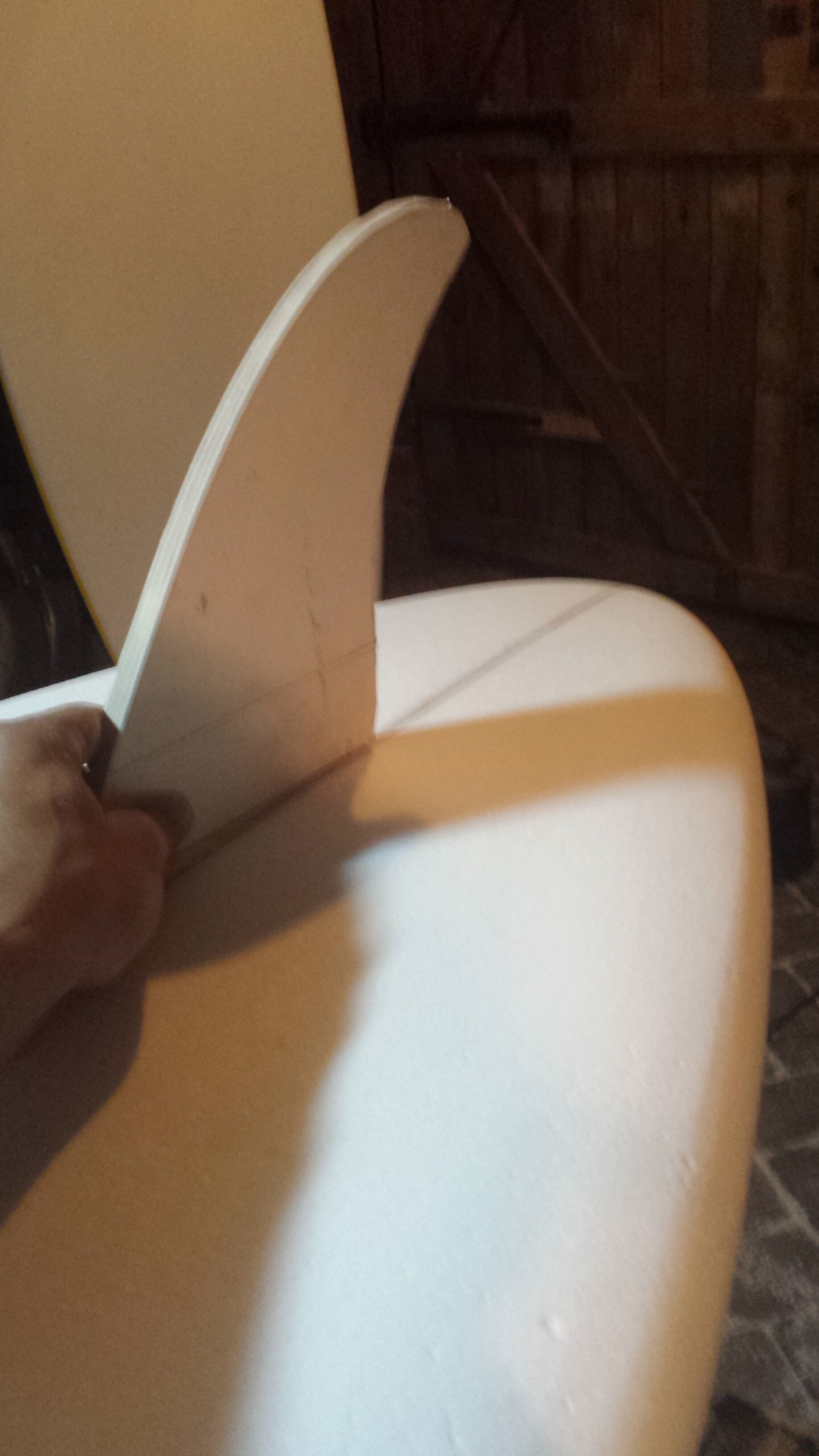
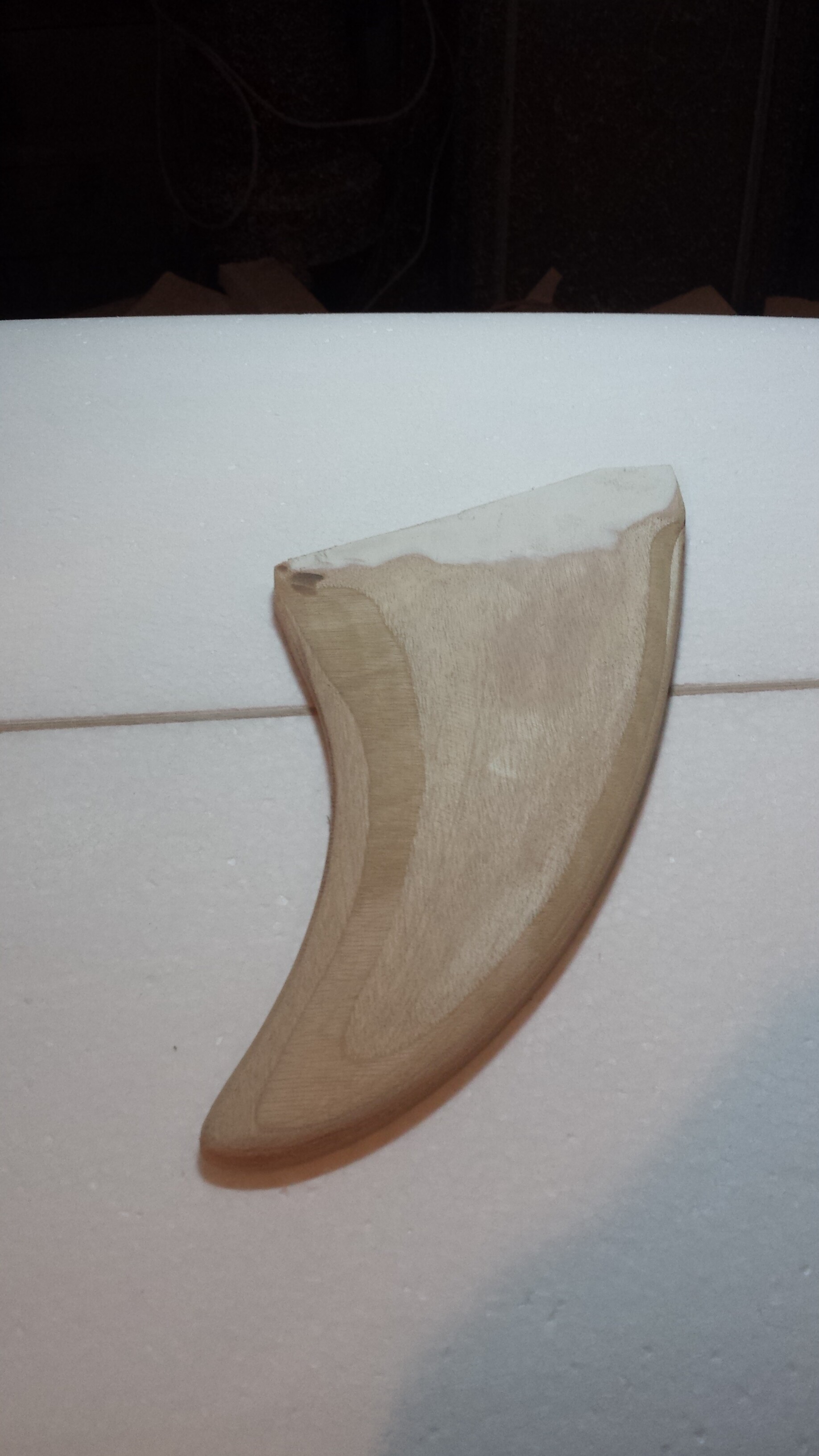
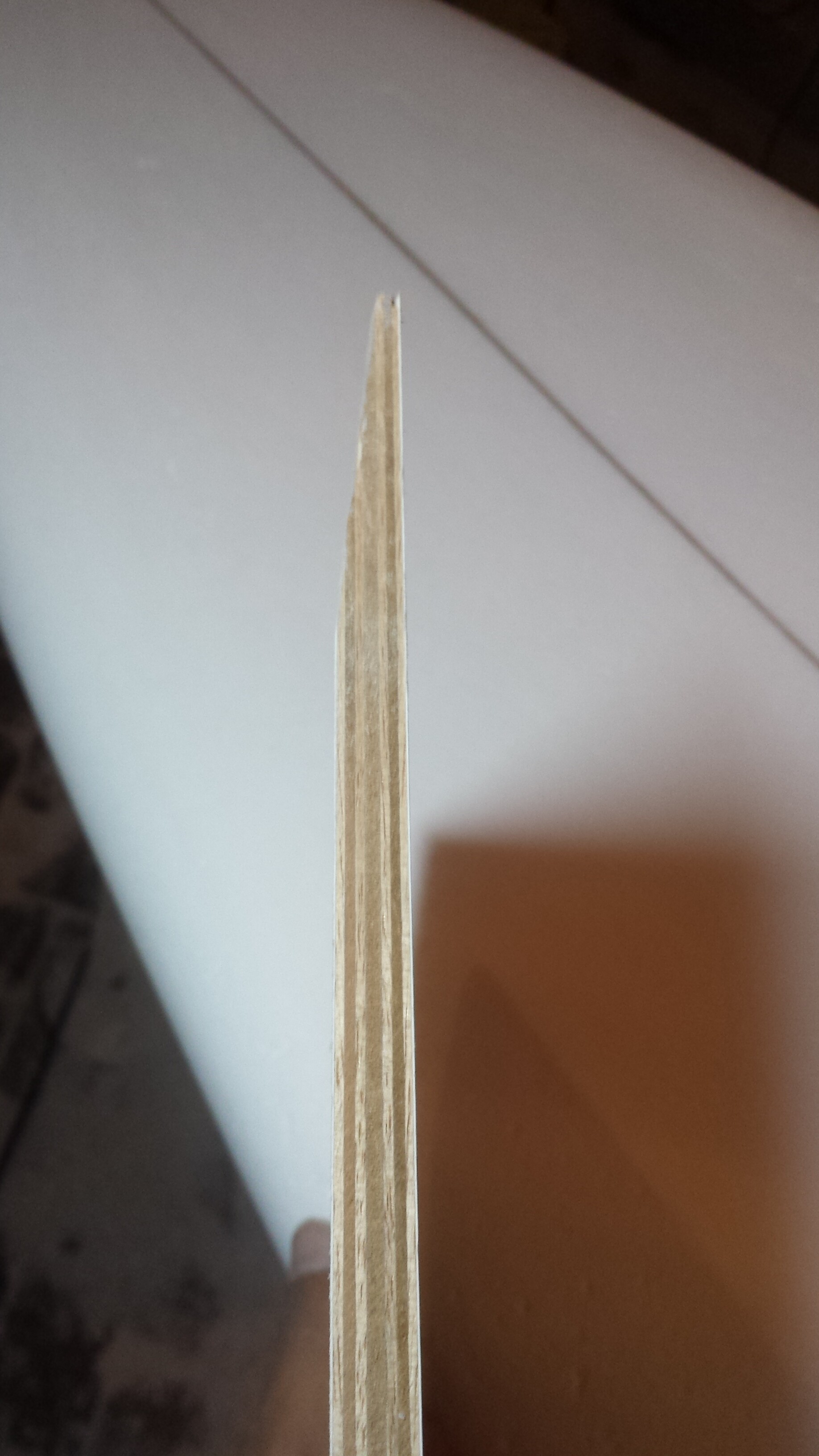
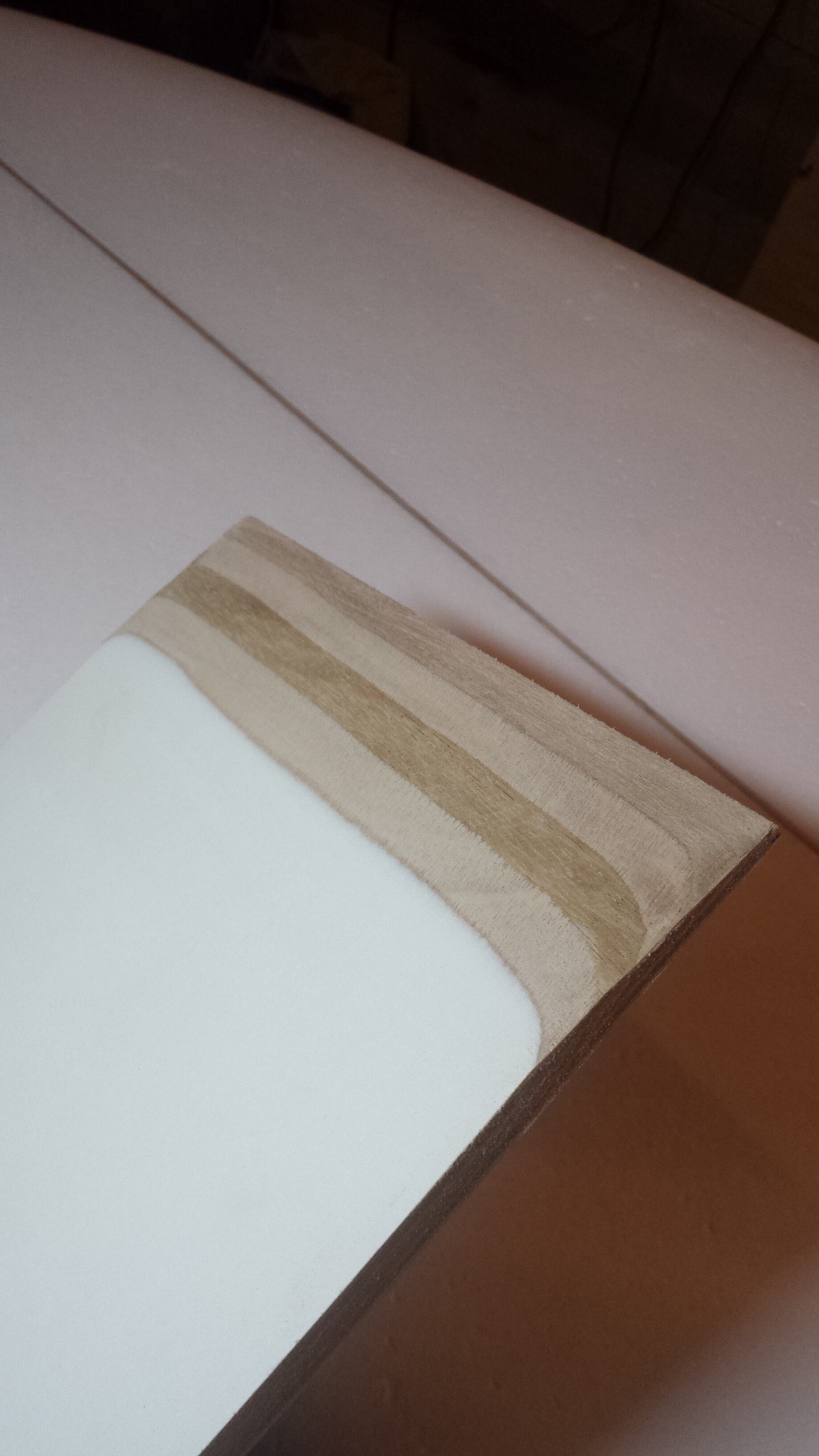
The layers of the plywood looked pretty fun so i lay over a template amd started sawing, grinding and sanding and only after 15 minutes or so, this popped out. I used a regular angle grinder mostly. Need to cut of a few inches from the base ofcourse, this was just for gripping.

Looks cool although this was started as just an experiment. Fact is, i’m convinced in shaping my own fin and glassing it in!


looking good. I was thinking the same thing as you about putting a tab on the base and bore out the stringer for the tab .I just glassed it on and tried it out yesterday and it’s still on with no cracks or anything. Looking forward to your progress and thanks for all the pics of your process.

cheers from California 

tom

Here we go again! Last 2 evenings I spend applying and sanding the spackle to seal the EPS. I did had some experimenting to do on different types and brands of spackle, as -here in Holland- I can not buy any of the brand which are commonly preferred on Sways. First off the spackle was a little to thick (pre-mixed spackle) and dried quickly which made it harder to apply, so I thinned it out with demineralised water. Which was probably not the best idea because some yellowish stains turned up. Lesson learned: Demineralised is not the same as destilled water. My bad. Got rid of most of the stains.

Anywhoooo. I;m getting everything prepped for my very first glass job ever. I am really lucky to be able to get about 22 feet of fibreglass and epoxy from work (for free!). The glass and the epoxy are commonly used by the yacht painters at the shipyard where I work so i trust on these guys for handing me the right materials. 

 I will be using 1 layer of 6 oz (E or S, dunno) on the bottom and 2 layers of 6 oz on deck. And i will be using the free lap method, from what i’ve read, this method is harder to f* up.  I did a LOT of reading about epoxy glassing and I think I understand the most of it. I will type out the entire glassing proces below and I will start on Saturday… so if any of you guys have anything to add or say, please do!

I am glassing this board inside the house, as the shed i’m shaping in is full of dust, sand, bugs and much more that can contaminate the glassing proces. I will open up a window so any fumes can get out (ofcourse using a respirator, gloves, etc.).

Here we go:

  1. Lay one layer of 6 oz cloth on the bottom. 

  2. Cut the cloth around the board nice and even, long enough for the freelap. 

  3. Check nose and tail for Smooth even laps when tucking under, cut little v’s into the cloth where neccesary

  4. Mix epoxy and hardener as per instructions (probably 1:2 ratio), use a wide stirring paddle and stir for 3 to 4 minutes for an even mix - very important!  Use a wide mixing cup to ‘‘slow down’’ the chemical reaction of heating up by epoxy. I now have laminating resin. (Possibility to add Additive F (or other Surfacing Agent), 1cc per ounce of hardener. This can be done to lower possible blush)

  5. Poor all of the laminating resin along the stringer, empty the cup completely

  6. Distribute the lam resin over the entire bottom with squeezee. Remember: do not force the resin into the cloth- like lamming Polyesther-, let the resin soak into the cloth. Use long swipes longwise, crosswise, featherwise.

  7. Soak the cloth hanging over the rails by wiping the squeezee from from stringer to rails. Start at mid of the board to nose or tail, do other side after. 

  8. Check if al the cloth on the bottom and hanging over the rails is evenly saturated (no dry spots, no pools of epoxy) all excess resin can be wiped into the mixing cup. [I’ve heard about wiping excess resin over the rails up onto the foam on the deck to minimize the ridge of the tucked-under lap] 

  9. When resin gels/kicks/ becomes sirop-like [this is the same is it?] cut al the strings off with a pair of scissors.

  10. Use squeezee to tuck the cloth over the rails up onto the deck. Start at mid of the board, going up to the nose or down to the tail, repeat at other side.

  11. Keep checking if the rail laps aren’t coming loose from the deck. 

  12. Let laminate cure.

PART 1 : BOTTOM LAMINATING DONE

  1. Flip the board. 

  2. Lay first layer of 6 oz cloth over the deck, cut around the board with just an inch or 2 hanging over the rails. Cut v’s where neccessary.

  3. Lay second layer of 6 oz cloth over the deck, cut around the board with enough lapping area, so it can be tucked under. Cut v’s where neccessary. 

  4. Repeat from step 4…

PART 2: DECK LAMINATING DONE

==============================================================

Check how well the laminating went. Start sanding out uneven spots but beware of sanding into the cloth. 


Hotcoat (also known as filler coat, sanding resin) is laminating resin (epoxy + hardener) mixed with a Surfacing Agent (which is actually a mixture of Styrene and melted parafin wax). A lot of people are talking about Additive F, which is a premade Surfacing Agent with some special ingredients to make it an ideal mixture to use. 


To mix the hotcoat add 2 cc of Additive F per ounce of hardener. As from what I understand the big difference between laminate resin and hotcoat is the added Surfacing agent. The surfacing agent contains parafin wax which rises to the surface while the resin is curing. This wax will build up as some kind of miniature blanket on top of the hotcoat, which prevents air (oxygen) reaching the actual resin. This enables the resin to fully harden instead of staying tacky/gummy. This makes sanding the hotcoat a lot easier for a nice smooth finish. 

If it is neccessary to do a second hotcoat (if you have left bumps or uneven spots) the entire surface needs to be coarsed/sanded, as the second hotcoat will not bond with the first hotcoat, due to the miniature wax layer. 

Apply the hotcoat with a new brush, and beware of any contamination such as released brushlashes. Apply a vertical hanging tapeline (Apron) along the apex of the rails to avoid droplets going under. Hotcoat away!


Hello JH-

It looks like you have a good epoxy procedure. Free materials is a very nice deal. Does that boatyard epoxy have a UV stabilizer? I would say make sure the mixing ratios and working times are known for the specific epoxy from the boatyard, and then test it with any other additives before trying it on a surfboard. Maybe do the fin or a test panel? I used some general purpose epoxy once, switching to surfboard epoxy made things easier, less expensive, and cleaner looking.

I hope it goes well, J

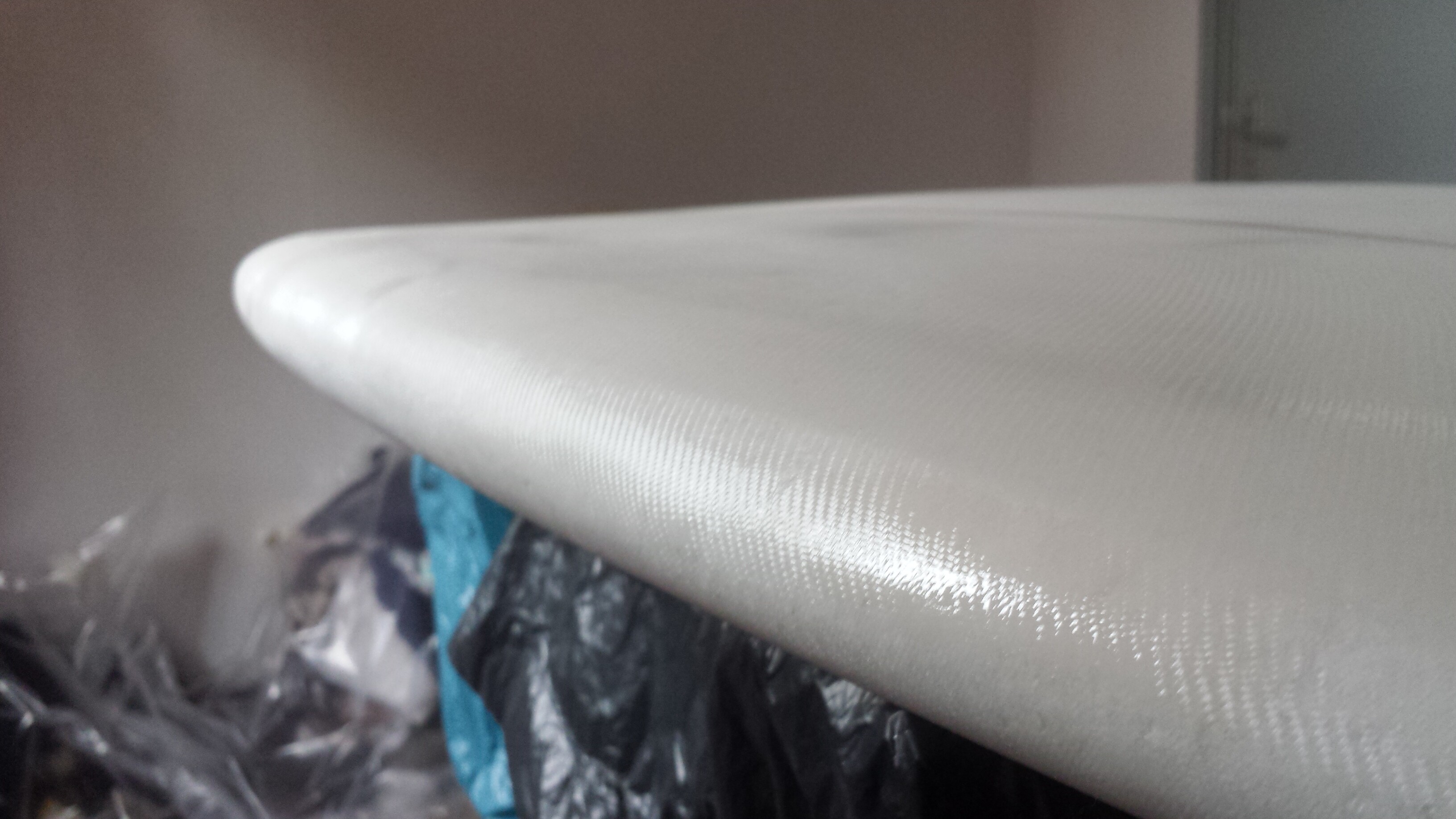
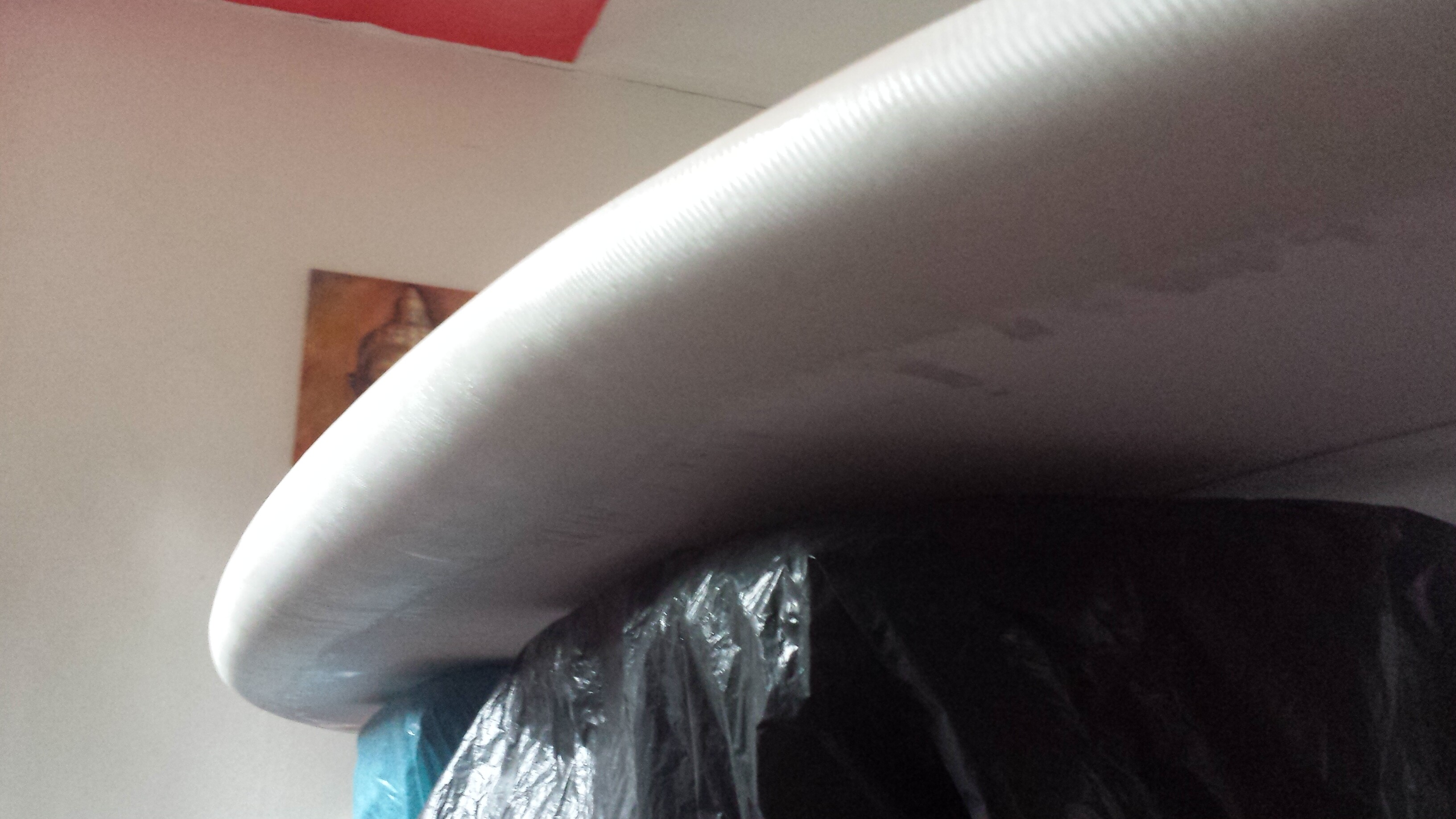
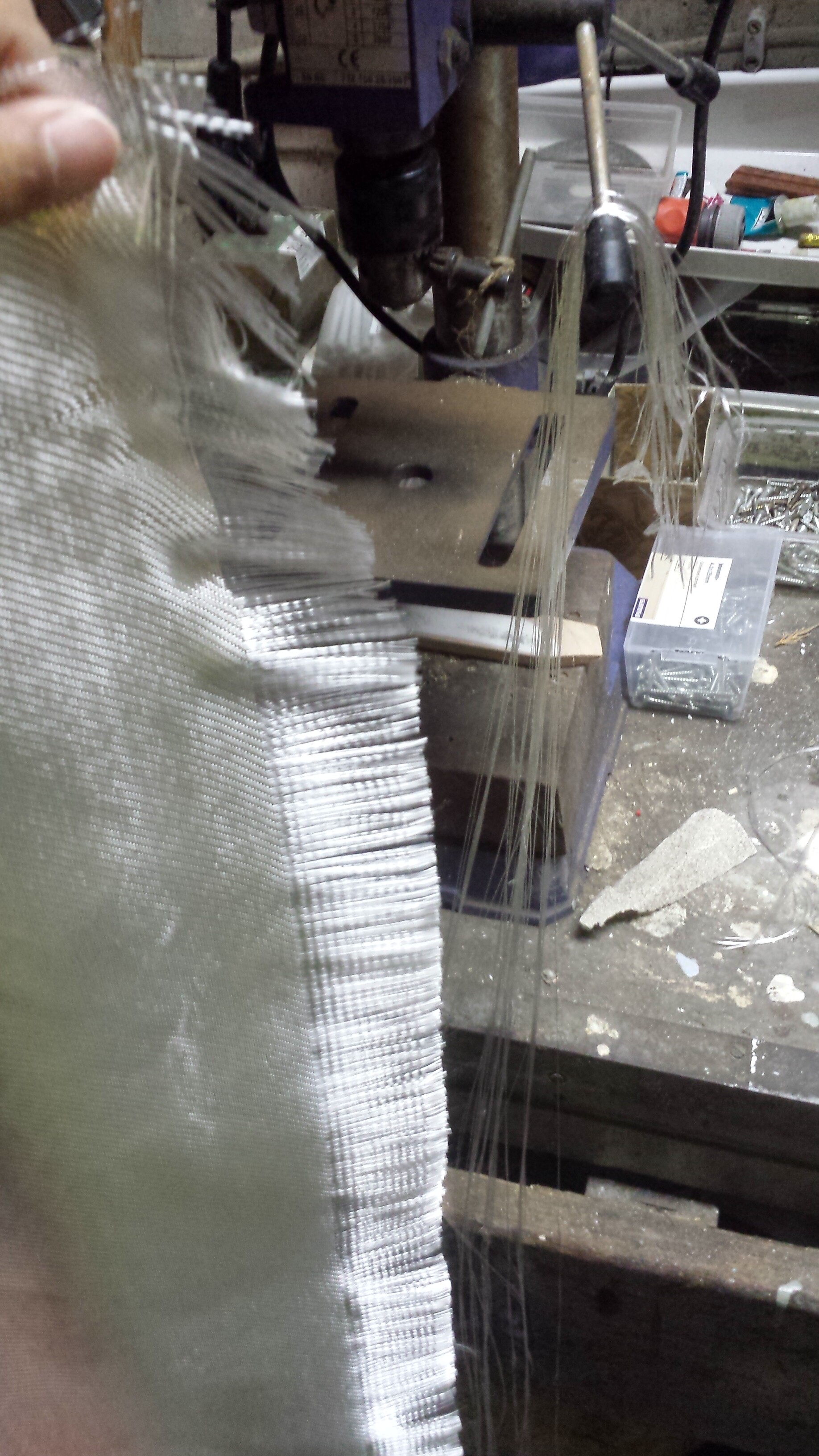
Did my very first bottom lamination yesterday and I think the results aren’t too dissapointing. At first I thought i might have been a bit low in resin as the structure of the weave is showing everywhere. But when I gave it a second look i didn’t see any dry spots anywhere and the cloth is evenly satured, no bubbles nothing. Although I did have some troubles with these fibreglas hairs sticking to my squeezee when tucking the rails under and then accidently wiping them over the deck. But I think these are common problems for everyone. 

I will probably be lamming the deck this afternoon, when the bottom has cured enough to be turned around. As from what I understand, if you wait longer then 24 hours the chemical bond between hotcoat and lam coat is no longer there, therefore you need to sand the lam increasing the mechanical bond. So i thought to do the deck lam this afternoon, wait for it to get tacky, and then brush on the hotcoat (chemical bond). Let it cure, then flip again, sand the bottom, to do the hotcoat (mechanical bond).


What do you guys think?


…Oh i forgot about the fin… this needs to be glassed in before the hotcoat ofcourse.

Some pictures


One thing I know i should be doing better in the future is the spackling. You can see area’s where the spackle isn’t sanded away completely and area’s where only foam remains. Another thing, I need better lighting in my shaping shed :wink: enough complaining, hope she floats! Stoked so far
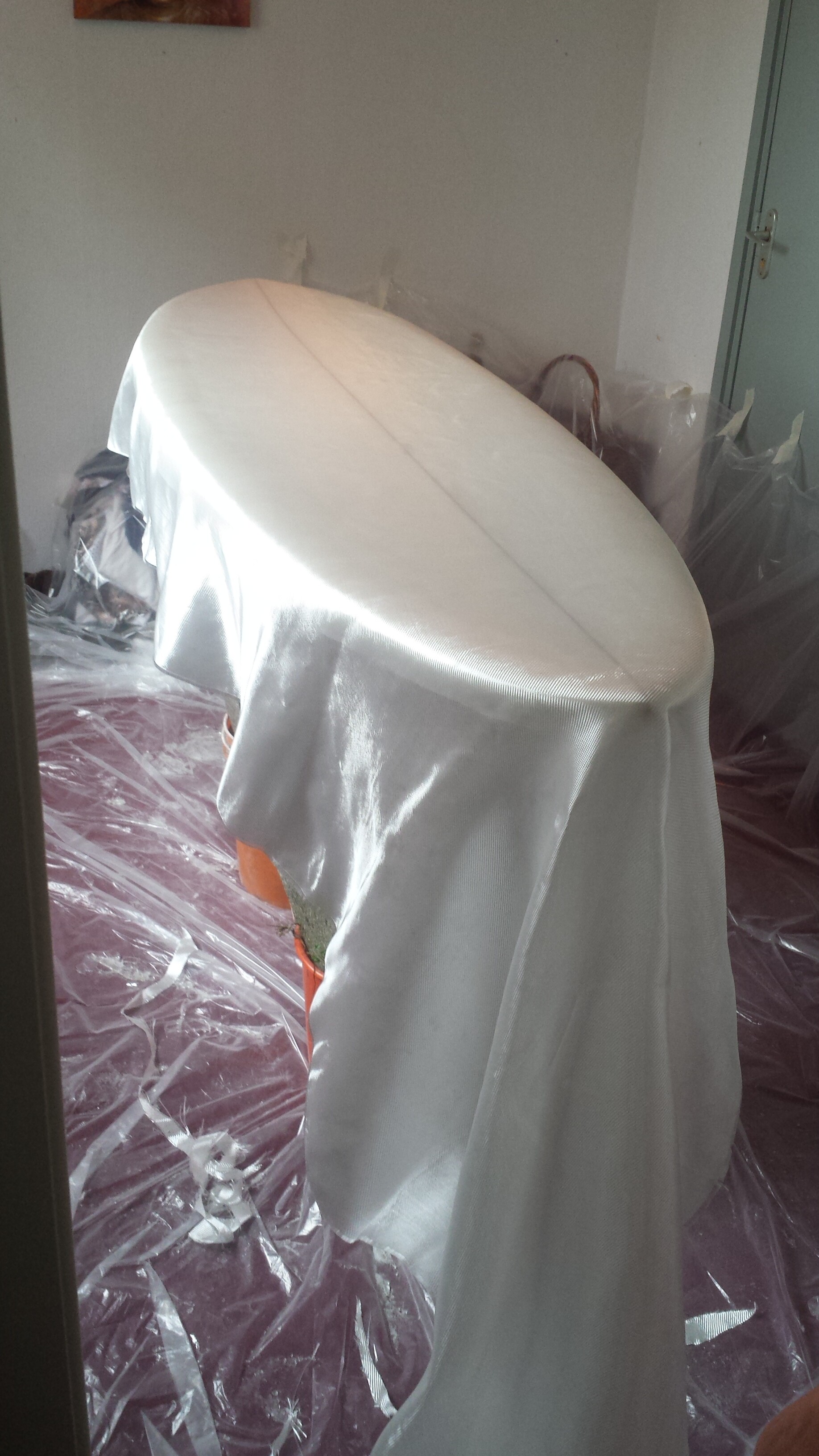
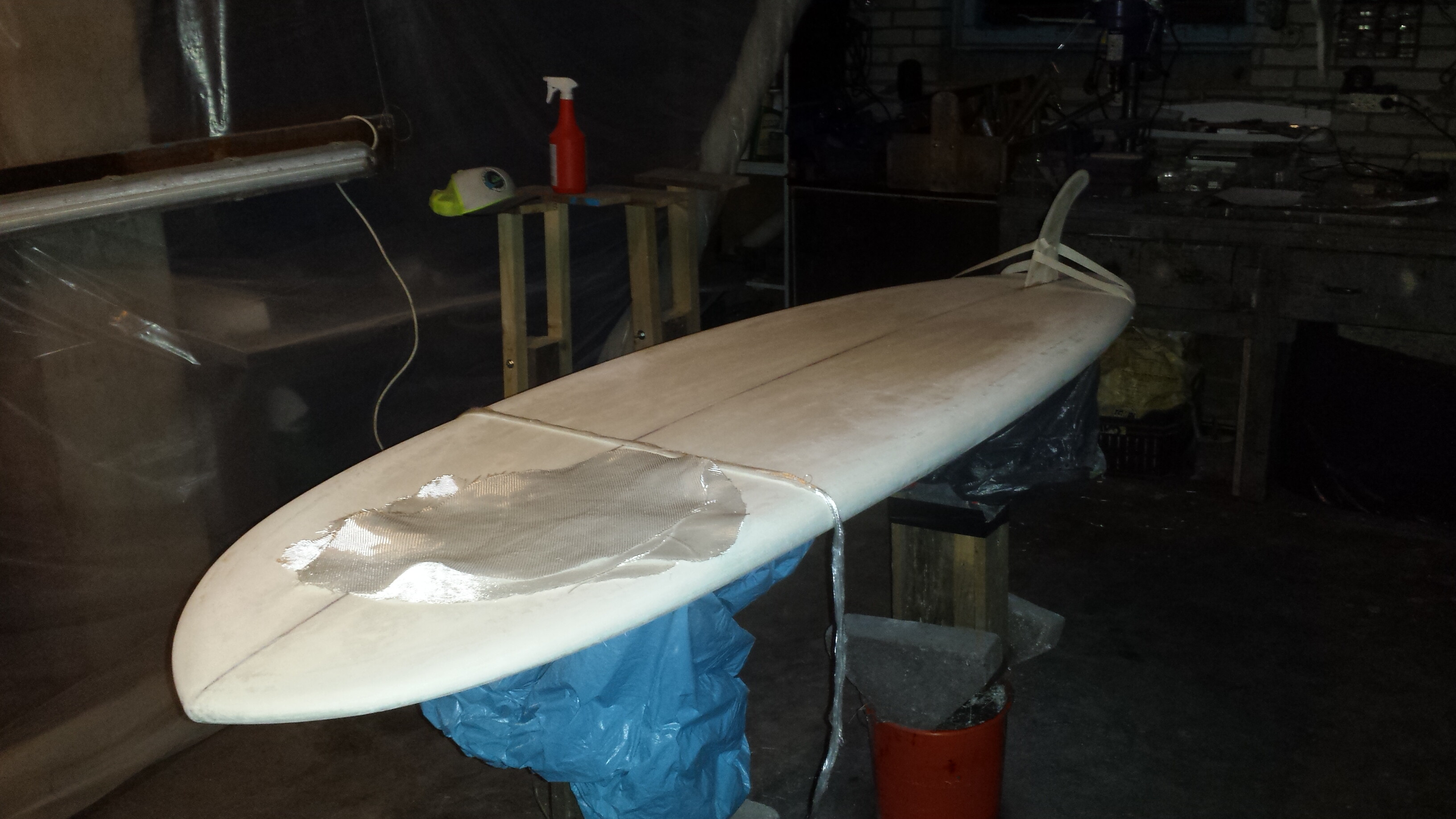
When I flipped the board yesterday I noticed a few wrinkles and a bubble on the deck part of the rail (have to pay more attention to this next time). As I could imagine these were common problems among beginners I searched the archives and learned an important lesson; The better you finish each step in the process, the easier it will get in the future. At first I thought to just laminate the deck, covering up the wrinkles en bubbles and fixing this in the hotcoat sanding… But now I know this will not be the best idea. To avoid any problems in the future I will try to get as few bumps and wrinkles as possible by sanding down the laps (free laps). As for the bubble, I cutted the entire bubble out and patched over with a piece of cloth. Hoping this will not show up to bad.( 2x 6oz deck lam might cover this up)

I did also read about brusing a little more resin over the edge of the free lap, where all these tiny fibres stick to the foam, in order to be able to sand this flush.

Will make some pics of the little mess tonight. Important lessons are being learned for future glassing :wink:

The deck lamination went great! The epoxy I’m using is very easy to work with (podlife is about 30 min.). I’m not going to use any surfacing agent for the hotcoat because the lam resin is really hard when completely dry and so easy to sand, great stuff! The wrinkles and the bubble patch I was telling about earlier were sanded flush and now the deck lam is over, can’t find any of the spots anymore. I used about 18 oz for 2x 6oz deck lam, which was the perfect amount of lam resin. 

I’m still having troubles with glass ropes sticking to my squeezee, can’t figure out what to do about this. 

Next up is sanding the freelaps flush again (I do use a little basting here for easier sanding).

I want to give the bottom half of the board a darker color, so i’m thinking to brush a very light hotcoat on the bottom and deck lam (for a flush surface), then sand and paint. When the paint has dried (and has enough coverage) I will sand lightly for a good mechanical bond with the next hotcoat. 


2x 6oz deck lam

Nice going there.I’ m waiting for some pics of the fin glassed on action shoots. Keep us posted.I dig how you glass in the living room with that clear tarp.classic!

Cheers :slight_smile:

tenderloin tom

very smart

Glassing the board inside the house is nice for having a steady temperature but the lights are horrible, so i’m forced to work on the board on weekends only. I’m already rebuilding the garage with more light armatures along the sides as your more professional shaping rooms have. It’s driving me crazy that the progress is going this slow. 

I had some info about painting epoxy from the guys at the painting department at work and i’m not sure what to do. As i already found out by searching the archives, regular paint is no good with epoxy. I can buy 2 compound epoxy paint which will definitely work, but this build is really low budget and the paint is somewhat expensive compared to what the board has cost so far. So i don’t know what to do yet… a bit of color would be nice, but if there is a chance it will ruin the board then i will consider leaving the color off. 

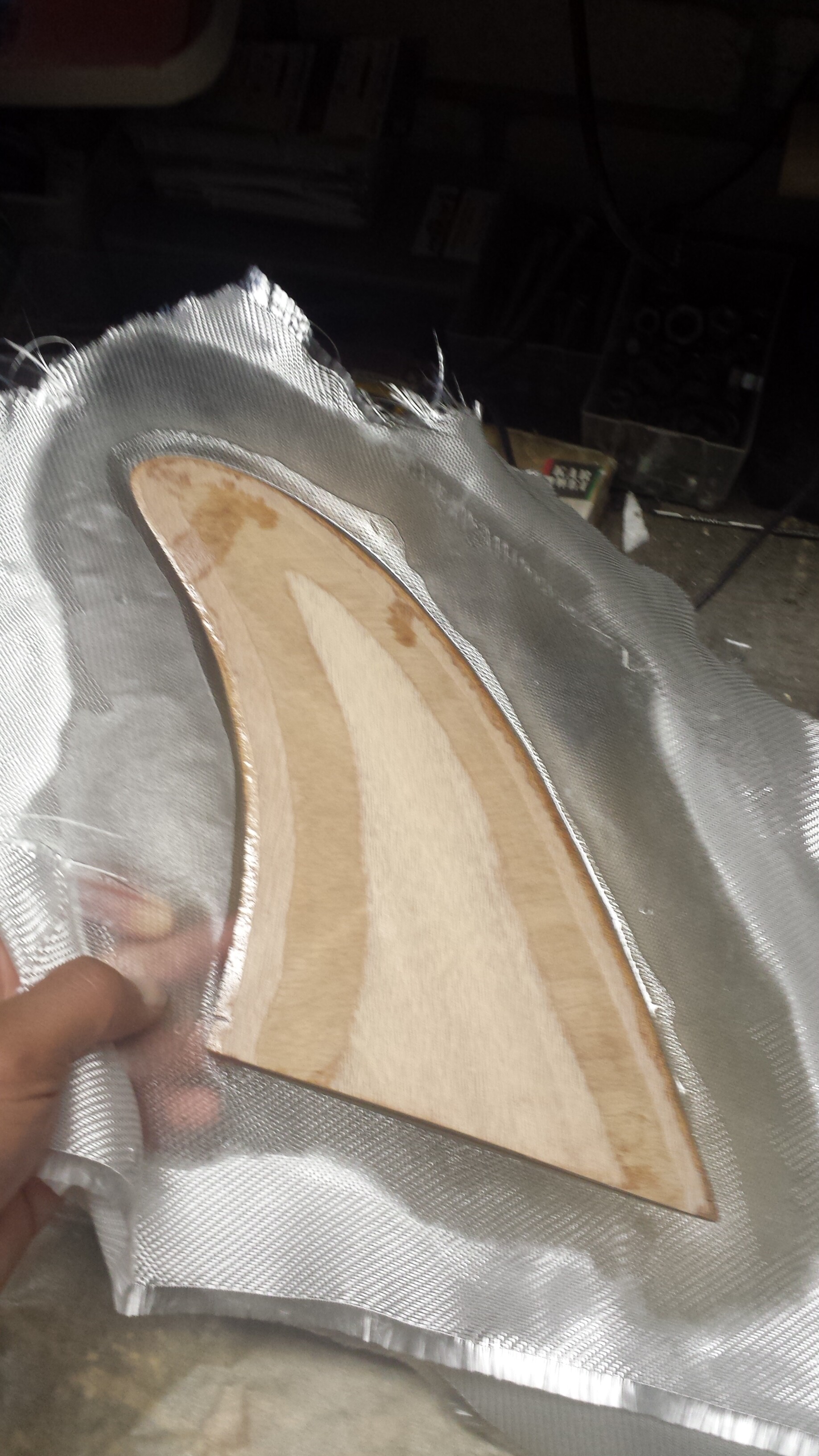
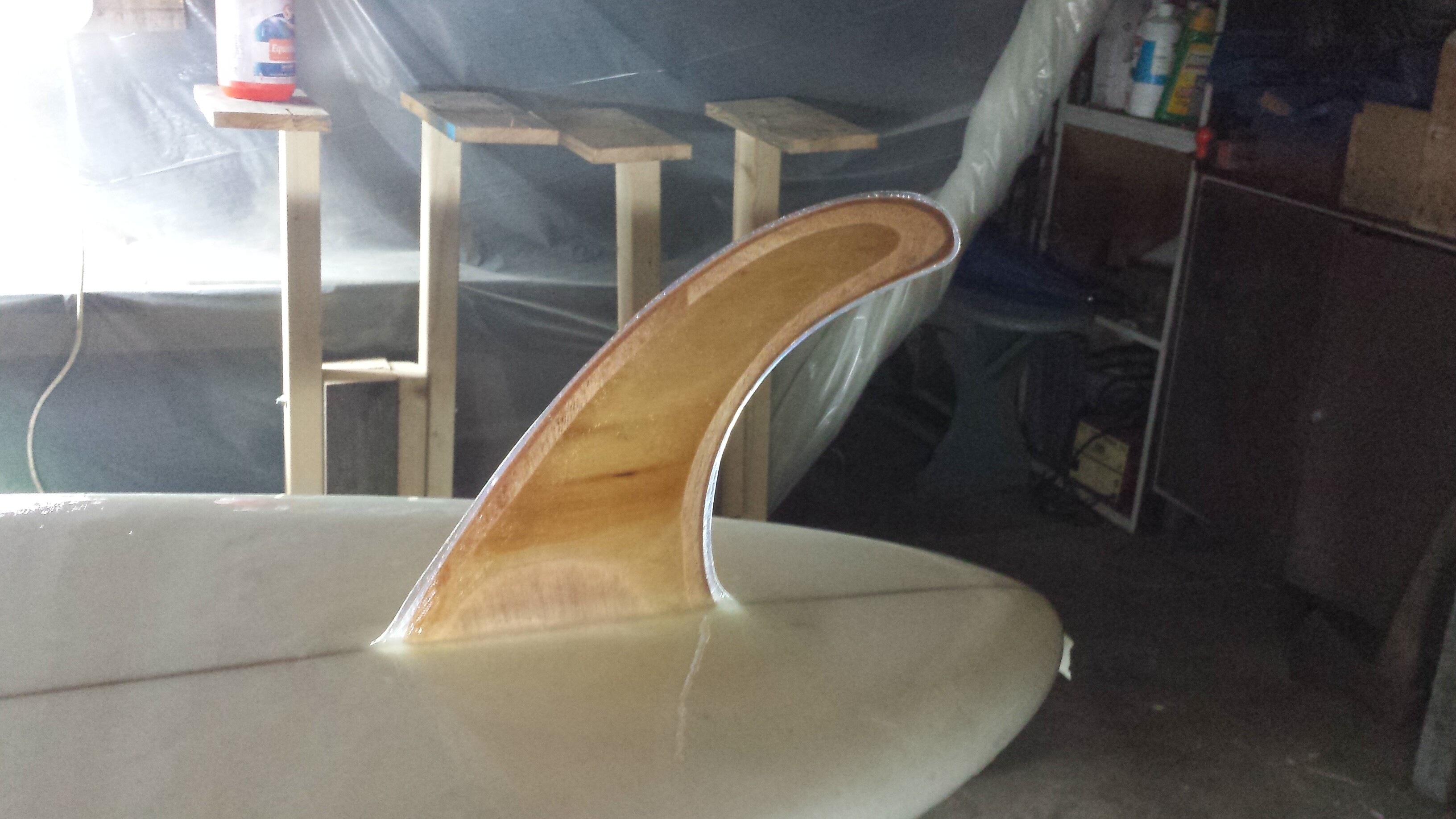
Last weekend I finished up the wooden fin, but I’m worried about the fin being to small. A rule of thumb is the fin needs to be as tall in inches, as the board is in feet so i followed this advice. But when I place the fin onto the board it seems a bit small. The bottom of the board is all flat, no v’s or concaves, so the only thing that is holding the board onto the waves is this single fin. I did laminate the fin with 2x 6oz patches on both sides of the fin., before tacking it to the board. But i might have messed up a little. I first glassed one side of the fin, wait for the resin to dry, turned the fin around and glassed the other side, waited for it to dry and then cut the excess off. But the lam is now leaning over to one side, fully hardened. This is probably because when glassing, I layed the fin flat on the workbench (with wax paper) and glassed one side. Because both sides are foiled the cloth was hanging over the edges and dried up. I probably should have cutted the excess of per side when the resin kicked. I sanded the overhanging ridge of glass off, but now the wood is showing up again. Woopdiedoo…

I’m considering of starting all over with the fin, making a larger one and learn from my mistakes.

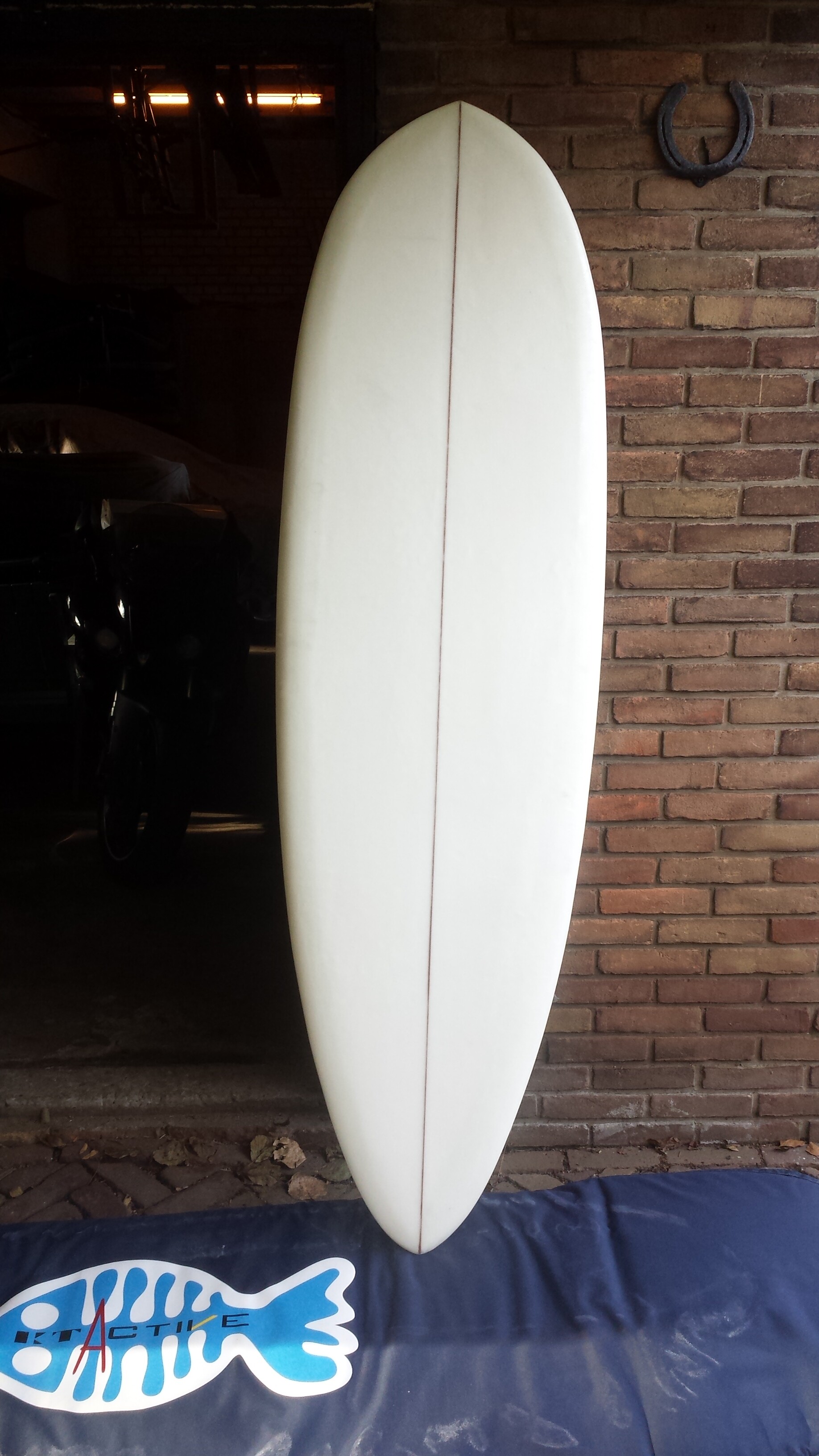
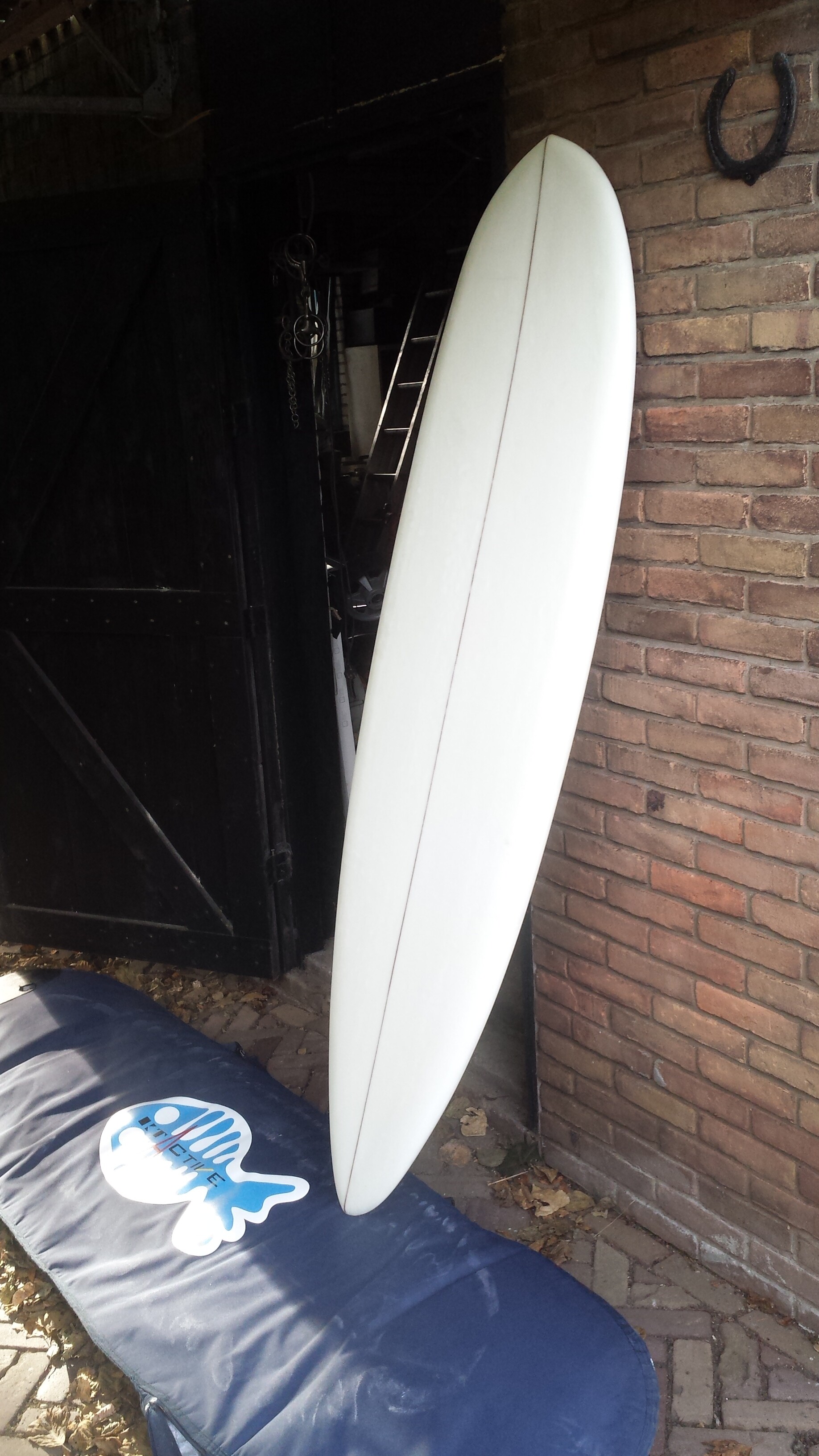
I was a bit bummed by not being able to glass on the fin this weekend, so I started on hotcoating the deck first (I know bottom should go first normally). I taped an apron on the bottom for drips (see photo). Hotcoat turned up really well and the epoxy is leveling very nice. There are quite a few little bumps but this is what hotcoat sanding is for right?

(Took the board outside for cleaning with the air compressor)


Fin tacked on. Waiting to dry then glass

Shaping your fin is nice, but if you want to glass it on, make sure you properly foiled it!

The fin is still too thick in the back half!

Try using finFoil to get an idea how the contours should look!

http://hrobeers.github.io/finFoil/


I just noticed that I’m too late already.

Your fin will work, but use finFoil next time :wink:

http://www.swaylocks.com/swaylopedia/image/naca-airfoils

Hi JH-

Thanks for the update on your project. Your fin is foiled much better than my first ones. Han’s program is fun to use. You can put your fin in there as an image, draw over the top, and see what it would look like with different foils.

I have includeed a link to a picture of NACA airfoils series 0012, 0014, and 0016.

-J


Thanks voor de comments everyone! Luckely I decided to make another fin which is thinner and taller than the ones previously posted. 

The last pic where the fin is tacked on is the fin I will be using. Last Saturday I laminated 2 pieces of oval 6oz cloth over the entire size of the fin, from top to bottom and onto the board, both sides at once. That evening when the resin kicked I cutted of the excess glass around the fin, leaving about .3 inch for a little transparent bead (might be sanded down). When the lam was hard enough to sand I feathered the edges of the lam down and layed on another piece of 6 oz cloth on both sides, halfway up the fin. Forgot to say that i layed a glass rope next to the fins. One thing added to the learning process: Cut finrope first, then saturate. It was darn hard to cut when completely wet, even with razorsharp scissors. 

It was a bit of a mess at the front and back of the fins, where the glass piled up a little, but i sanded everything down and flush and looks good enough for me.

I will add some photo’s tonight, when I will be hotcoating the bottom inc/ fin. 


Totally stoked on the process so far! 

Some pics. First hotcoat is on