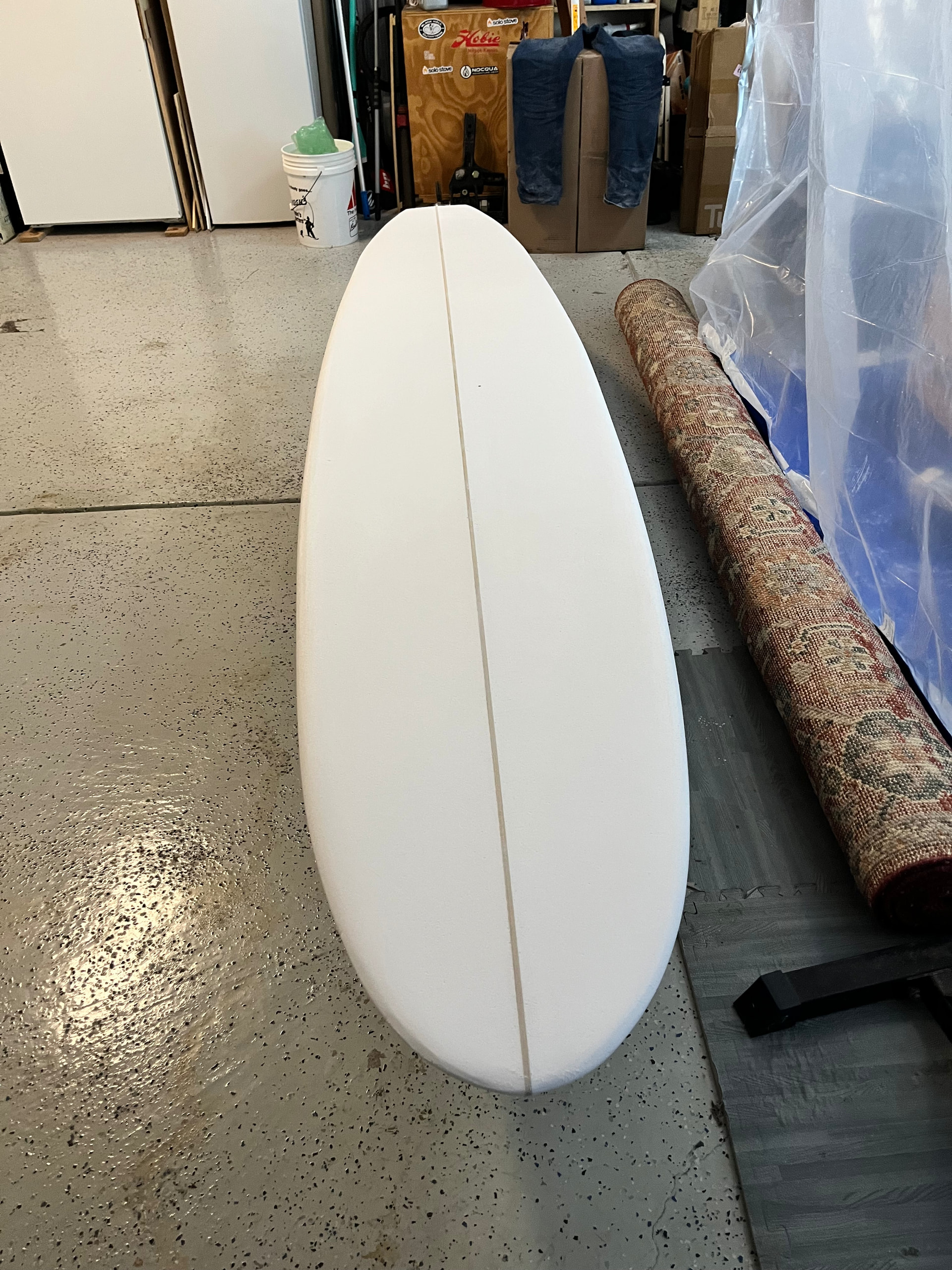
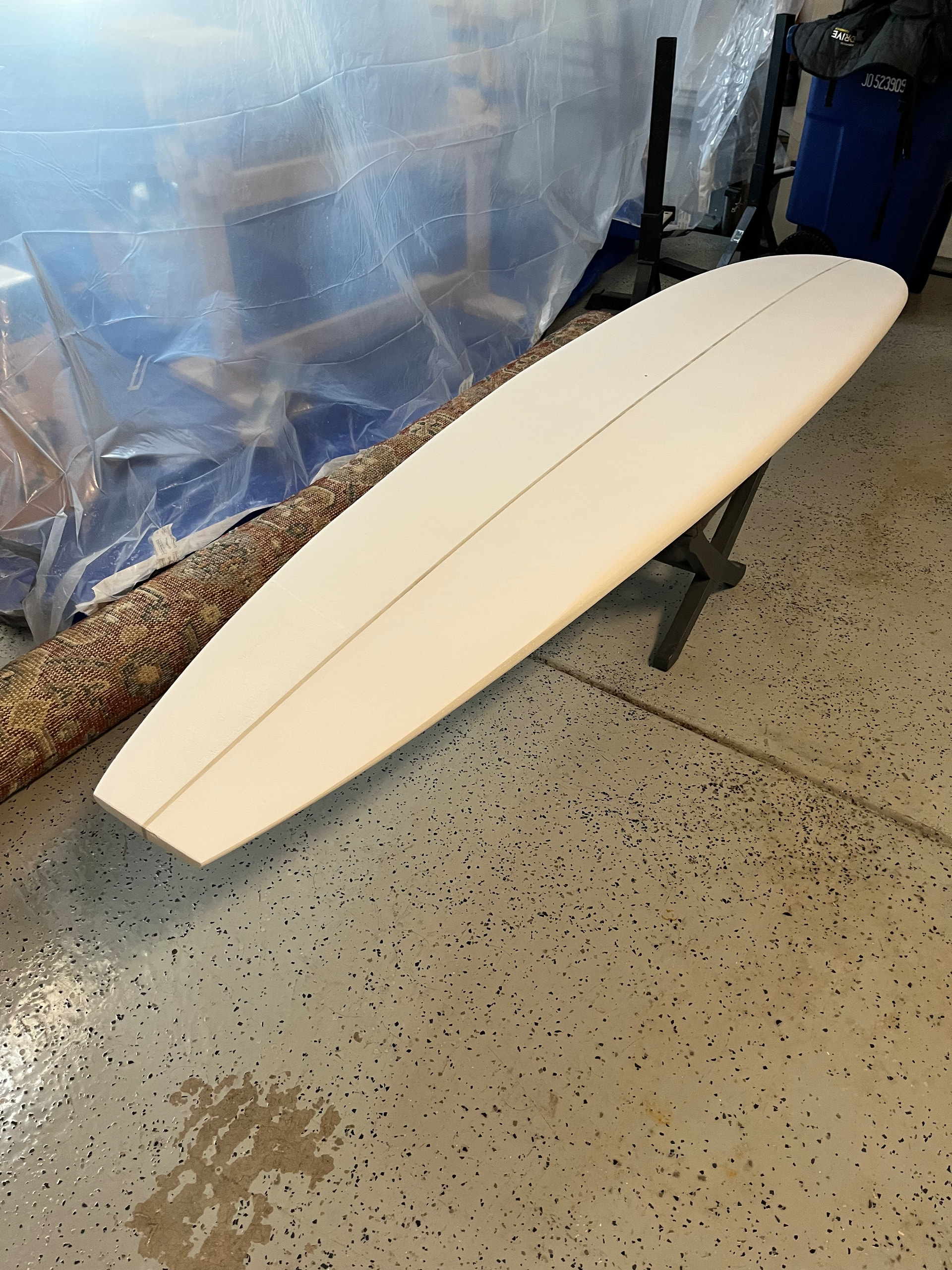
I have surfed for many years and at 66 decided to build my first board😀 I’ve been a handtool woodworker ( furniture) for many years and I think it has helped with patience and working tight tolerances with planes , saws etc etc
I decided to do a 9’0” longboard because I live in place with small crappy waves most of the year.
Got an EPS blank and copied outline and thickness along the length from a board I really like. One thing I did not pay enough attention to was the natural rocker the blank had . I am happy with my first attempt but little worried that rocker is less than board I tried to copy..,nose is 3” and tail is 4” ….about 1” less than what I usually surf on both ends.
Before I attempt my first glass job….can I increase rocker a little by cutting couple inches off tail and nose and re-shape ? Or is that too difficult for first timer???
YouTube the Ben Aipa shaping video that Fiberglass Hawaii did a number of years ago. It is still available for viewing. Ben demonstrates a simple method of adjusting rocker. I would suggest you use that very simple method over chopping nose or tail off. If you start chopping on that blank, you will most likely still not come up with the desired rocker and now you will have a board that is also not the desired length. Plus; when you chop a board you change the outline. So your finished shape will be the wrong length, wrong rocker and wrong outline. The rocker you described originally is not bad rocker for a longboard to begin with.
I think it’s great you are attempting your first board at age 66, not that 66 is old.
For the next board, consider using a PU blank which has a close to desired rocker so you don’t have to fiddle too much with the rocker. While it is ideal to learn all aspects of shaping a blank (outline, rocker, rail bands, etc., for the first board it’s a good idea to choose a close to shape blank. There will be plenty of good challenges on your first board even despite having a close tolerance blank.
Ditto to what OSS1 stated. Chopping the nose and tail will, in essence, reduce rocker. Yes, cutting off nose and tail will give you a thicker nose and tail from which to attempt to increase the nose and tail rocker. At this point you are back at square one, trying to increase rocker, and then you probably have to reshaper other aspects like rails, tuck, etc.
Thank you for your advice.
I did not try to change the length. Final nose rocker 3 1/2” and tail 4 1/2”
Took 3 full days with surform and mesh/ sanding pads.
I copied rails also from longboard I like and hard rails last 20” or so.
I don’t have dedicated shaping bay…put plastic sheets up as walls in garage so my lighting wasn’t great…but I used handheld work light as best I could.
Very satisfying thing to do!
Looks pretty good to me. Less nose rocker and more tail rocker is usually what you shoot for in a longboard. Sounds like you gained a little of both. I think the nose and tail rocker you wound up with is satisfactory. You may want to soften the hard edge a little. 16 to 18” forward from the tail is plenty. If you decide to install side-bites 15 1/2” or 16” would be about right for a 9’ board.(measured from the tail to the trailing edges of the fin. Usually your hard rail fades out just forward of your side fins. Steve is correct. Next time buy a blank closer to your desired rocker. Then if necessary adjust it using the Ben Aipa method.
Too much and your board is shit in all except small curvy waves.
Most of time when you go with low rocker you just need to adjust trim with little position change. Quickly you’ll find you surf better and never comeback to higher rocker. So much surfer like me (50 years) spend too much time on those high rocker Slater era boards.
Thank you for the advice on the hard edge….yes I just measured and its over 20” so I will soften it more as you recommend.
I was thinking single fin for now.
Appreciate the feedback.
Now I have to read all the info on Swaylocks about sealing the blank before glassing
Your shape turned out great, better than my first few for sure.
What are you plans for sealing and glassing the board?
Sample panels and simple schemes are your friends.
A pastel acrylic latex base coat and epoxy freelap glassing would be easy.
Avoid the urge to do a dark colored resin swirl cutlap, with the undirectial carbon and mother of pearl inlay alternating with veneer and aloha cloth on board # 1…
Thank you!
I was just starting to think about sealing…read a lot of people used Dap fast and final thinned with little distilled water and sanded well after dry?
Not sure I understand the sealing products you describe?
Just doing plain resin with no tint or anything fancy😀
I am glassing 2 x 6oz on deck and 1x6oz on bottom.
Latex paint is another way to seal a blank and add a color if desired.
Fast-n-Final is fine if it is white (they has a ‘grey’ period’ a few years ago, forcing people to go with Ace Hardware or Sherwin Williams or other brands of white spackles). It’s been 5-6 years since I bought a tub.
I am due to seal a board soon. I have never tried the alternatives such as plain epoxy or filled epoxy or even filled paint. Maybe it’s a good time for me to make some samples.
I think you have a larger selection of blanks and rocker in PU. In my opinion, it is easier to shape and fine tune PU. With PU you can use polyester or epoxy resin.
Acrylic spackle is easy to spread and sand, add no weight and no strengh to the blank. Compatible with acrylic paint for under lam deco. You can buy it, need to cut with tap water for easy spreading. You can build your one by adding microsphere and cabosil in acrylic paint.
You can also make your epoxy spackle, harder to sand but add strengh to blank. Not as clean as acrylic for paint.
You can also just spread clear resin on blank, let cure, light sand and lam. Add strengh to blank.
With modern thick and fast epoxy you can lam direct on “good” eps. But sealed blank before help a lot for a clean bubble free lam.
Liteweight spackle thinned with distilled water. To mayonnaise or catchup consistency. Spread it with a plastic squeegee. You are looking to fill the voids only. Let it dry hard and screen with a worn out piece of screen.
Make a 1V micro + 1/2V cabosil. Add this to paint up to a mayo texture. Spread with a squegge scrap over to only fill between eps beads. Add water only if needed.
This is the same as we do in boat repair and boat building with 1 part per volume (V ) epoxy to make structural fillets. There is an old MAS epoxy video out there on YouTube.
The food words for texture/consistency are good descriptors unless you are late for lunch or supper…
I just made an 8’ board from a 10’ EPS slab blank. with a very similar outline.
I wanted to use as much of the off cut later, so I cut 2’ off the tail. That left me with 5” of foam to work down to about an inch. I use the same method Ben showed. It helps to have a planer modified for shaping surfboards, but I have used my cheap home depot planer in the past.
I ride low rocker boards, so the end rocker I created is just under 3” in the tail and just over 4” in the nose. This is actually more rocker than what I usually ride. I surf the softer slower waves on Oahu’s south shore.