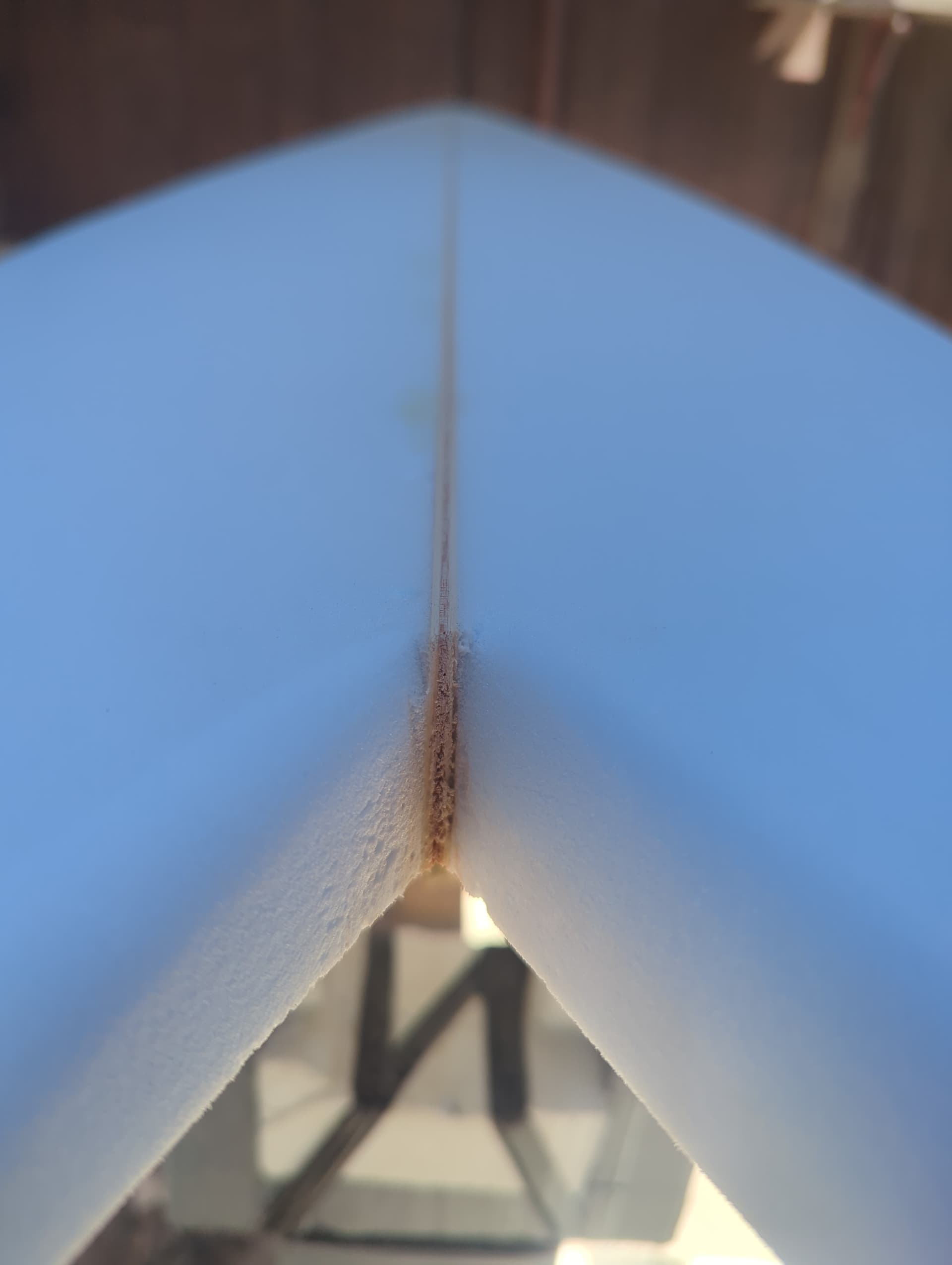
Any advise on how to clean out the section where the stringer is .
Photos attached.
Yes it is thick.
I’m a beginner/Intermediate and 90kgs.
Regards
Any advise on how to clean out the section where the stringer is .
Photos attached.
Yes it is thick.
I’m a beginner/Intermediate and 90kgs.
Regards
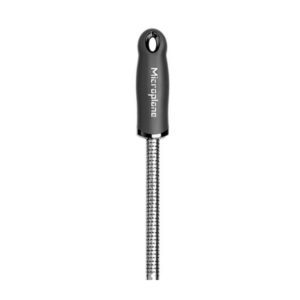
Use a micro round rasp to round over the top of the stringer between the swallows. Then a piece of sand paper to blend the inside swallow foam into the finished stringer. These are available at Foam EZ for around $12.
Again—- The rule is take the wood down first, then take down the foam to match. Using this method you can use practically any tool in your shop to get there.. I was blown away years ago to watch a well known shaper (now deceased) use an angle grinder to take down and finish the stringer on a Fish. Then take down the foam to match with a sanding block and paper. Wood First. Foam to match.
I have finished it now and not that happy with it. Looks more like a swallow tail than a fish tail. But it’s a learning experience. I thought to use a grinder for the stringer but I was too scared. I should have. That’s why the fish tail became too wide and thus a swallow tail.
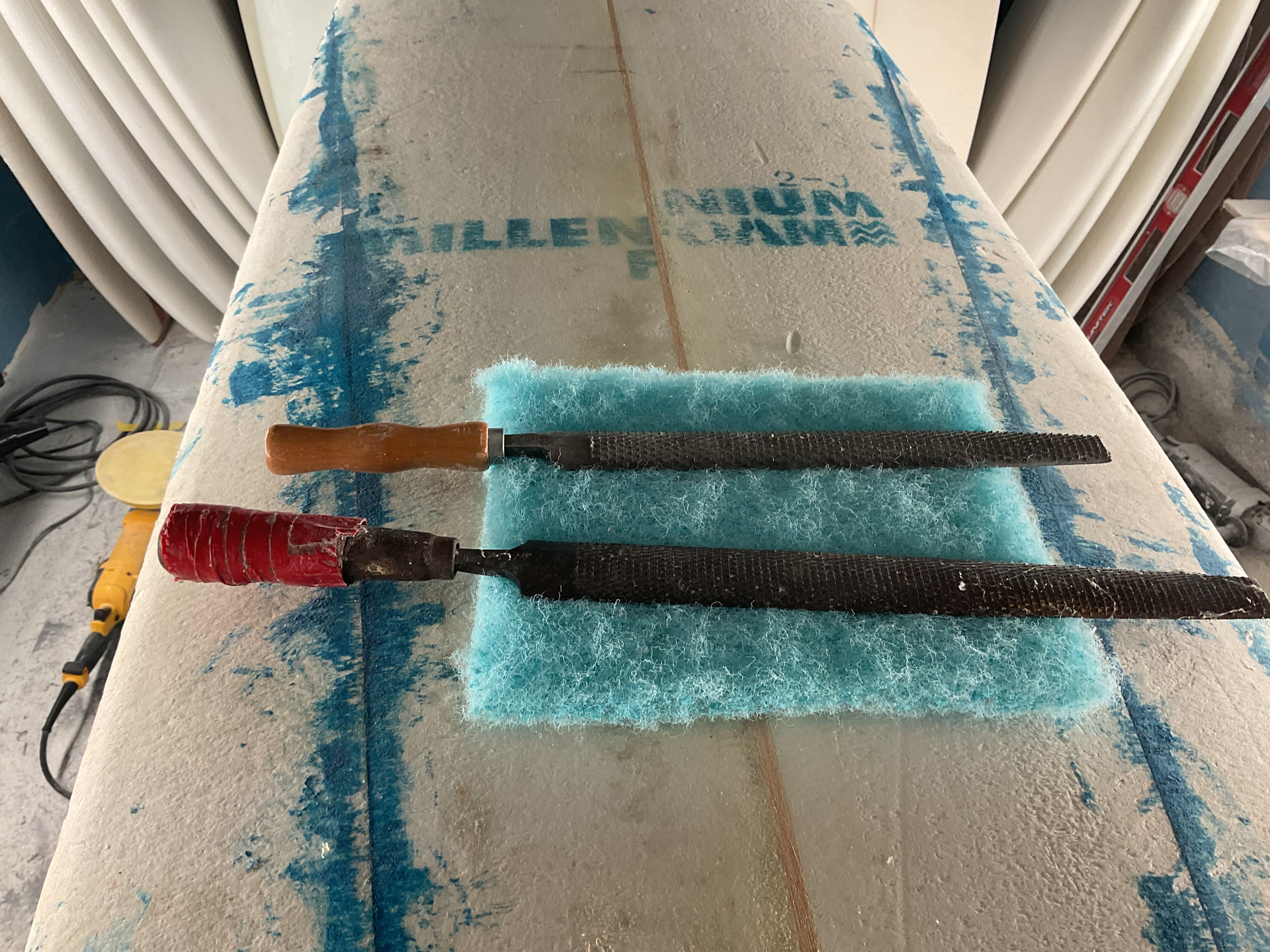
A die grinder(air driven) with a 2” Roloc disc 50# works really well. At two inches it’s narrow enough not to change the outline too much. My method is to draw the tail and cut it out with a coping saw, Japanese pull saw or jig saw. Cutting to the center of the stringer from each direction. Then using a grinder or a file turn the stringer down to the desired profile. Clean the stringer up with a narrow (1 or 2”) piece of wood wrapped in sandpaper. THEN; using a standard sanding block wrapped in sandpaper take the foam down to match the stringer. This is the commonly used method anytime wood exits the foam on an outline. Honestly I most often use a Farriers Rasp. Horseshoers Rasp. I’ve got a picture of it on my phone. I’ll try to post it for you. It’s pretty aggressive.
Isn’t a fish tail a swallow?
Not to me.
IMO butt crack depth on a Fish is much deeper (1/2 of tip-to-tip tail width) than a swallow.
And tip-to-tip tail width for a Fish is approx. 60% of widepoint width.
Yes, that’s what I think.
And why my fish tail is more like a swallow tail.
It is more like a ‘V’ (inverted of course) and I needed to keep a little more foam at the stringer before it then curves away to the rail. In this case it was just the execution. First time doing a fish and all.