A strut designed to fit into a fin box work? 10" Fin boxes would give you a lot of room to play with foil position.
Nice. I have some marine ply from a skimboard company that would work. gonna work on it this weekend. pumped!
So after all those experimental struts, I worked out that the metal ones need costly fabrication, same with the fibreglass struts. Connecting the strut to the foil would be easy if they just sort of screwed together, especially as the forces on the foil are towards the board. Any simple connection of strut to foil would work as the materials could be the same, struts could be ply or G10 or polycarbonate plastic sheet joined in a T intersection with stainless screws for simplicity.
But connecting the strut to board would be different, what’s the easiest technique we already use…almost out of date these days…?
Whats the cheapest, easiest, lightest, simplest system that everybody knows ?
That’d be these guys.
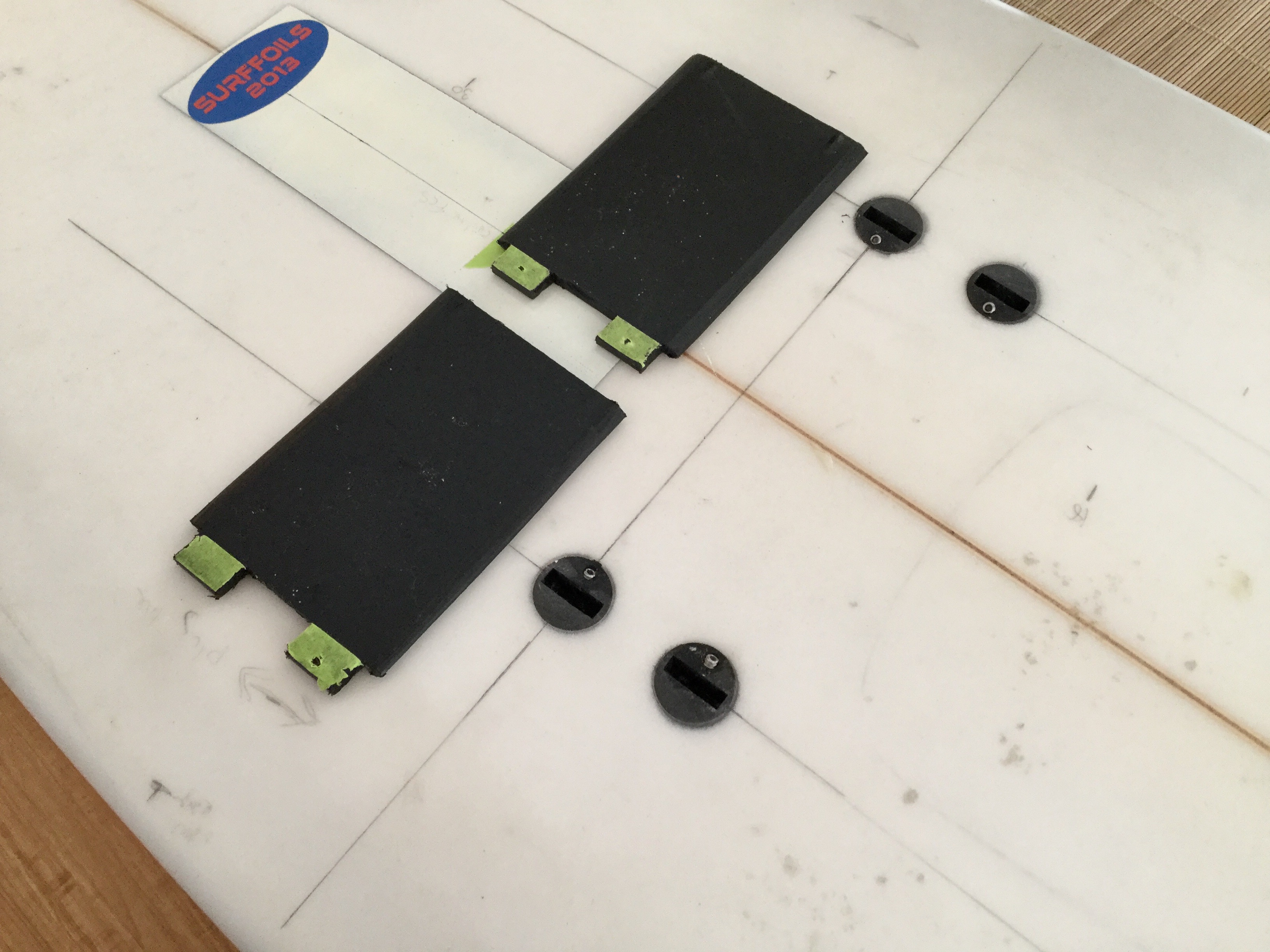
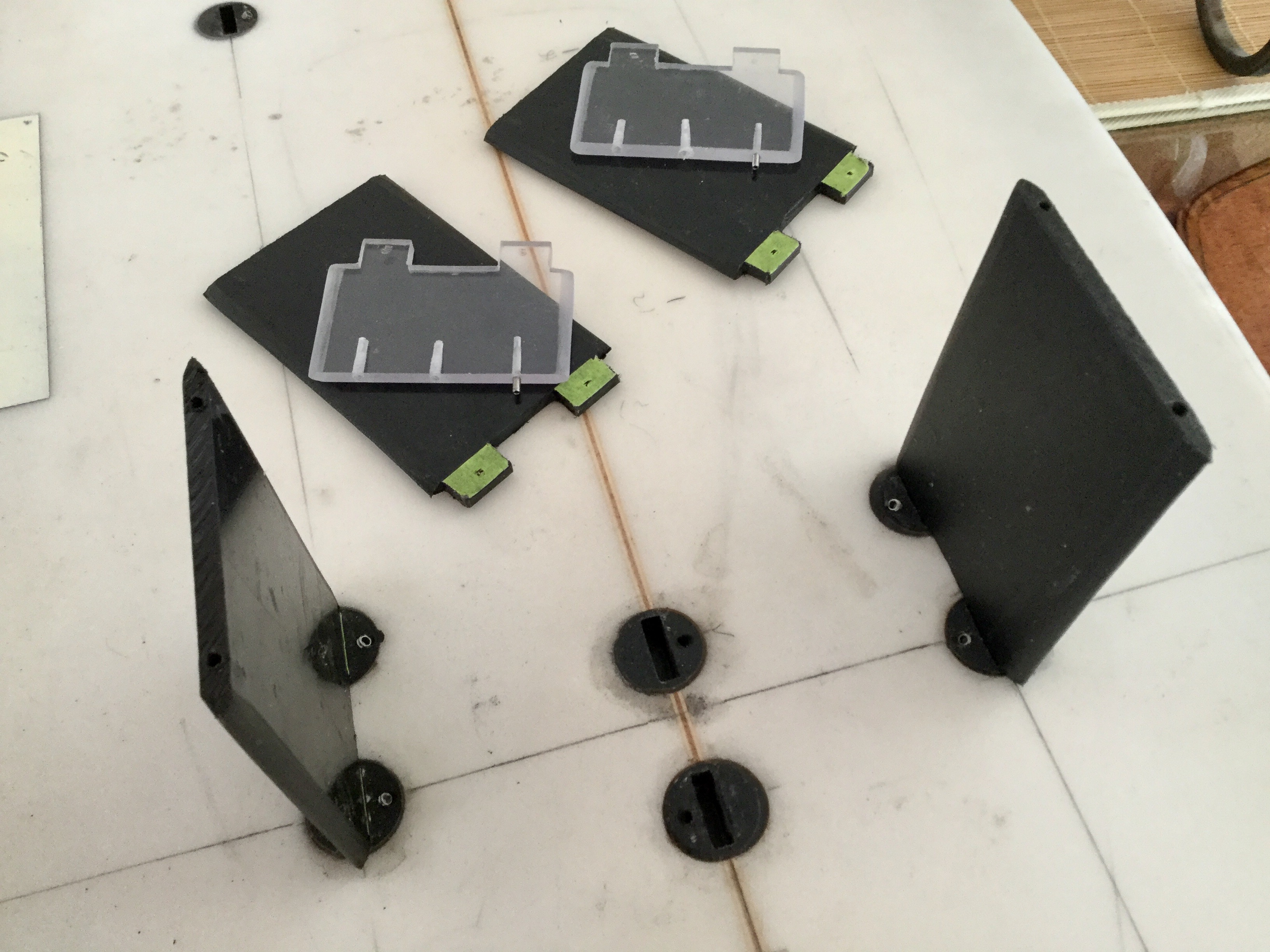
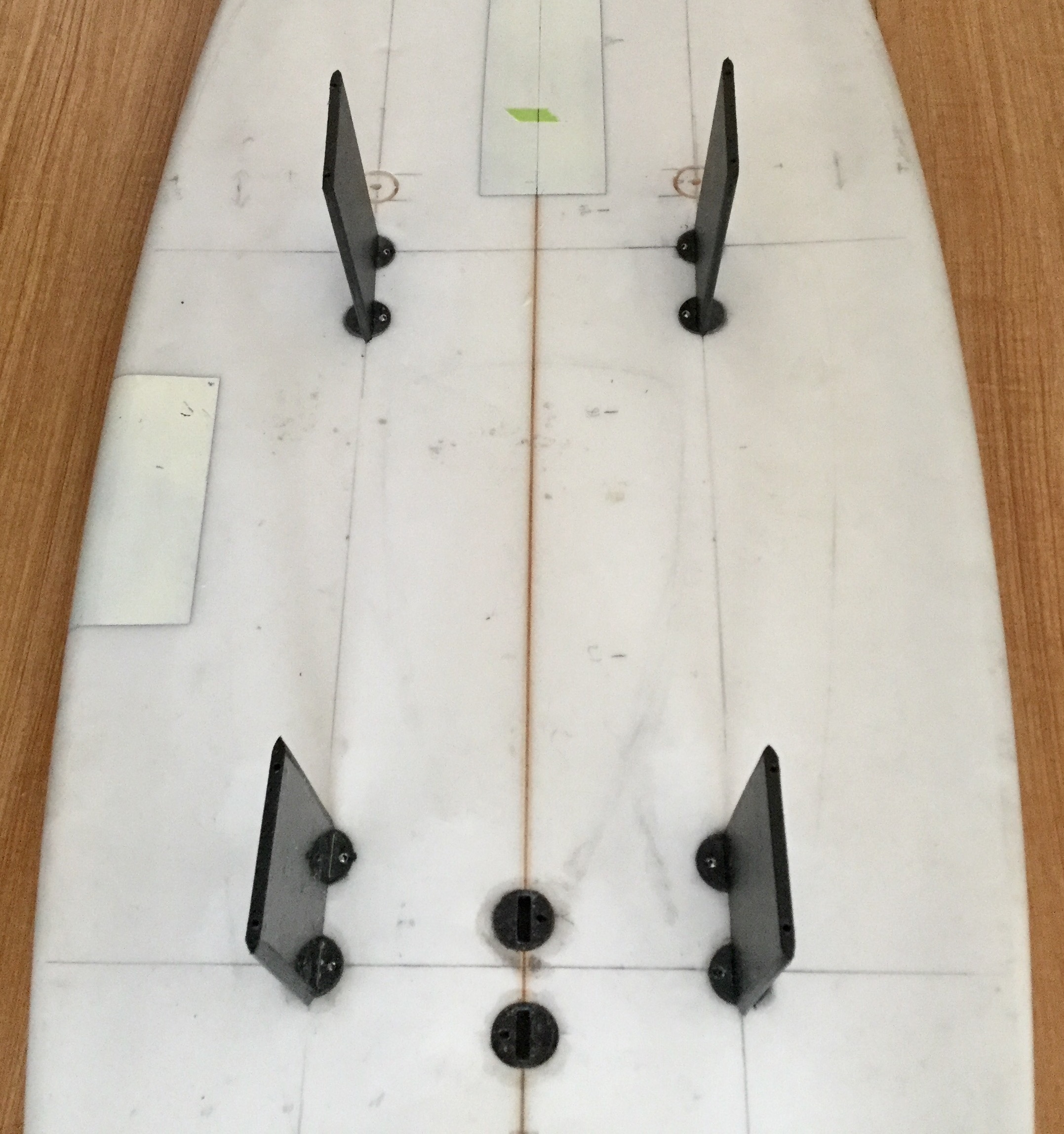
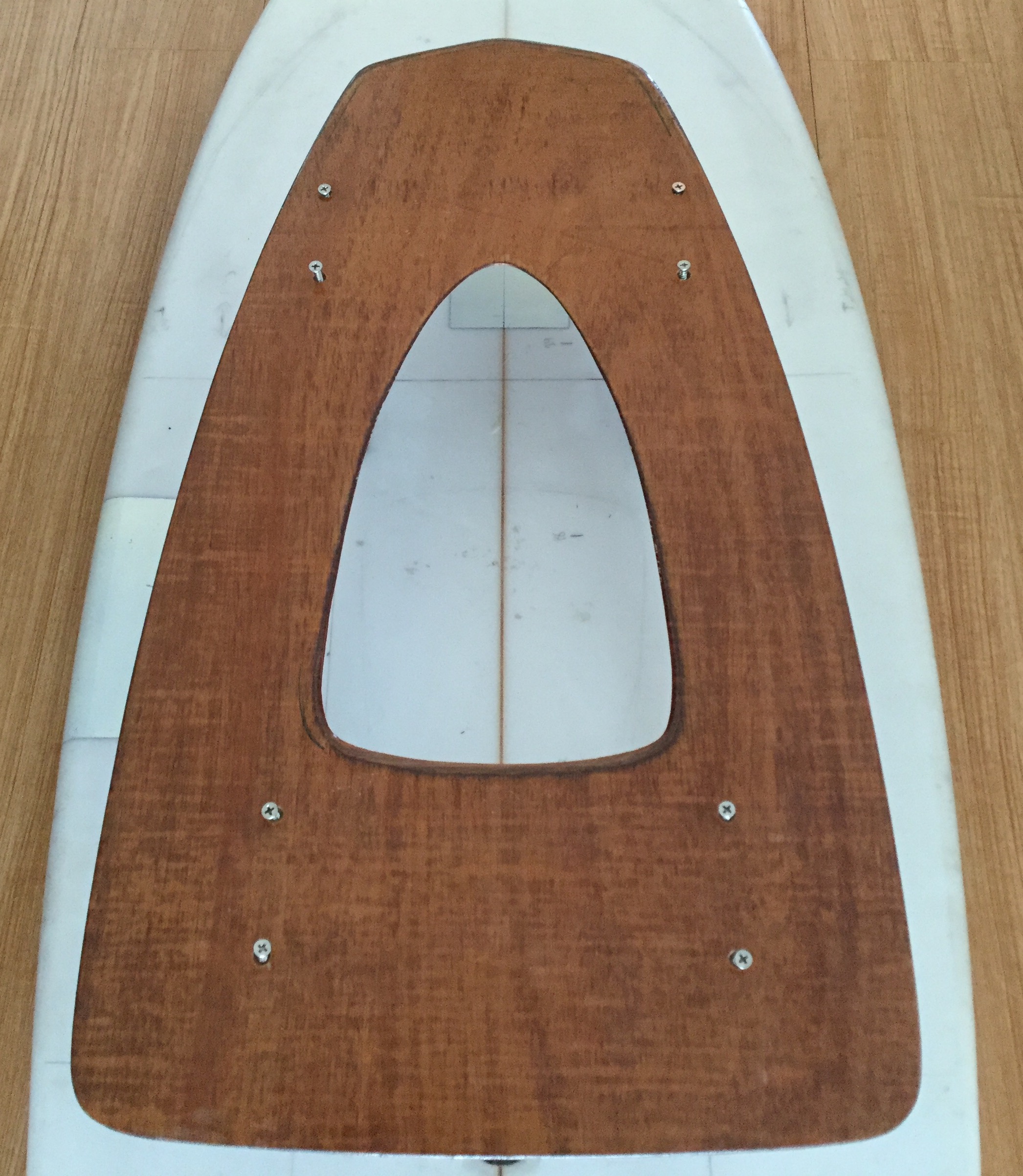
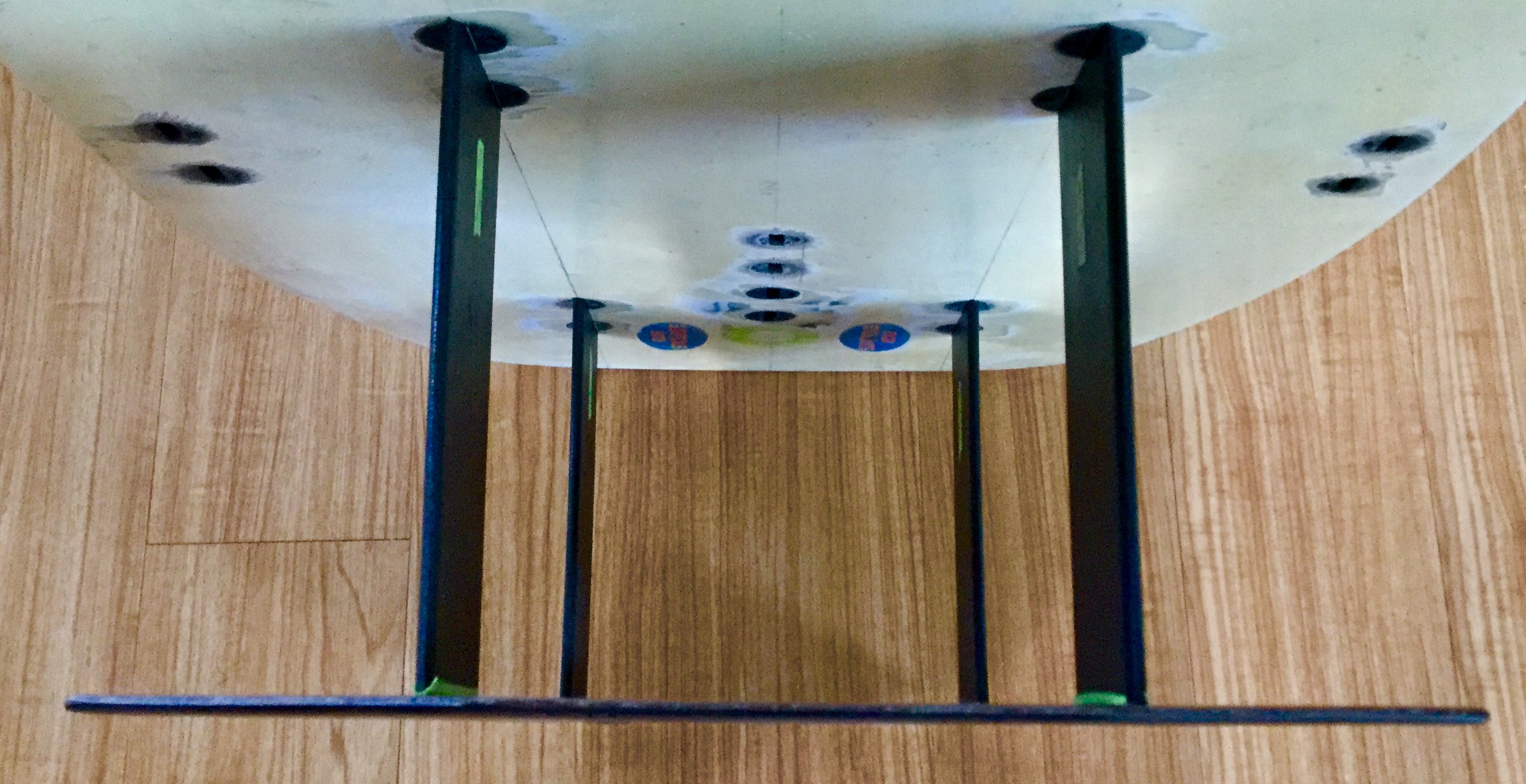
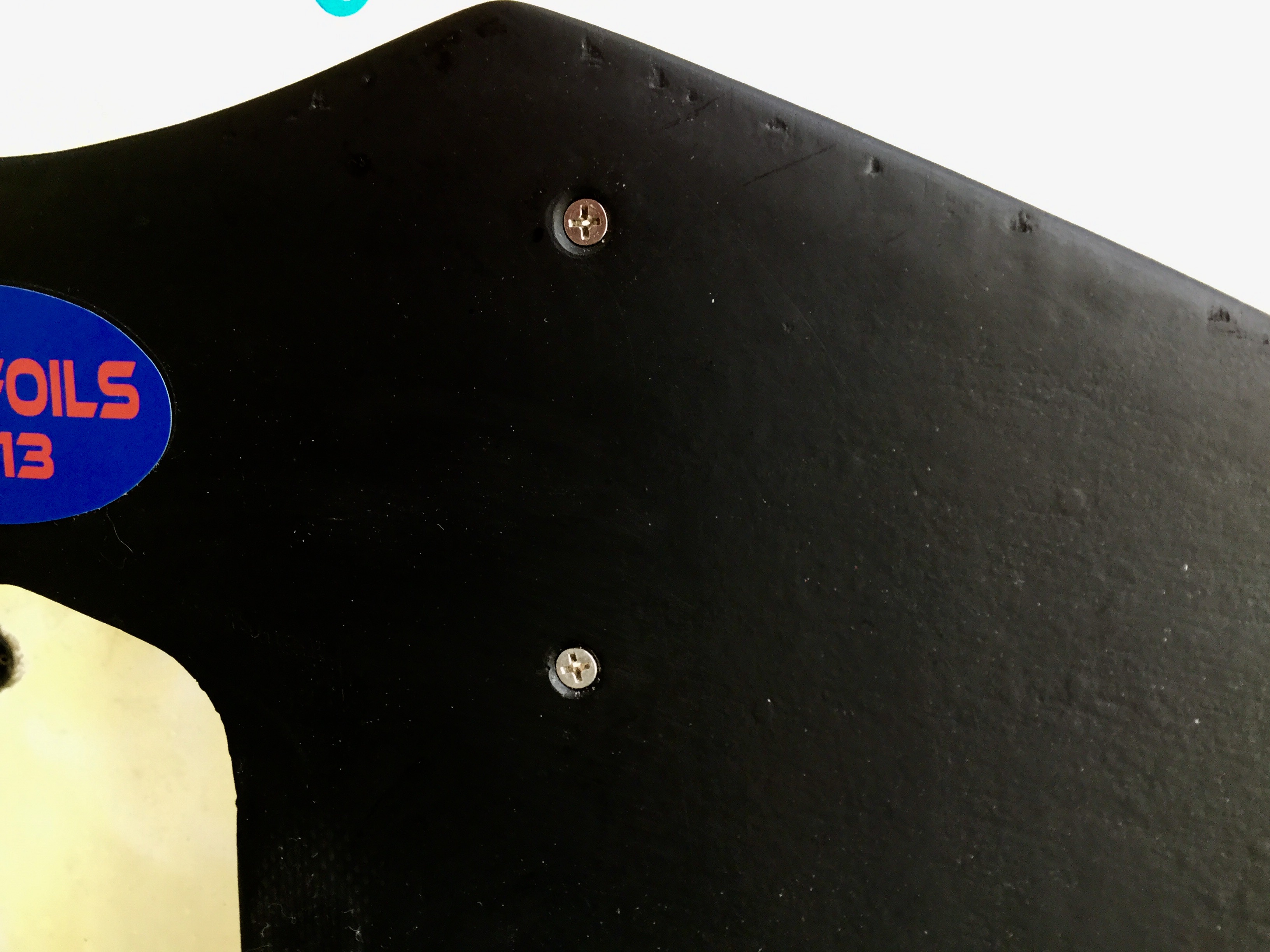
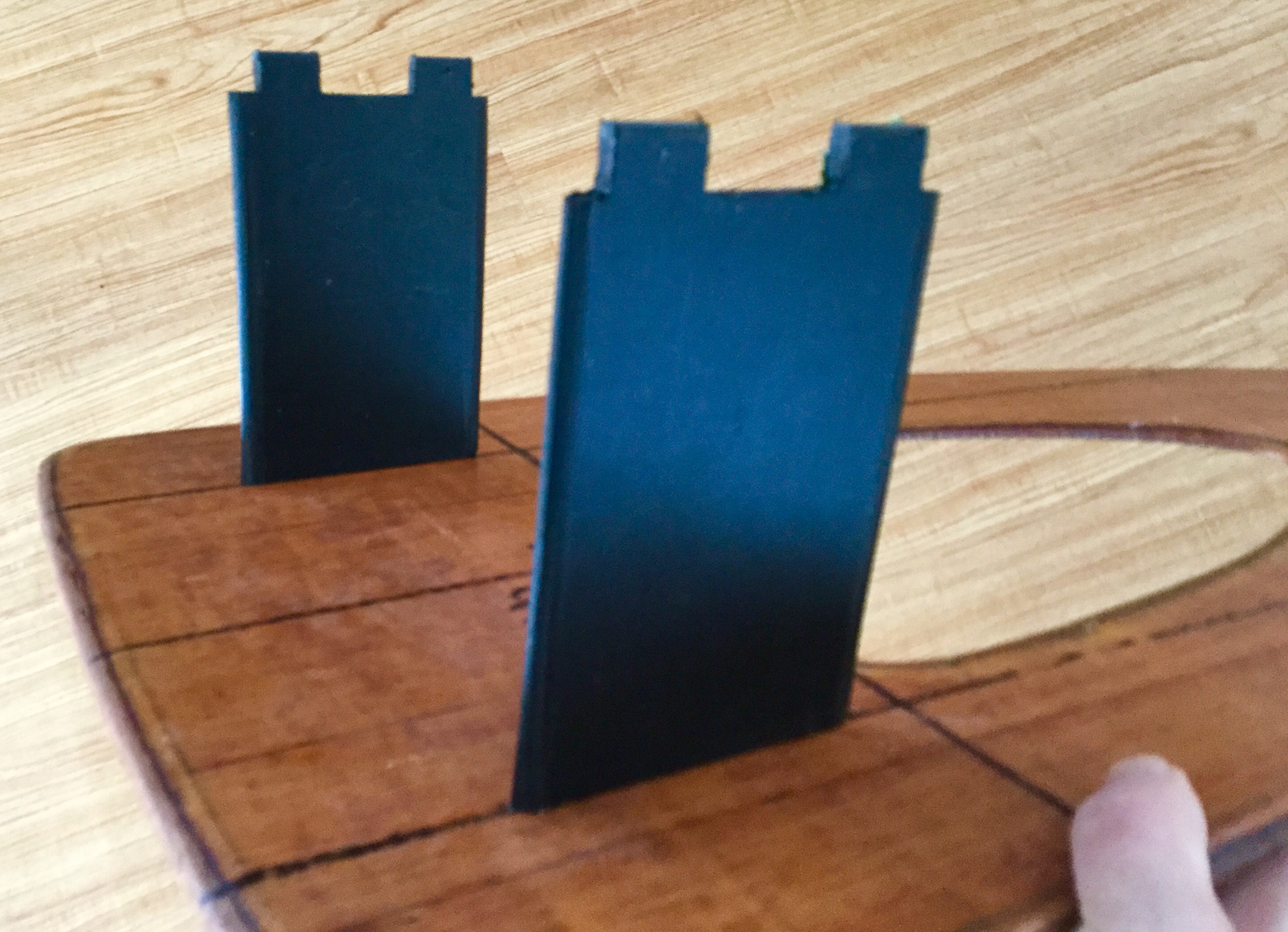
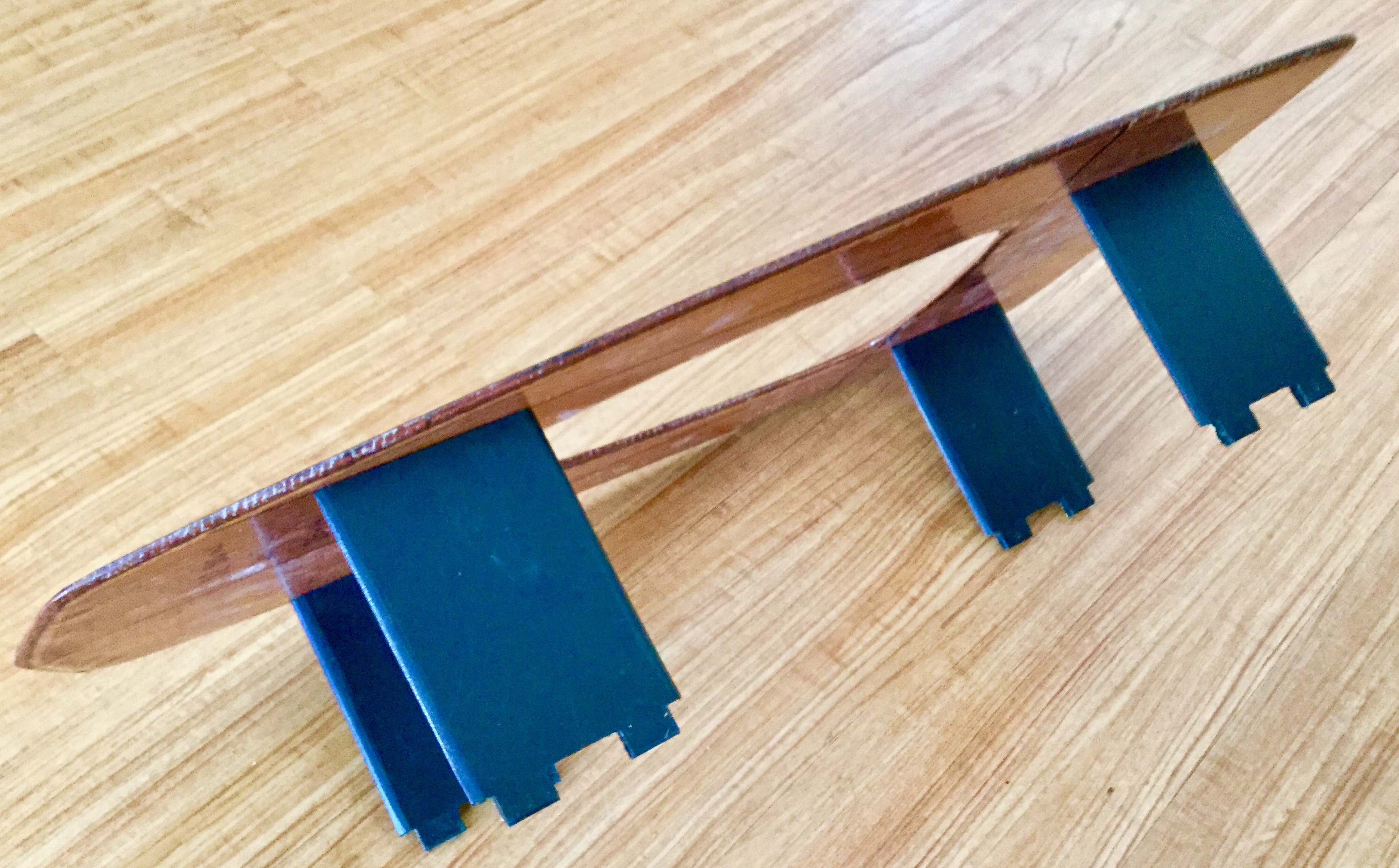
Seems like a 10" Fins Unlimited box might give more strut base with adjustability.
Let me discuss the adjustability issue.
If you’ve already found the right position on the board, as we did before, then that is where the foil goes in order to synch with the shape of the hull. That’s where it goes to get the best paddling speed and reduce drag.
When you stand on the board you will naturally stand over the foil, if you have a slightly different stance, you don’t need to move the foil, just shuffle an inch or two fore or aft.
Moving the foil makes no difference and then buggers up the sweet spot you found at the start.
It’s like moving the wings on a plane because everyone is sitting at the back, it’s simpler to just move the weight forward.
I get what you’re saying but it’s making it more complex and prone to fail.
I’m going to have to think about this one because I despise FCS plugs. With that said, there are 4 struts (connected to each other by the wing) that have to be installed in the same motion, not just one or two. That makes “rocking” the struts in as we would with Future or Bahne boxes a no-go. Unless we use finplates front and rear on a Bahne box.
The Gearbox fin system might work except that’s a small footprint to be handling that load. It uses a longer full-length tang so it would be less likely to break away.
The lightest and strongest install would be a rout-in glasson. Rout a slot that’s 1/4" wide, 3" or 4" long and as deep as you dare go without coming through the deck. Then you glass the tang of the fin or strut in and it stays there forever.
The thing is, once those struts are on the board that’s it - there are no alterations to the struts, and I’d have to screw the wing on every time. I guess that’s it’s no different than plugging the wing assembly in and relying on the grub screws.
Fark it, the board is a throw-away anyhow and I’m just doing a proof of concept experiment. I might as well commit and send the board out in a blaze of glory.
How long did you say we wanted to make the struts?
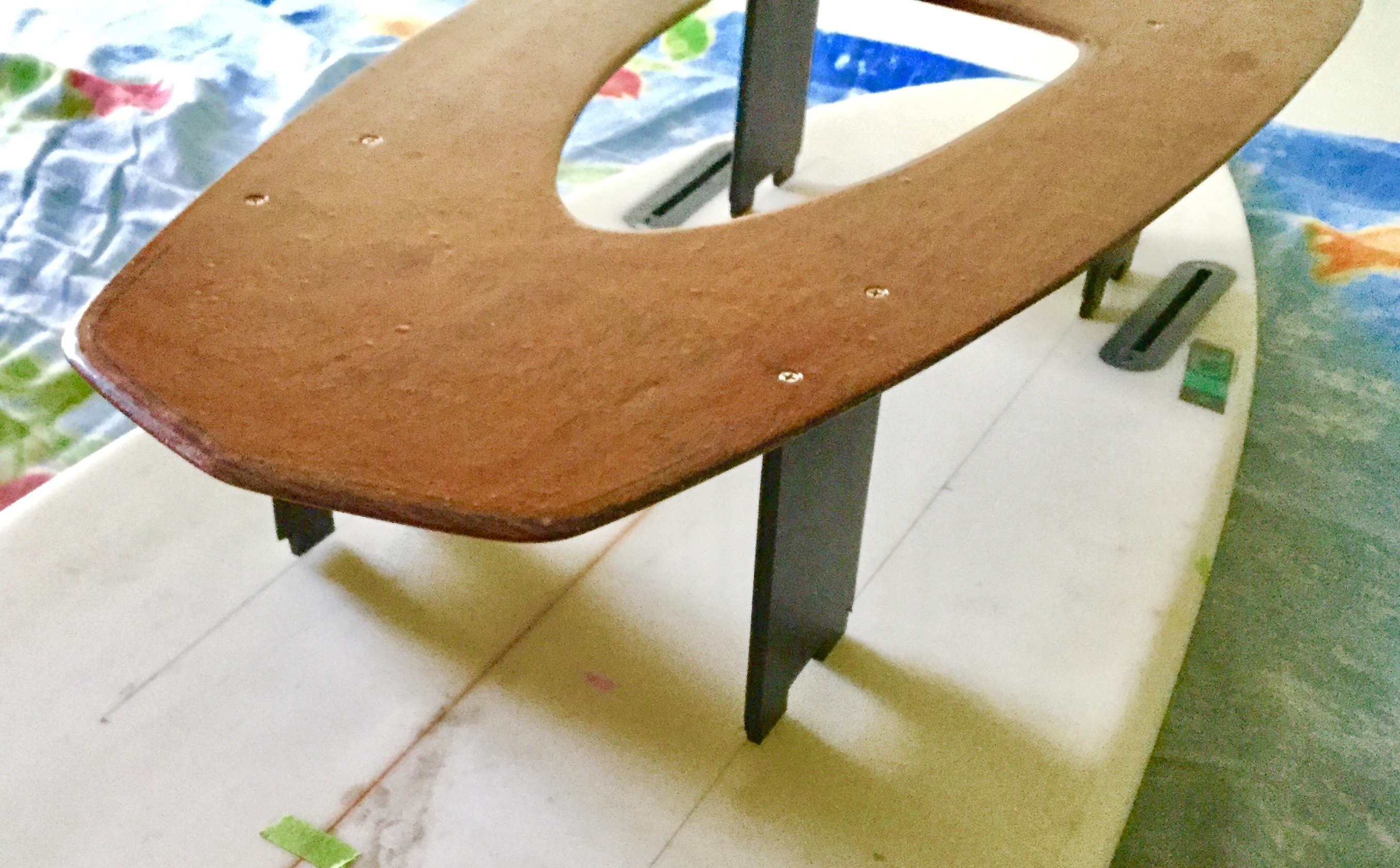
I’ve made dozens of these struts in different lengths and materials and 8" or longer is easiest to ride first time and polypropylene of polycarbonate are the best, Just any material that’s stiff and if you want more stability use a thicker, maybe 10 mm sheet and trim down the tabs to fit the plugs. The base width of the struts are 4 inches. FCS tabs are 7mm so you can get plastic or ply that fits directly into the plugs.
The shape of the strut base with the tabs is the same as any FCS fin so for installation you can use the standard FCS bracket, or a fin or the strut to get a 90 degree angle on all plugs.
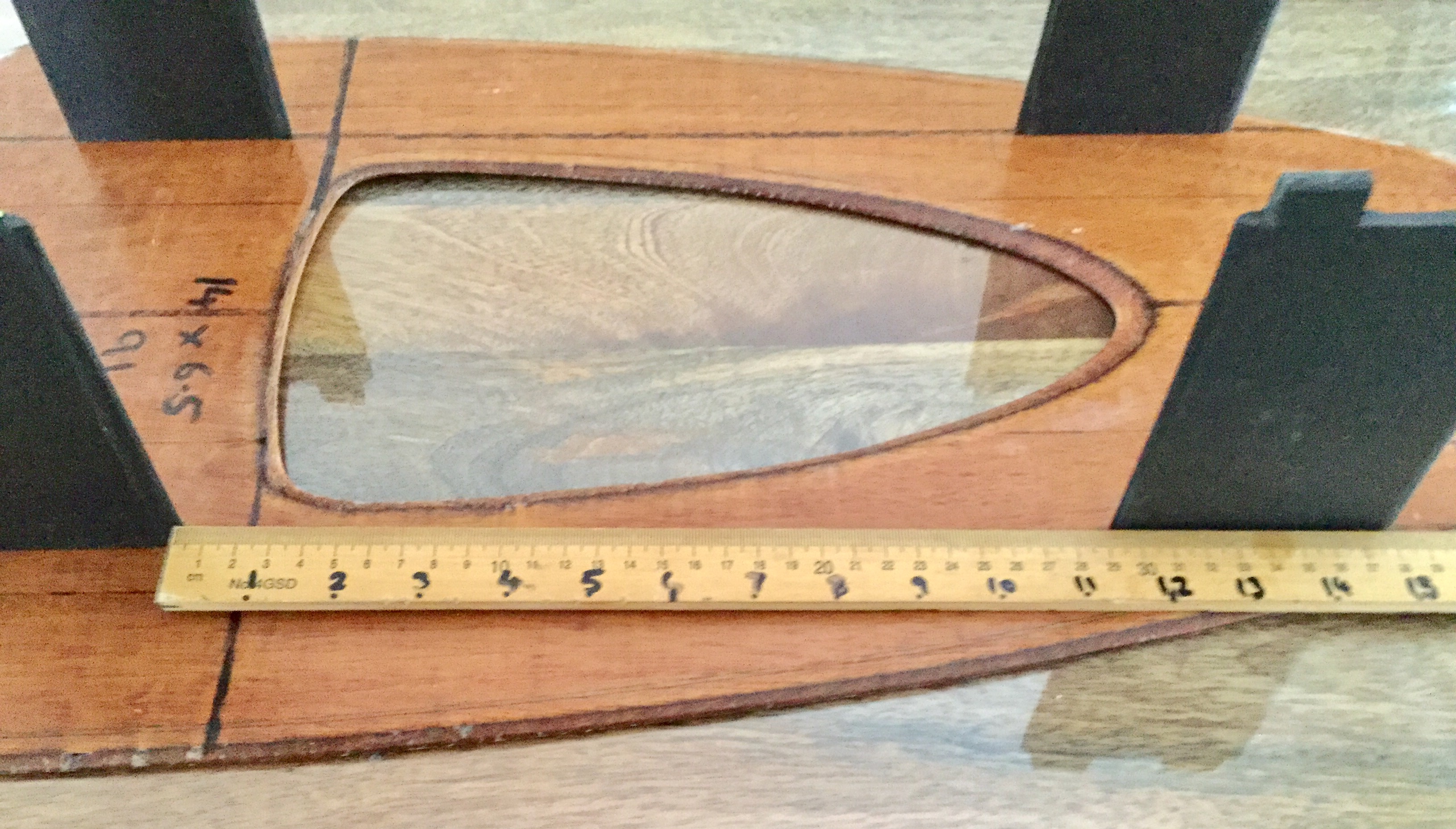
I chose an arbitrary position for the struts on the foil and they’re approx the same distance from either end of the foil and the inside distance between trailing edge of one strut and leading edge of the other is 11.5 inches.
Once you cut out the 4 struts, screw them to the foil by drilling thru the foil and use stainless steel screws.
Position the foil and struts in the middle of the area on the board that we measured earlier and line up the strut tabs on the pencil lines on the board.
I know two plugs can fail on a fin but now you’ve got 8 plugs spread out over a wide area and any extreme water force is usually momentary and the foils setup does flex under pressure but over 5 years I haven’t had a snap or broken plug. Cutting down the area of the foil does reduce the drag too.
Another benefit of the FCS plugs for foils is that you can unscrew the struts and foil and slip it all into a shoulder bag or under the car seat. Everything fits flat for storage or postage.
The rails and tail are hard down and sharp, but does go to more of a 50/50 towards the front.
The idea is that I wanted to minimize any suction that would make it more difficult to come out of the water.
the scallops on the back were hogged out to enable better range of motion for my legs while kicking.
If I made a second board, the transition in the back would be even more abrupt, whatever I could get away with without creating suction because my leg motion is still hampered some, (This is not something that needs to be addressed if you are planning on using your foil to surf standing up)
I will try to take some pics of the rails and post them later today.
Brett, I don’t understand how the femestrated (sp?) foil works and how it helps the Newtonian foil? Is there a simple explanation?
All the best
Surffoils, Thanks once more for your generosity and innovation!
Re: finboxes,
Fcs simplicity is good and using familiar procedures and materials is good.
There are plenty of viable alternatives.
One is futures, obviously. You could make the connection by installing the front struts to the board, then the foil with back struts already attached could be inserted, and last screw the front of the foil to the front struts. Or you could do futures in rear and fcs in front.
Another is through-bolting through an insert that reaches all the way from deck to bottom. With 1/4" or 6+mm screws, this would allow using only one screw per connection.
A hybrid method worth considering:
Install fcs plugs as described, then route through the deck down to the plug and fill with epoxy, cap with a glass patch.
Next drill through the plug from below, all the way through the deck.
Insert struts and drill from above into one tab of each strut.
Remove struts and tap for your screws with a bottoming tap.
Now you have a foil that assembles with only 4 screws, and still has tabs to make alignment easy and handle torque and rigidity. Yes you would be weakening some tabs, but replacing lost tab area with larger, strong screws.
More of a pain to make, but perhaps a couple hours worth spending if you expect to disassemble often.
I have a kitefoil with 11 screws, at least 6 of which I often have to deal with for transportation… leading me to this idea, in case it appeals to anyone. The original idea is good, but I get tired of screws.
With a little thought and modified finboxes I am sure you could get it down to 2 screws and still have a solid connection.
One is possible, but 2 appeals for security.
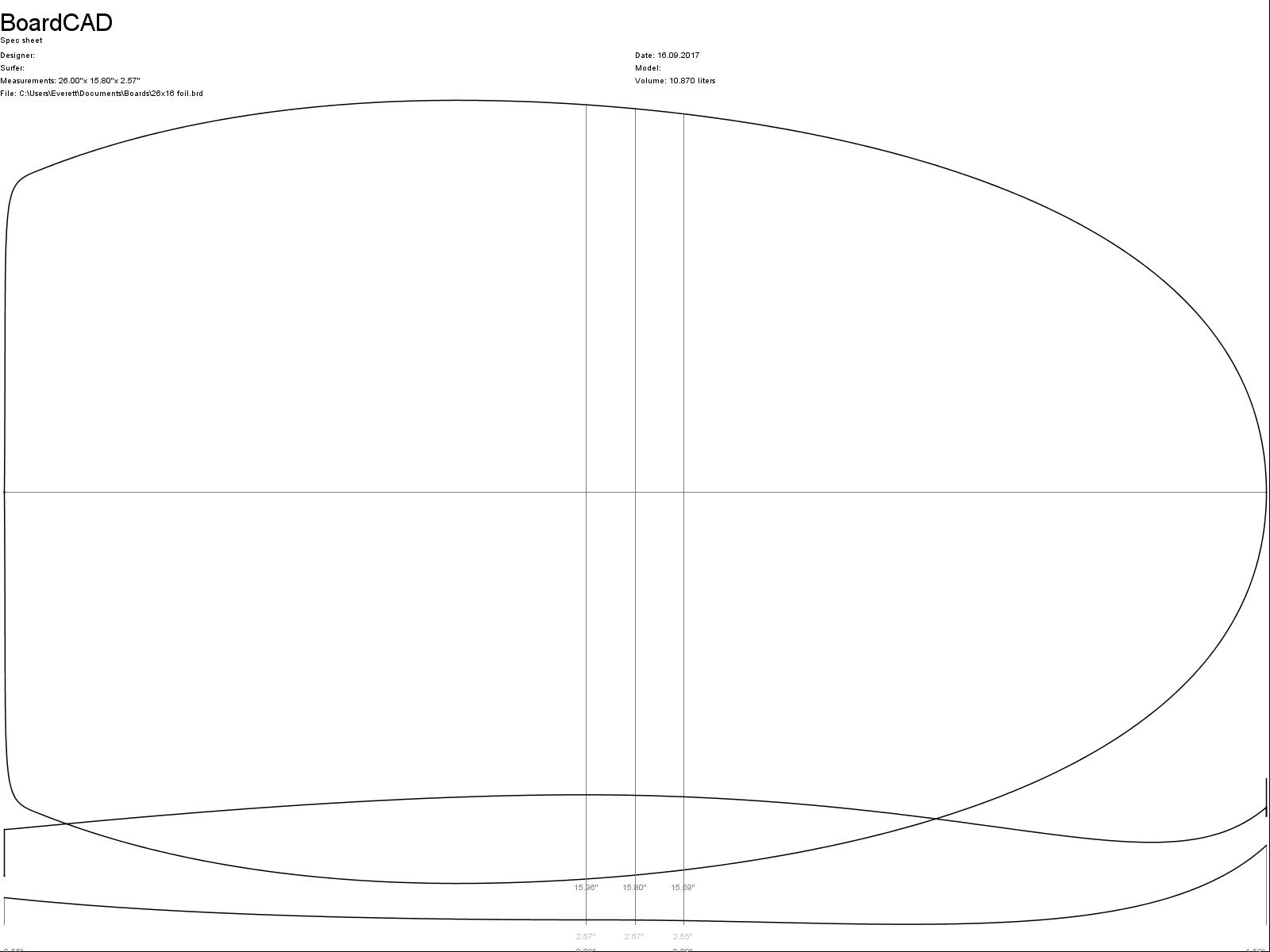
I made a 26 x 16 foil on boardcad. Made the nose a little rounder. Didn’t change the thickness profile, so disregard it. Don’t know how you made the pdf of the outline, gdaddy.
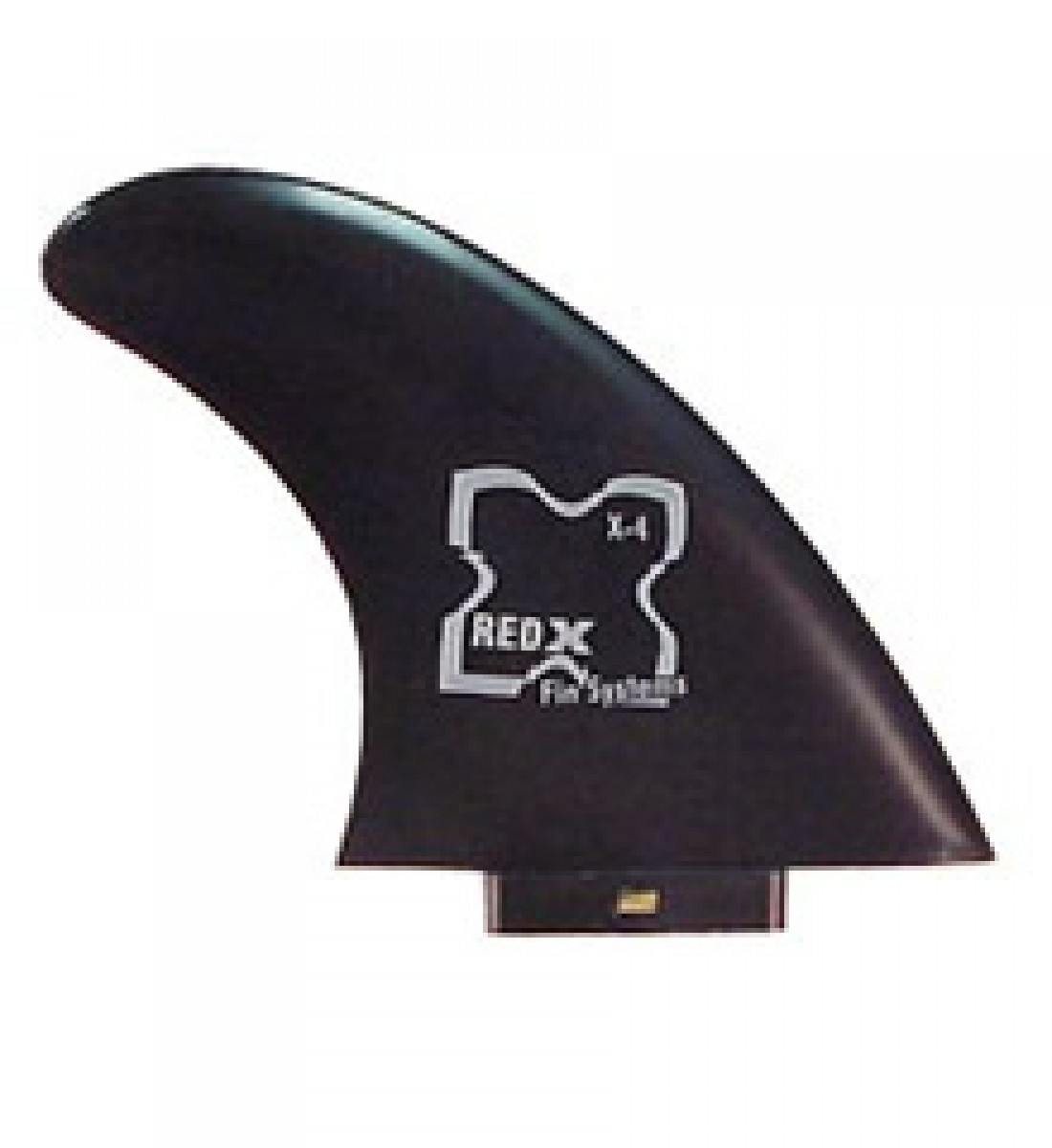
I was thinking that RedX boxes might be the box to use if you’re after a through-the-deck connection. it’s kind of like a smaller version of a tuttle box that the kite foil manufacturers use. it’s an easy single tab to make, too.
As far as unscrewing the parts, I’m wary of screwing/unscrewing over and over again, since the threads in the struts could fail w/o a metal nutsert or nut. RedX uses a brass nut placed in the tab to accept a machine bolt from the deck.
Brett, any comments on how twin struts compare to quad struts: drag? sturdiness?
moved to end…
@ gdaddy
I was thinking install struts in the FU/Bahne boxes first. Attach foil to struts after.
Maybe use some type of screw slots, rather than holes, in the foil.
Yah, I’m leaning toward that as well, not the least reason for which is I can use 30% thicker struts (3/8) and put a real foil on them. In ply, so the weight will be about the same as 1/4" fiberglass. Get a wider footprint against the foil as well as a deeper full-length tang connection with the board.
At the moment I’m considering using the shorter 6.5" Bahne baxes to save a little weight. With that said, if I already KNEW exactly what I was doing with placement and strut length I’d just rout them in and be done with it.
I know I proposed some alternatives that may be unneccessary, but also want to point out that if you need to have some fore and aft adjust-ability in the foil, you could simply drill more holes in it, or in the bottom of the struts, if you ended up needing to move the foil an inch or so fore or aft. Imagine 4 or 5 holes holes in line in the bottom of a strut, 3/4" apart on center…
From what surffoils wrote, and my own experience with conventional foils, moving the foil or your feet as little as an inch may be all that is needed for getting the trim right. The extra low aspect ratio of his designs, in comparison to the airplane-shaped conventional ones, will probably make exact placement at least a little more forgiving, mainly because any camber that develops from flex under higher load should tend to move the balance point aft, in opposition to the forward pitching moment that comes with the increasing lift as you pick up speed (which is a challenge with conventional foiling). Sorry if that is redundant.
Guys, I’m heading out for a surf trip with my sons for 2 weeks of school holidays so I’ll let you sort it out. I’ve rushed through it but you’ve got all the essentials.
Now should we head south to Bells Beach or north to Burleigh ?
Good for you and your boys.
All the best on your trip
Thanks Greg, you guys know what you’re doing and it will be good to see what youve come up with in a few weeks.
Brett.
Take care of that shoulder Brett.
Thanks very much for your input, Surfoils. I look forward to taking the discussion up again when you get back.