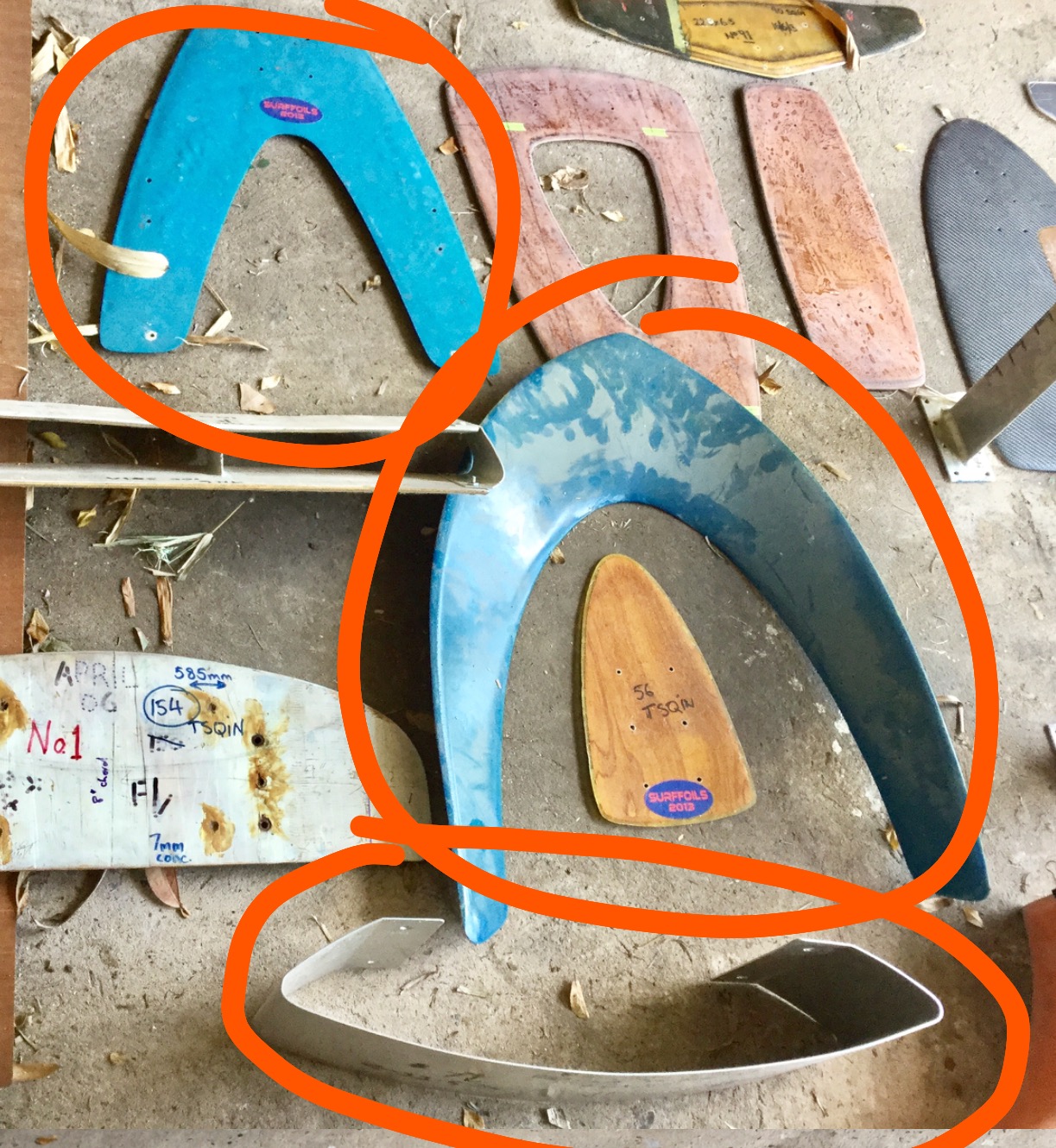
Surffoils, in the pic of your many foils there are a few that look like simple elongated “C” shapes that you attached to the bottom of the board resulting in a foil parallel with and close to the bottom of the board. How did these work?
Then it’s a perfect board for foiling Adam. You’re one of the creatives here that will jump on this foiling thing and develop it further.
I’ve got my ply and I’ve marked out my wing. I haven’t cut it yet, though, 'cause I want to make sure I don’t get ahead of the process.
I just ran up a wing on Boardcad with similar dimensions as the Gofoil Maliki and it ends up with ~180 square inches, so that’s a lot less (like 45% less) surface area than this wing. I was thinking about the pitch aspect and comparing the stability of a wing with a 26" chord with their 8" or 9" and its no wonder they need an extra lesser stabilizer
tried but couldn’t direcly embed this instagram video. this spot is near me:
https://www.instagram.com/p/BY-9MU4he7x/?taken-by=punkerpat
The regular foils I’ve shown are around 230 sq in., the Bernoulli foils are very effective lifters so can be difficult to learn. They are now making them more stable by increasing the chord, decreasing the thickness, moving more area out to the tips and reducing the mast length.
The inherent stability of my long chord foils means you’ll stand up & foil on your first wave, possibly get the feel of it instantly, then a 2 or 3 wave learning curve to get your feet sorted and then it’s all about riding the lift.
Stick closer to the top of the wave for maximum lift and plan ahead to go around foam or floater through. Peel off a wave and keep the foil level so you can keep gliding.
If you’re progressing beyond your foil design, build another one.
Gdaddy, what shape did you decide on ?
Having flown for a living I’ve often thought about what a small wing would do to lighten up a board. I’ve pictured something foiled like a wing - the width of the board - but very close to the bottom so as to be unobtrusive.
Sorry I haven’t been able to contribute anything to this thread yet (not that surffoils needs any help).
I’ve been dealing with the hurricane and it’s aftermath. I didn’t have much damage to speak of but it’s been a pretty stressful week nonetheless .
I have been following along…
One thing I would like to add is that if you end up making a foil with two wings and a fuselage it is important to note that the back wing is not perfectly inline with the front one they are I think appx 3 deg off which forces the rear downward relative to the front.
this has the effect of causing the foil to want climb constantly…THIS is the main reason they are able to pump to stay aloft because they are essentially just unweighting the front and allowing the foil to do what it wants to do naturally.
This is also why you see that the foils on Kai’s boards are mounted almost all the way in the rear and he stands out over the front of it.
I have seen a foil that had both wings in line, but the foiling on the rear wing was reversed, I’m not sure how it worked but the theory makes sense.
Another benefit of this set up is that you are much less likely to do a sudden nose dive if you get your weight too far forward (it happens lol)
It was the realization of this dynamic that led me to develop my latest foil shape. Up to that point I tried to maintain a sleek inline profile to limit drag.
Waaahoo, that lowest foil is the first Foil I made, it’s 3 mm Aluminium and sits 5 inches off the hull. One foil was set laterally in front of the side fins and the identical foil was set across the wide point.
And it was perfectly stable. Each foil was 22x 8 in so about 350 sq in total and it easily lifted and planed on the surface in small surf so I learned that 350 would be the upper limit of area unless the wave was slower or the rider heavier.
I think the real problem with foils set too close to the hull is that there’s going to be a feeling that the rider isn’t actually foiling above the wave. It’s one thing to know it’s true but people will want to have a clear sensory perception of flight and disconnect from the wave.
I think for casual foilers the minimum distance is about 8 inches, and 12 inches is a good height average.
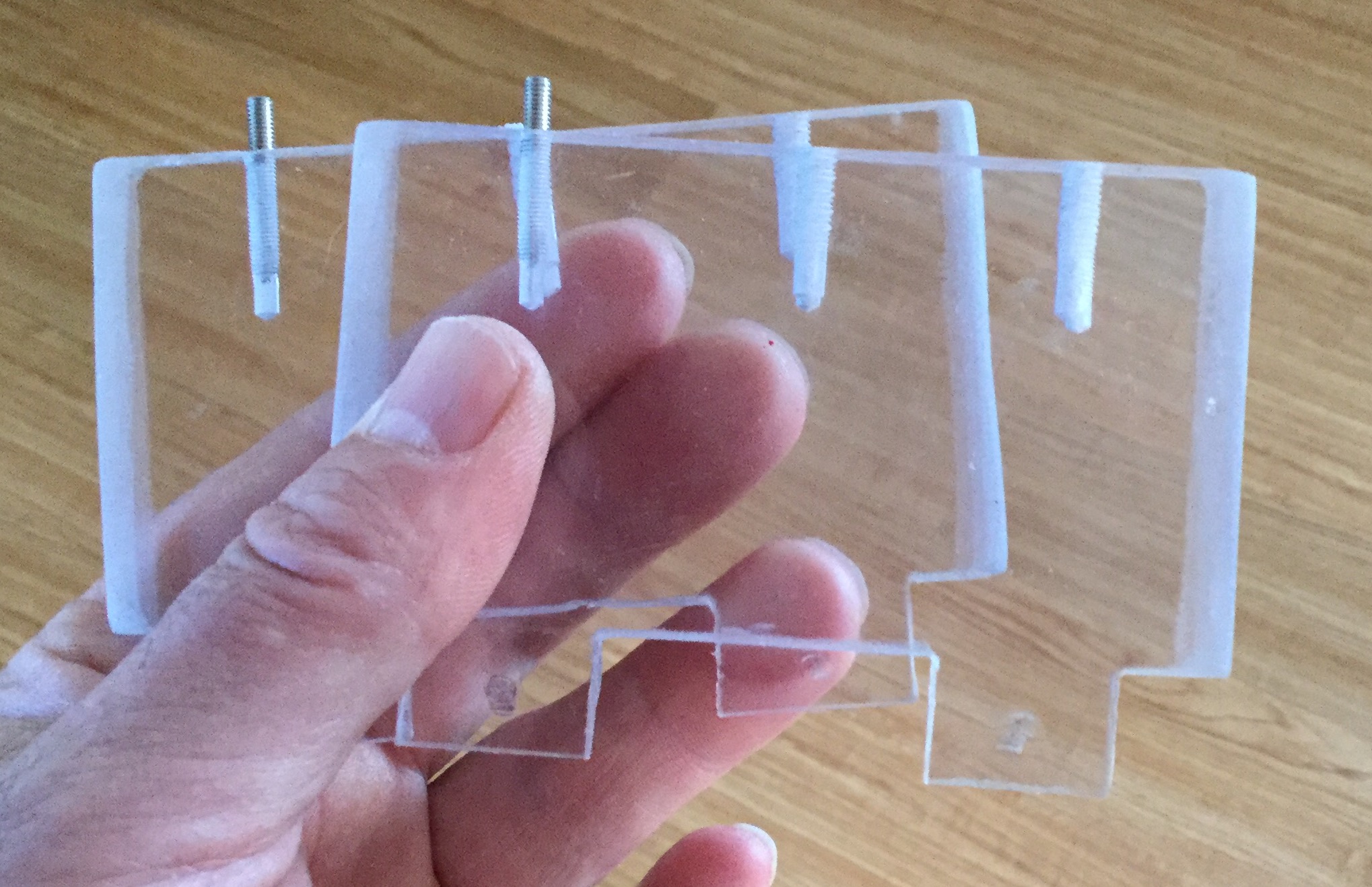
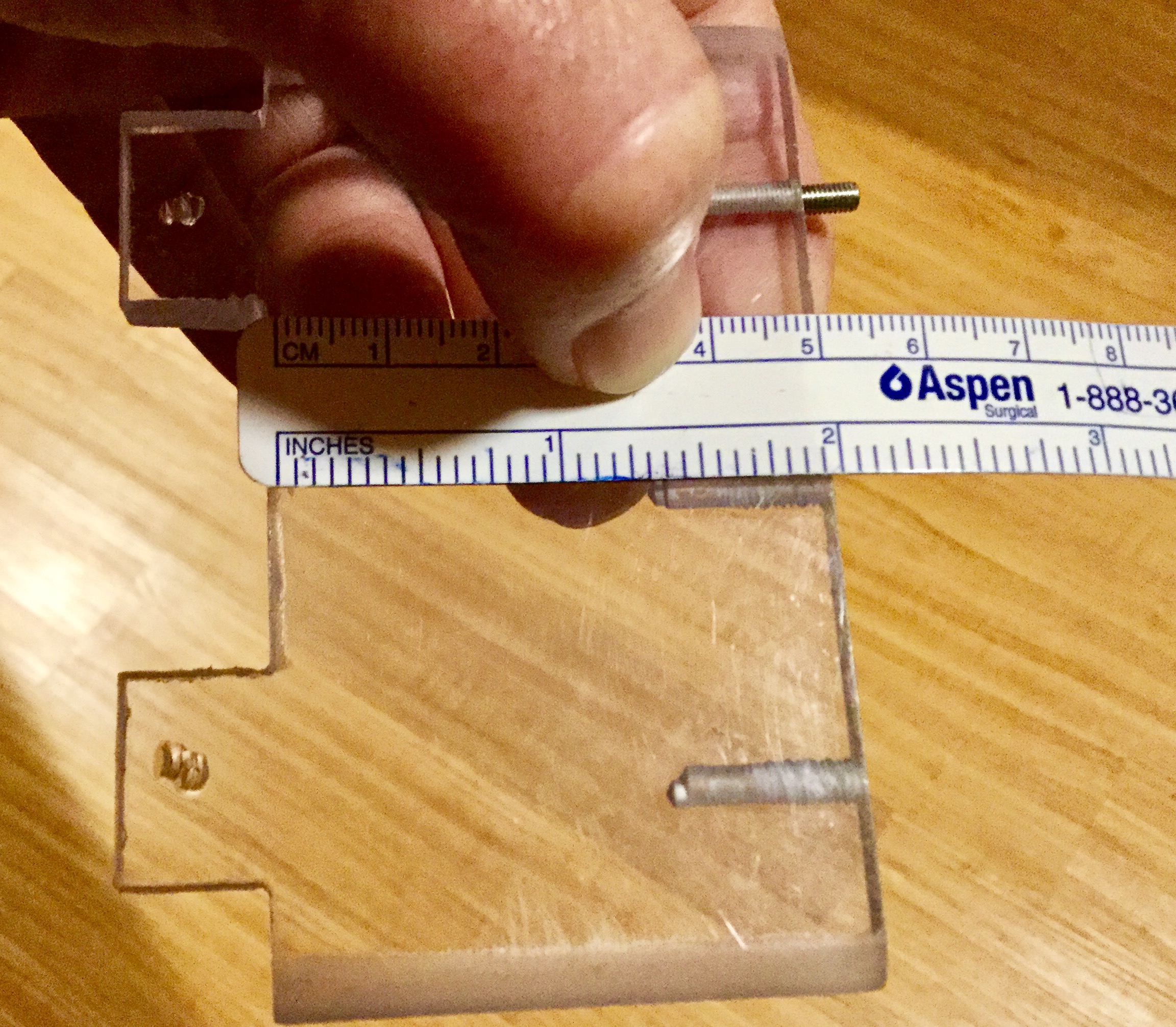
I ride clear polycarbonate 2 inch struts ( see pics below) but that’s because I’ve been foiling exclusively for many years and there are other benefits when you ride that thin line of flight.
I understand what you’re saying but you’ve jumped way ahead and that arrangement is at the highest level of surf foiling.
I know better than to solicit expert advice and then ignore it. I’m following your program. You laid out the 26x16, so that’s the shape I’m going to start with. I have to wait a couple hours this morning before I start running any power tools, lest my neighbors get upset with me.
My next question is - for a raw recruit - how do you recommend foiling the leading and trailing edges? Then we can get to struts.
The short strut and piercing variations really capture my imagination, but obviously those refinements come later.
Going back through this thread I hit the “flat spot in the rocker” comments and started thinking about that. We’re all using conventional rockers for our initial intro-to-foiling experiments, but I can see how the use of long-chord foils might influence rocker design on the boards as we get into designing and building dedicated foil boards. As least for the short-strut refinement that Surfoils mentioned earlier, where the slot effect might come into play. Prolly not an issue with the longer struts when the wing is operating below the turbulence from the hull
Really, if all you’re using the board for is to get paddling speed up to engage the foil then the design of the board should be optimized for that much more limited function - meaning fewer compromises WRT how the board would interact with the wave if there was no wing. Template, thickness flow, bottom contours and even rail shapes. What’s the optimum rail shape for paddling speed? Spooning the nose to remove mass makes sense. Shoot, for a glider-oriented design it might even make sense to add weight to the bottom of the board near the wing to provide more leverage to the cockpit area of the template. .
My imagination is working overtime at the moment. Hampered by my lack of understanding of the physics of either surfboards or foils.
It is my understanding that wider and flatter are the attributes that are desirable for paddling and catching waves.
I had a board made by Tom Nielson (similar to my avatar) with catching the wave being my primary objective, it is 25 inches wide 4 inches thick in the back and has only 1/4 inch of tail rocker and 3/4 in the nose, oh yeah and it’s only 48 inches long, but keep in mind that this is a prone specific design. it is super fast when the foil is not attached but it doesn’t turn too well.
It looks like bodyboard-style rails, right?
I know Tom Morey has been using undercuts in his rail profiles at the tail for years
Glad to hear you made it through the storm relatively unscathed Dave.
Since I like wide-point back surfboards anyway this wing template really appeals to me.

Gdaddy, last page you asked about Foiling the edges.
With a 4 mm thick foil you’re only splitting the water by 2mm on each side.
On the leading edges foil 1/4 in back top and bottom.
Trailing edges, foil 1/2 in back on the top only.
Choose the pretty side of the ply to be the bottom becuase you’ll see that side when it’s installed.
Here’s my latest foil, just ply and a coat of epoxy resin, no glass.
About making custom foil boards, I have made flat bottom boards with an inch of nose rocker but when I converted an old surfboard and it worked I thought I’m not going to waste time , energy and materials making something new. There’s too many old surfboards that are perfectly suited to foiling.
But yes a custom foil board would be a step up.
That is a big foil at 350 sq in but for a longboard on gentle waves it will definitely get you airborne with ease.
A point about the speed, width and balance. Much like a bicycle, at low speed there’s no balance so you’re no going to carve until you get some speed up. Having said that, you can get some real speed even on small waves with a foil. See how Kai and the other foilers are choosing waves with a long shoulder, not height or power, just get a long shoulder in front of you, stay high on the wave and you’ll get plenty of speed.
Dave, good to hear that you and the family are OK.

Okay so what about the sides? 50/50 like the leading edge or single foiled like the tail? (Your pic looks like 50/50, but I want to be sure).
I’ve already got the leading and trailing edges done - looks cool.
If this pans out I’ve got some 1/8 x 5-ply aircraft ply that I normally use for fins. It’s spendy but the foils look really kewl.
Yes, you’re right 50/50 on the sides.
Let’s have a look at struts.
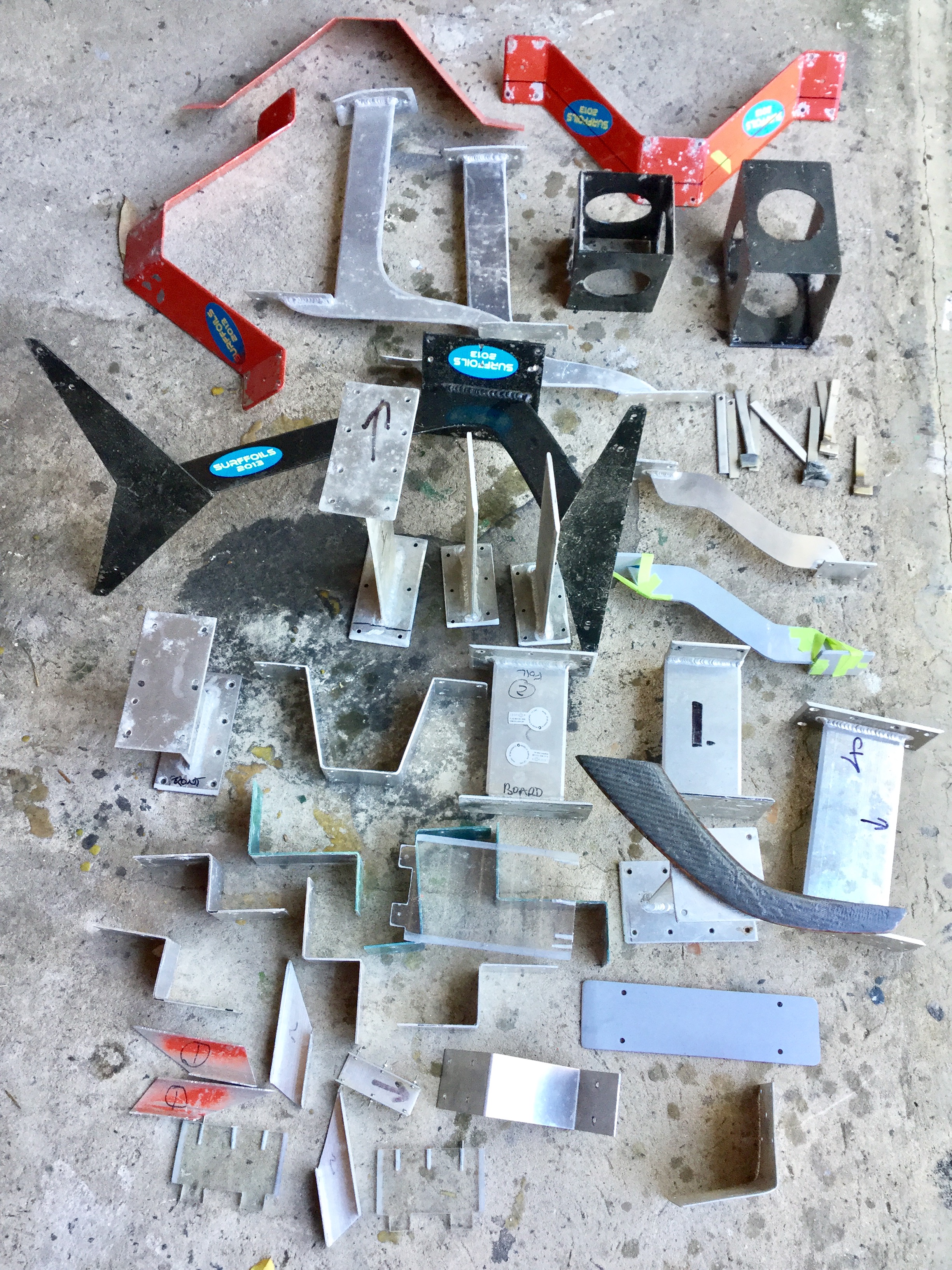
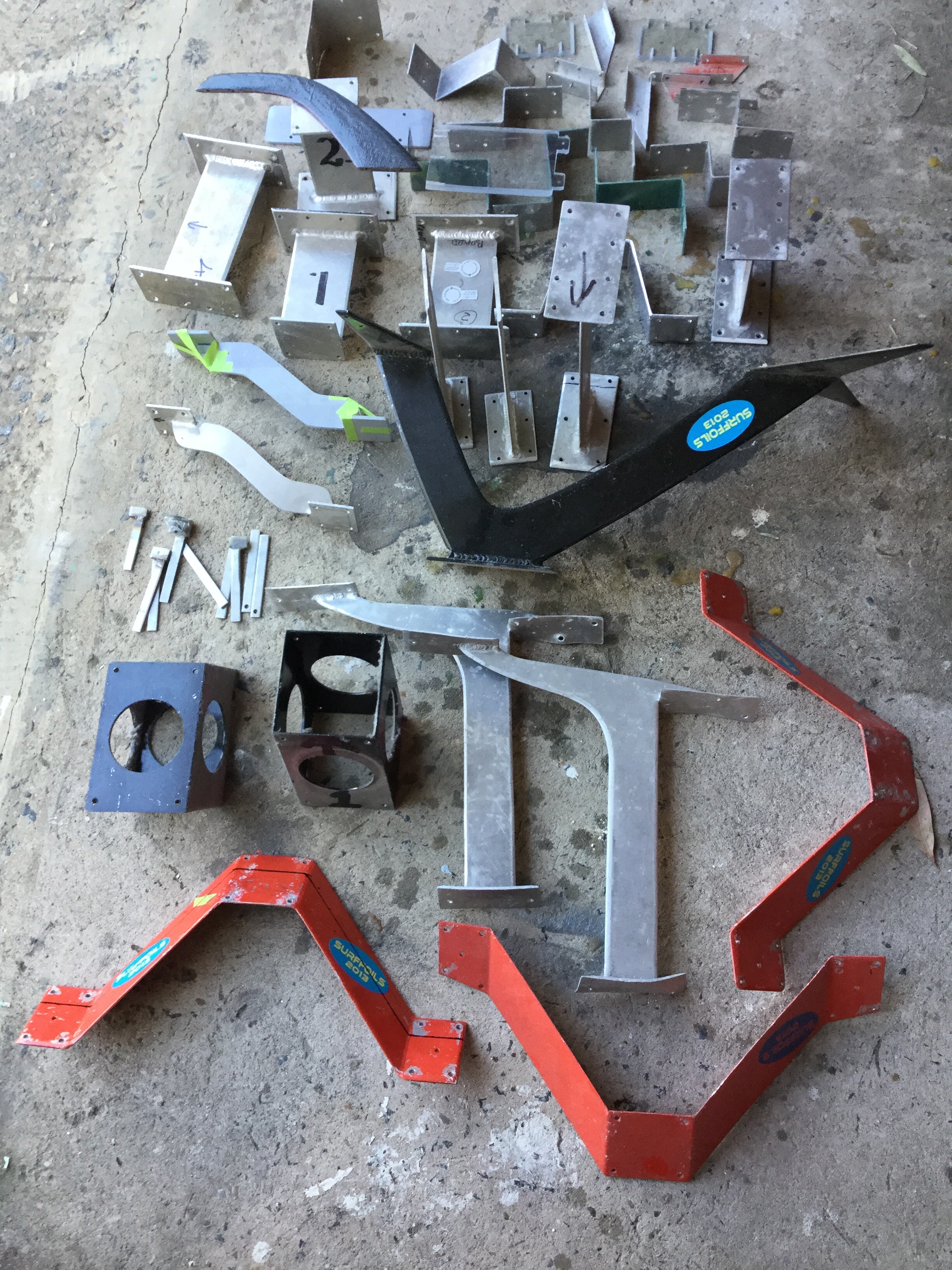
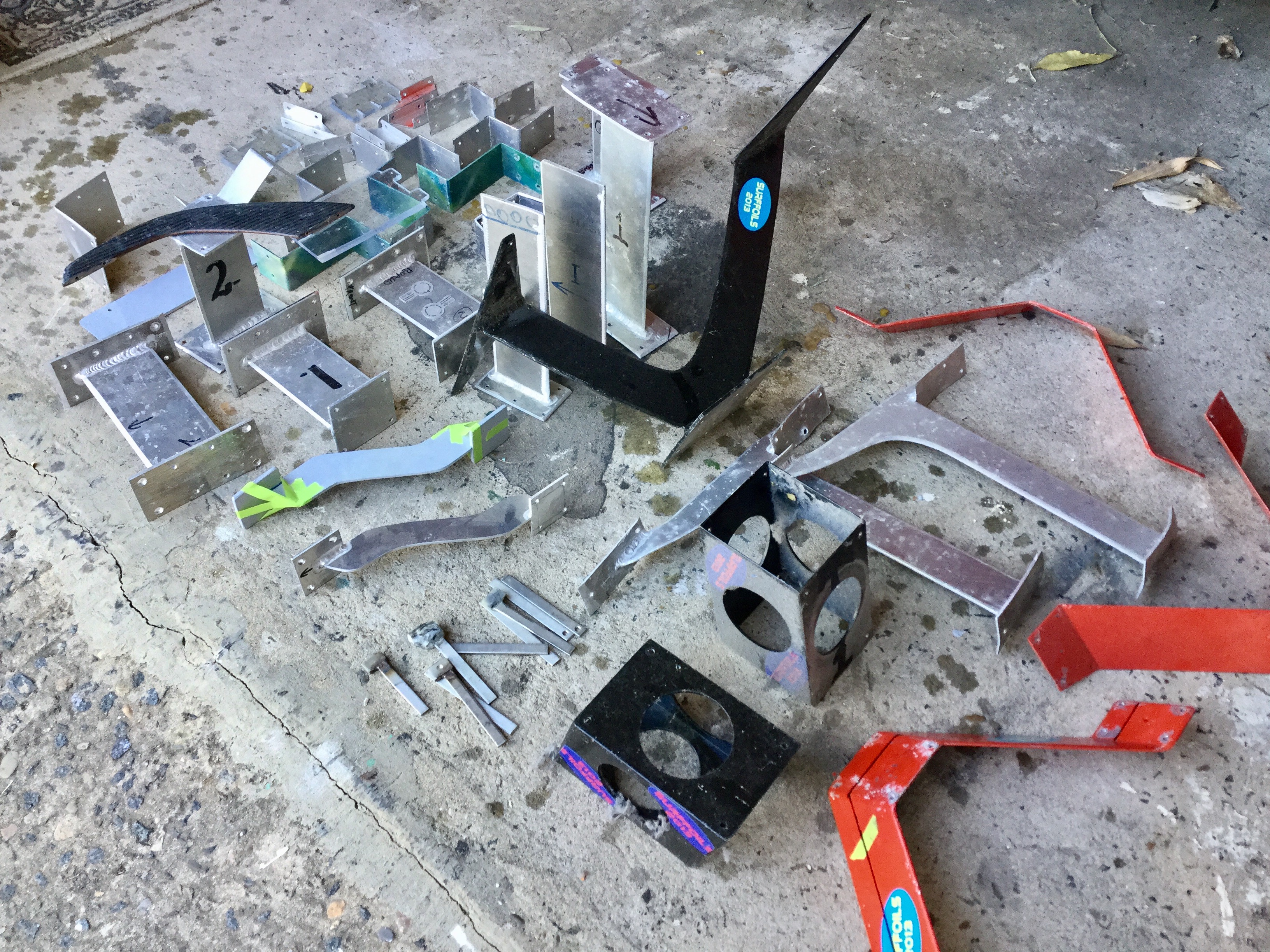
Here’s Box 1 of 3.
Lots of square sections with screw holes for bolts, long and short I-beam Aluminium struts, folded Aluminium ones, single post, multi- level, gullwings, all sorts of single, double, triple and quad versions.
I got my foiling done. Belt sander plus a sanding block and it goes quick.
The big question I have about struts now is how best to attach them to the board.
