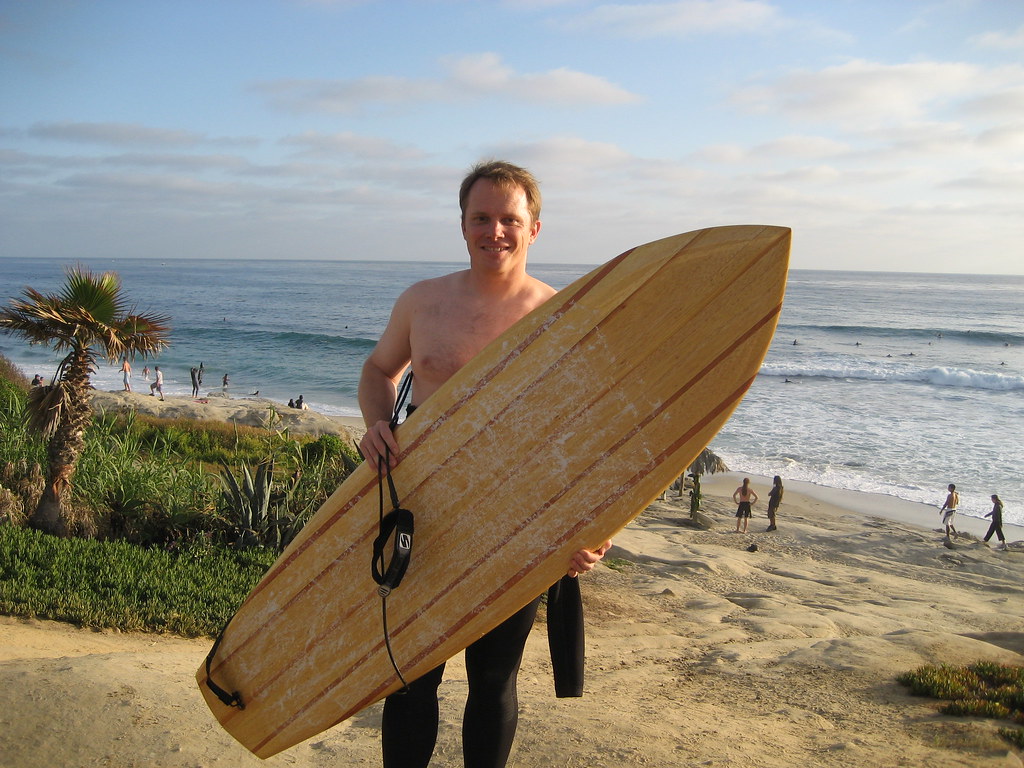
Good discussion! Sorry, I have been busy and haven’t made any progress since my last post. I can’t remember where I saw it, but I saw an image of a balsa board with balsa fins that had the grain going horizontal (parallel with the board). I liked the way it looked a lot. I am going to print out some more paper templates and glue them onto my fin blanks with that orientation.
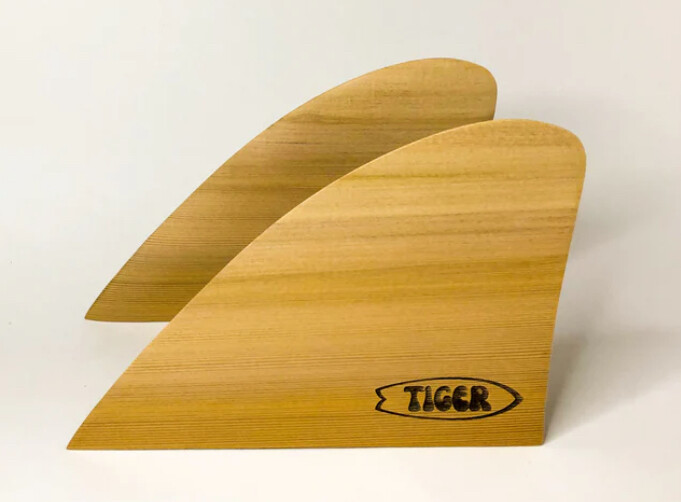
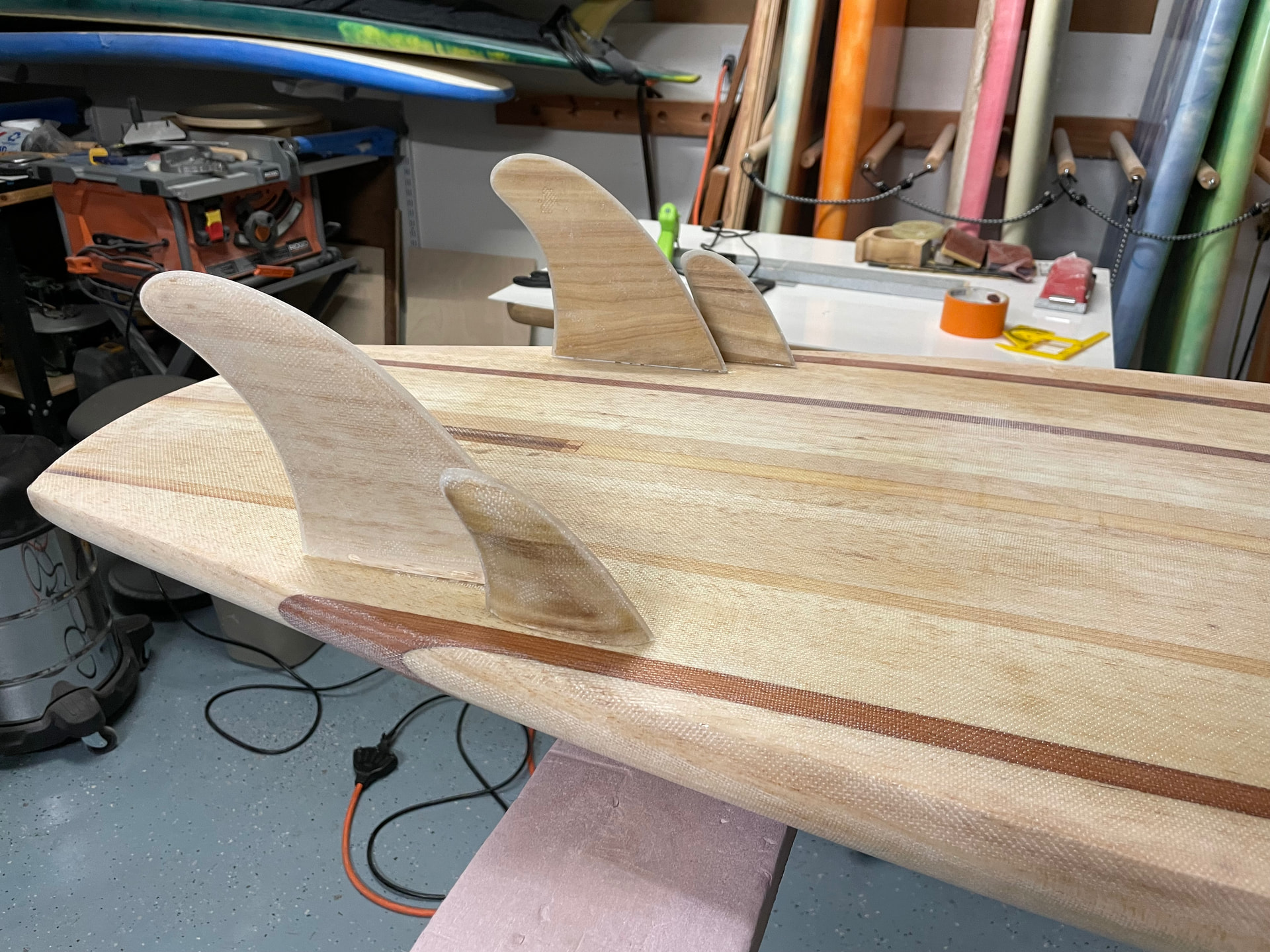
Here’s an example of the grain orientation that I am talking about. I am not worried about the wood being weak. I plan on using plenty of fiberglass, and will rotate the orientation of the cloth by 45 degrees each layer.
I found the old 2006 post that I made when I shaped this board the first time around. Remember, this was my first attempt at building a surfboard. It was fun to go back and read all of my newbie questions. A classic Swaylock’s discussion. It’s too bad almost all of the pictures were lost.
Most epoxy resin don’t go deep in wood even light one except if it’s end grain. Will it set epoxy temp increase wood degas through fiber leaving punholes. Seal wood avoid this problem.
Now you can find waterbased epoxy specificaly design for wood soaking. Diluate to water like viscosity it go far deeper in wood.
Look at resoltech 1010, often use in wood epoxy boat build.
Will Surfboard laminating epoxy bond well with water based epoxy? Or does the water-based epoxy need scoring with sandpaper for mechanical bonding with the laminating resin?
Regarding use of surfboard epoxy to seal balsa, you don’t need a lot of wood penetration to stiffen/strengthen the balsa surface and also get a chemical bond between green sealer coat and FG laminating coat.
No? I wasn’t going to use that fin template. I was just using it as an example of how I planned to orient the grain. Do you not like horizontal grain lines?
Well cure and dry no adhesion problems on this water base epoxy with other epoxy.
I would not use balsa for board anymore and only do wood (veneer) because customer want it. Always ended with water soaking problems. I repair many wood boards with water problems, even those with pawlonia have water problems here and there mostly if wood encapsulated. Only cork have no problems with water.
Yeah, the grain orientation is the problem. Very weak and will break easily. If you like the look then layer it snd create a plywood fin, with the center layer oriented vertically with a slight lean back.
I hear you on it being stronger to orient the grain vertically or diagonally. But doesn’t most of the strength and stiffness come from the fiberglass weave? Especially if I do overlapping layers of cloth rotated at 45 degrees from each other.
Has anyone ever had a fin break along the grain of the wood?
Sorry again about lagging so much on making progress on this project. The surf has been good lately.
I had a yater surftech with a balsa fin. It looked like a balsa fin with a fiberglass / resin halo. But it was really a fiberglass / resin core maybe 3/16” - 1/4” thick with a 1/16” balsa veneer each side then a layer or two of glass over. You could do the same. Thats the only way you could have enough fiberglass layers to give the strength needed for a fin. IMO
Yes that is a good way to do a nice looking fin that is strong. The center is the glass bead or “halo”. If the Veneer is cut accurately it looks like a solid wood fin. By using fiberglass at the center, you can make a fin that will go in a fin box.
I mean I’m just giving my two cents’ worth, you can do whatever you want its your board of course. But in my opinion the grain orientation is a key factor in fin strength, or in strength of anything wood. As a career carpenter working with wood, grain orientation is a big structural factor and is not eliminated by a few layers of fiberglass and resin.
I would guess the fin pictured would probably hold up just fine in normal use, but the first time it hits something, its gonna break along the grain.
I appreciate your advice on how to make the fins stronger. I’m just going to run with my idea, though. If they don’t hold then it’s no big deal. I’ll just grind them off and put something else on. That’s what’s great about making your own boards. You can just try stuff out.
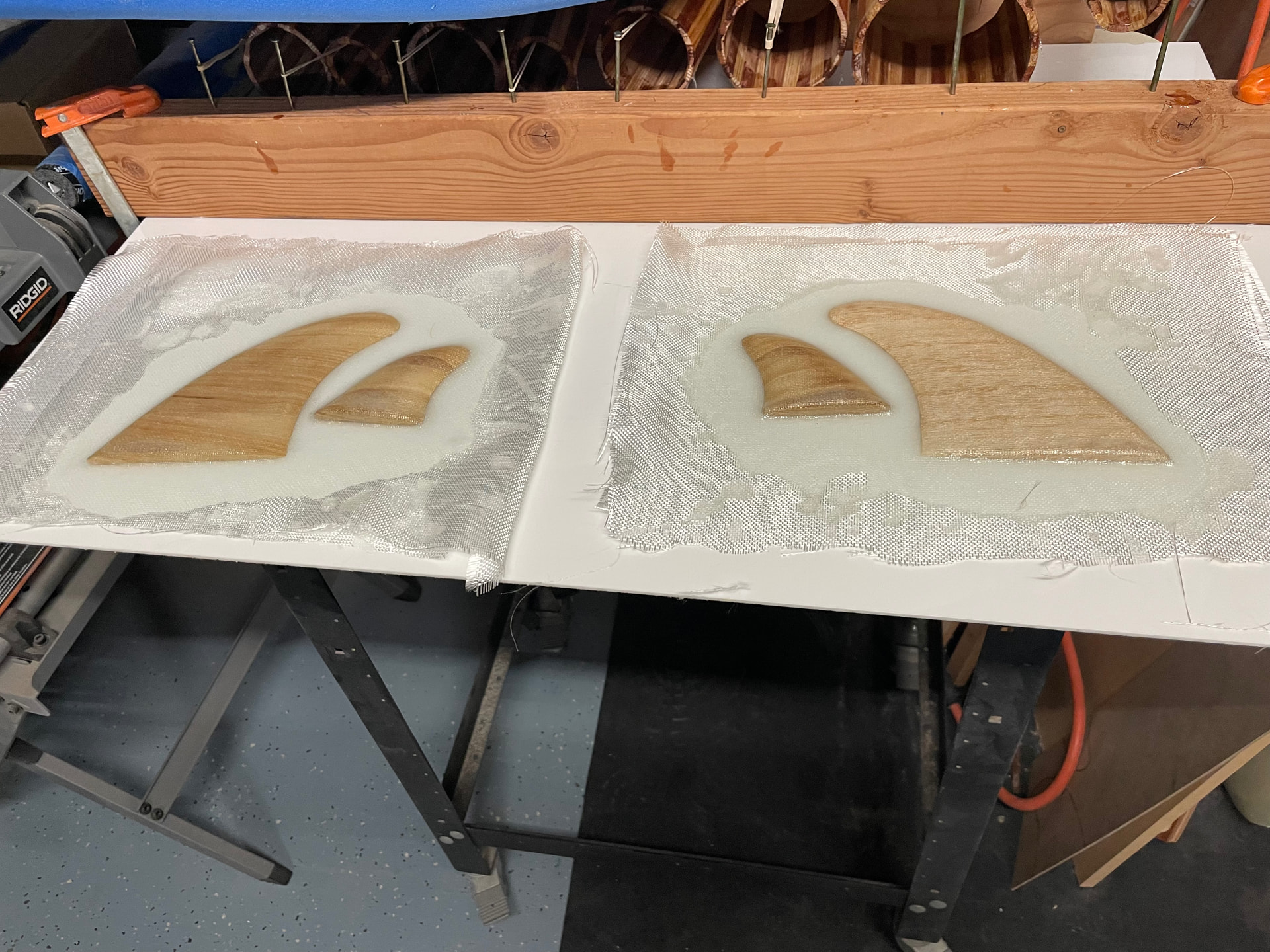
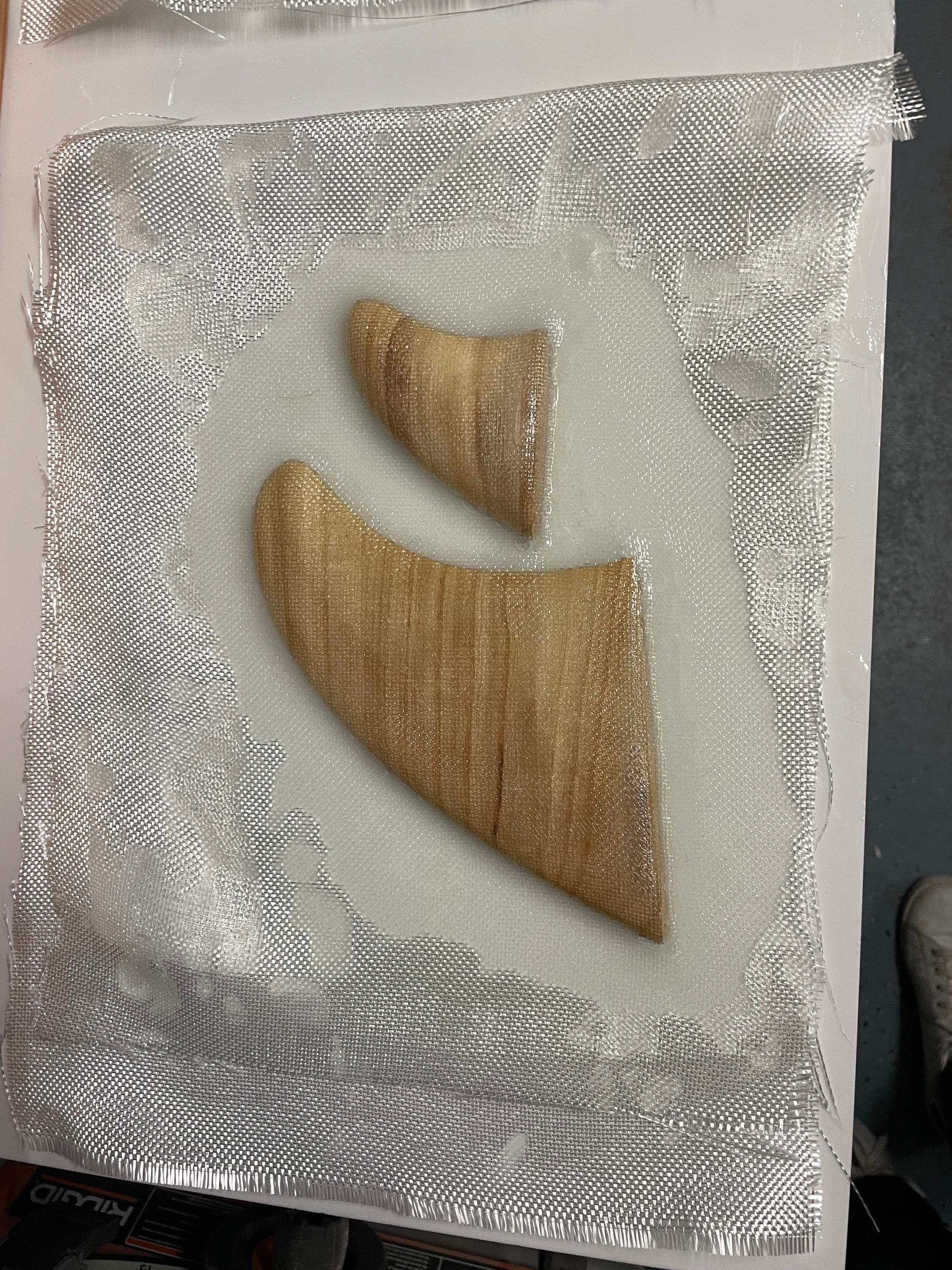
Here is how I glassed the fins. I was going to vacuum bag it but couldn’t find all of the parts to my pump system. I just wanted to get it done so I laid everything up on top of a sheet of plexiglass.
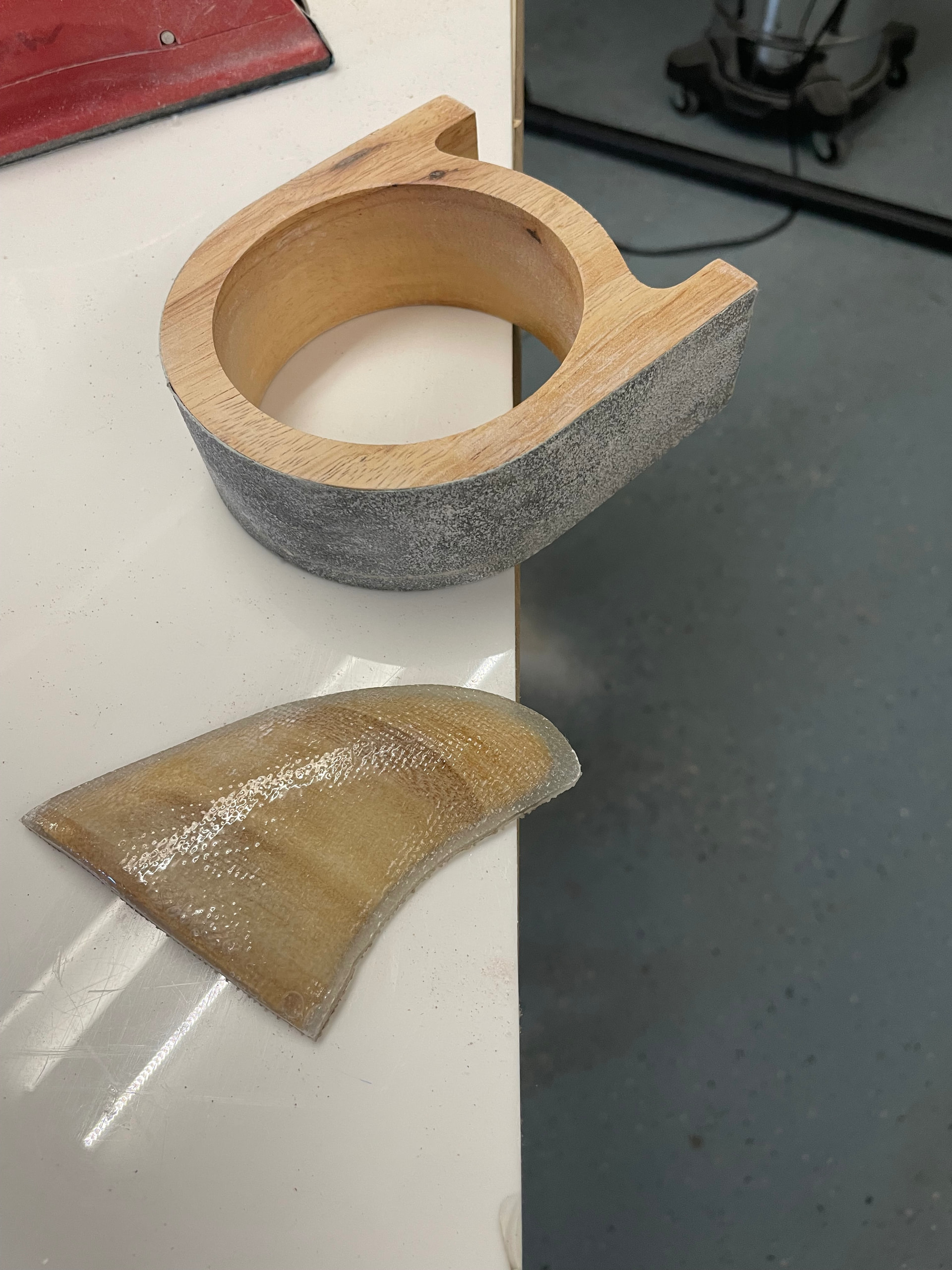
I let the fiberglass cure all the way before cutting everything out with a band saw. I sanded the fins by hand. This little sanding block that I made from an old clock was perfect for the task.
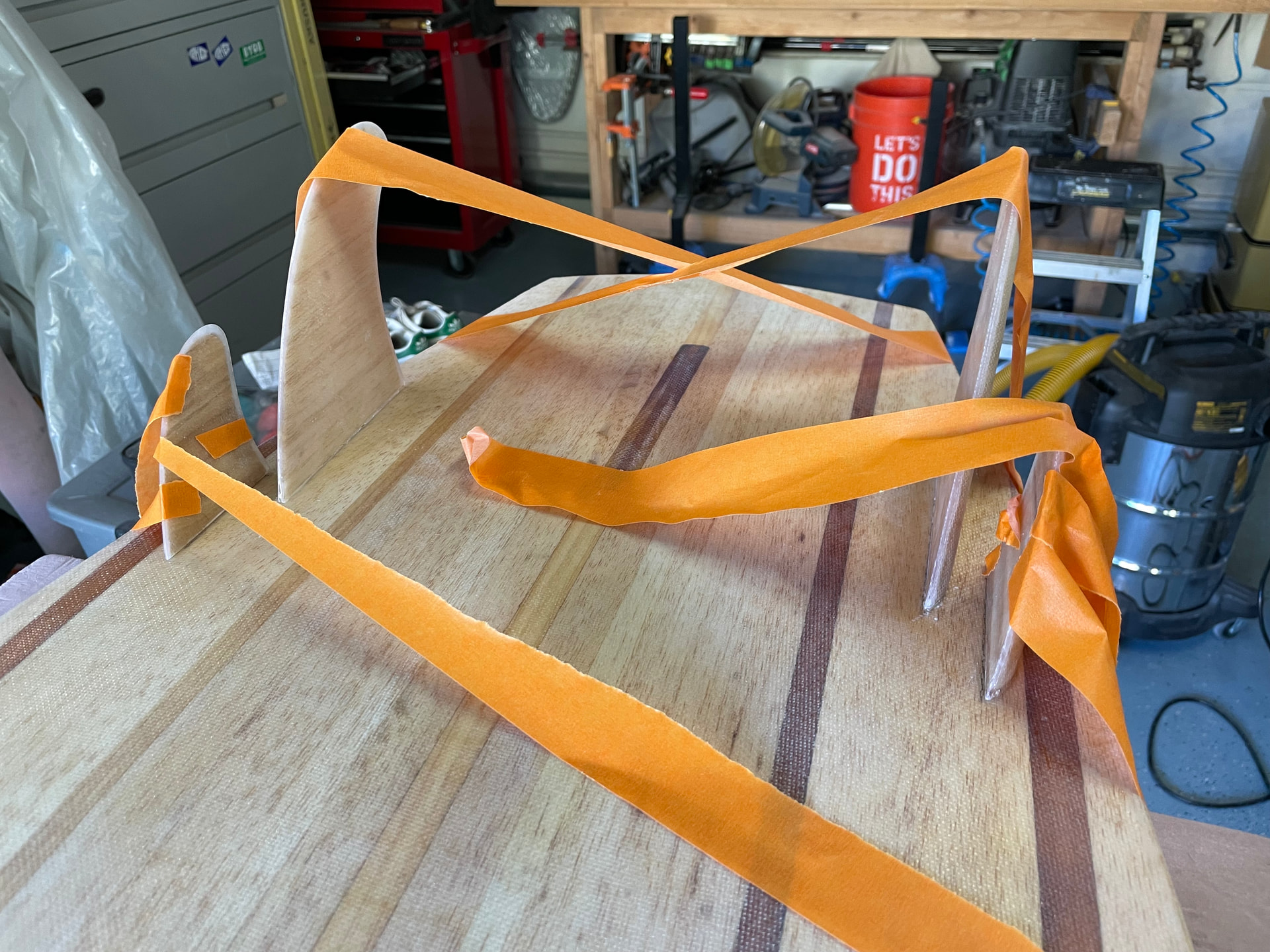
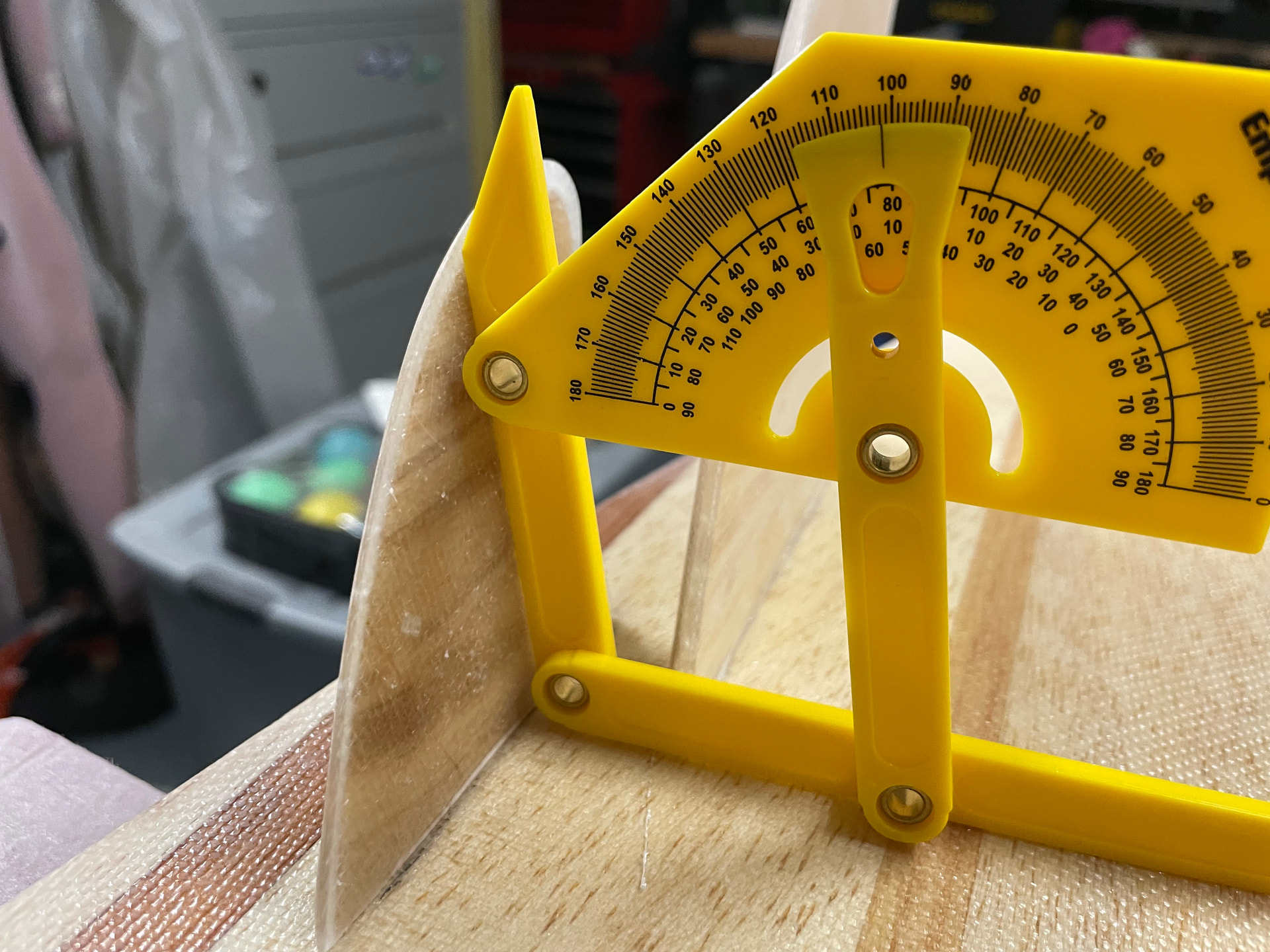
Today, I tacked all of the fins to the board with epoxy. I tried hot glue at first but it didn’t work out for me. I made a maze of tape that actually ended up working. The front fins have a cant of 12 degrees and the rear fins are 5 degrees.