I accidentally deleted this right after creating it luckily, I had the text copied. Here is is again…
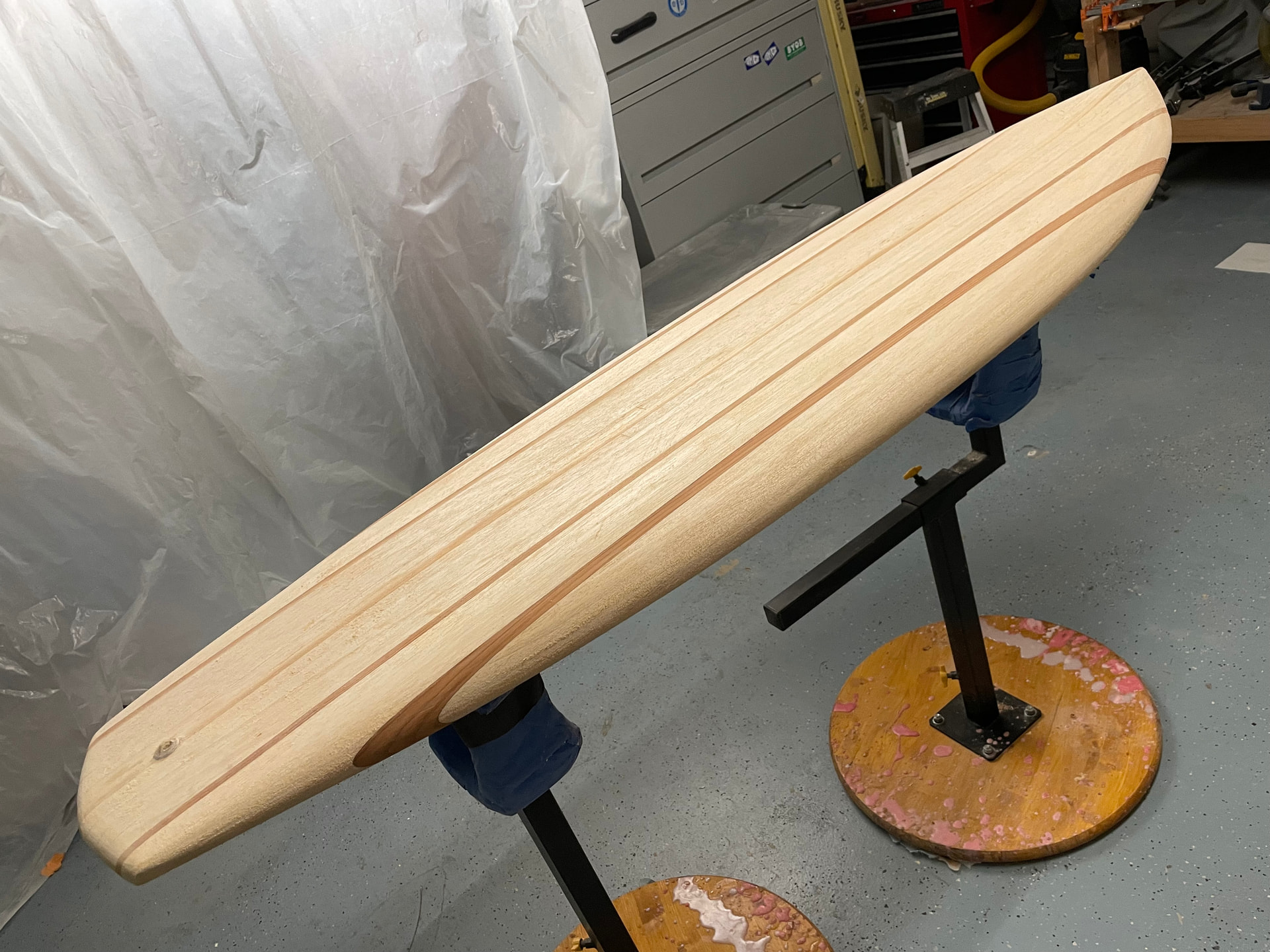
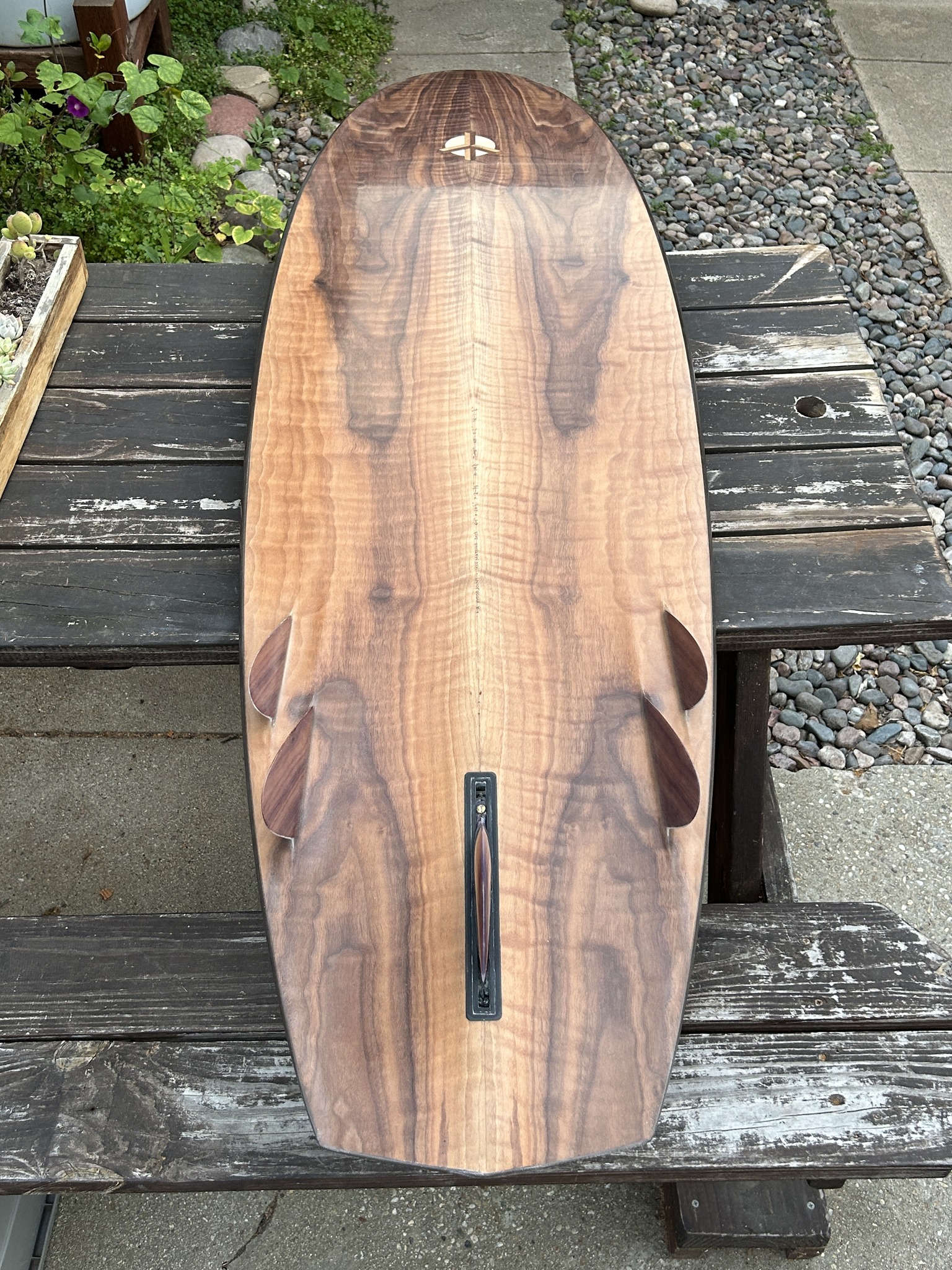
I reshaped an old chambered balsa board that I made back in 2007. It was actually the first board that I ever shaped, and it had some issues that I wanted to fix. I was a little nervous about taking my electric planer to it, since I didn’t remember where the thin spots were located. Luckily I didn’t bust into any chambers, and it came out looking better than I expected. Anyhow… standing back and looking at this board is making me think twin fin. I really like the look of twinzer’s, although I have never ridden one. What do you all think? Do you have any fin recommendations. If so, what are the dims, and where should I place them on the board? I’m going to shape the fins myself and then glass them on. Here are the metrics for this board: 6’2” long, 21” wide, and 2 7/8” thick. The tail is 11” wide from corner to corner. Total sanded weight before glassing is 13 lbs..
Wow beautiful board! I’m sure there is lots of stuff in the archives on twinzers. William Aliotti and Torren Martyn have done a lot of good surfing on twin fins lately also, check you tube. Keep us posted!
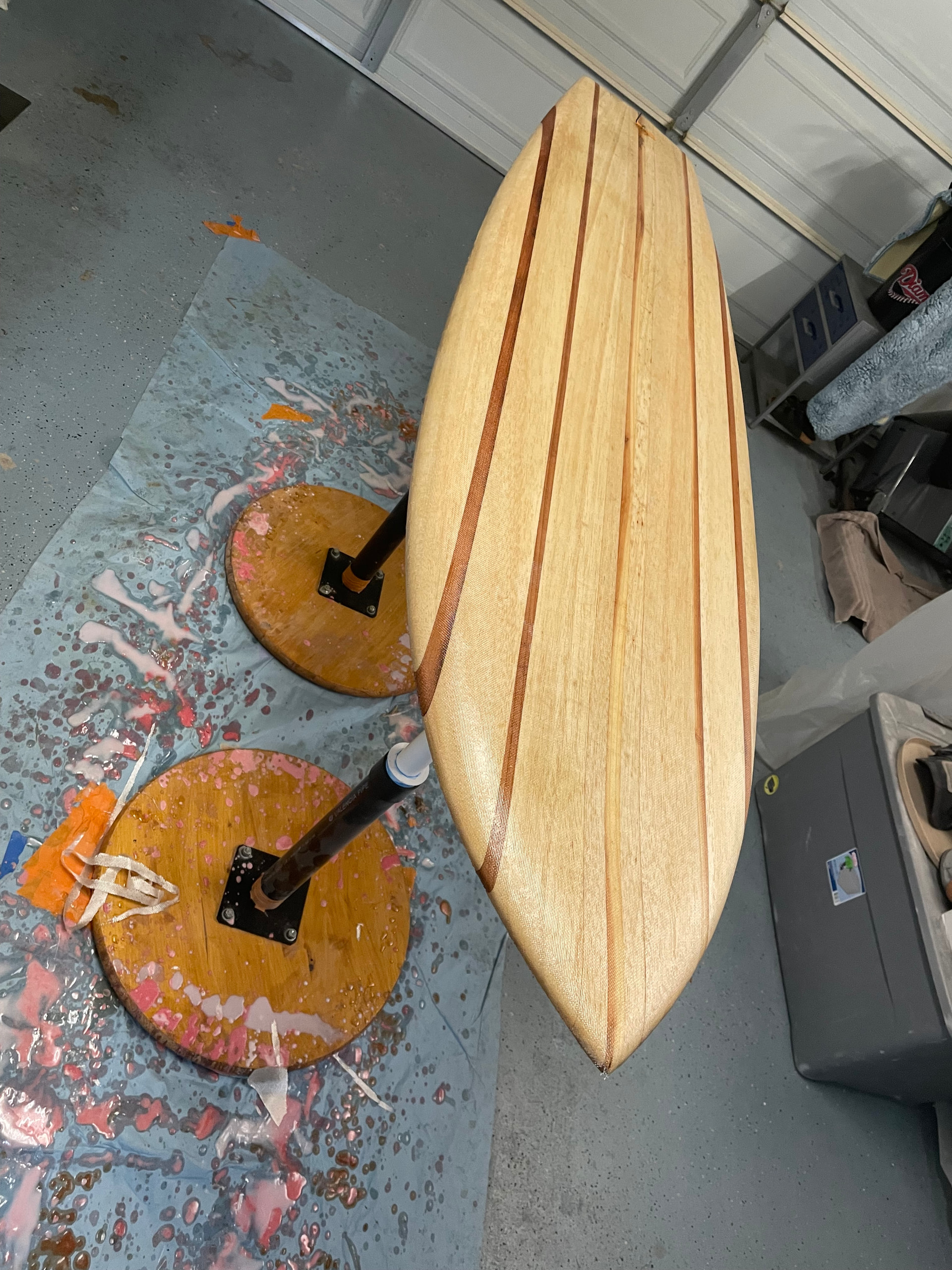
I glassed it today with Resin Research Kwick Kick epoxy. I applied a single layer of 6oz e cloth on each side. Yesterday, I sprayed clear shellac onto it to seal the wood. This is an important step to prevent the epoxy from soaking into the wood and drying out the fiberglass. I like how the redwood lines really popped with the finish.
There is a variety of information in the archives on the topic of twinzers. I saw one quote from Probox Larry stating that the front canard fin should have a cant of at least 14 degrees. My first reaction was wow, that’s extreme. But, Larry knows fins. I think I should trust his advice. But I haven’t seen anyone else recommending that much cant. What cant angles have you all tried?
I printed out the 5.5” fin template and it seemed really large. Does anybody have any advice on fin size? The board is 6’ 2” long x 21” wide. It is 16” wide one foot up from the tail. I’m about 205 lbs, so a bigger fin is probably needed.
I think I’ll put the trailing edge of my rear fin 8” up from the corner of the tail, and 1.25” in from the rail. All fins will have a 3/16” toe. I’m thinking 6 degrees of cant for the rear fins, and 14 degrees of cant for the front fins.
I’m just trying to get confirmation on these measurements before glassing everything into place.
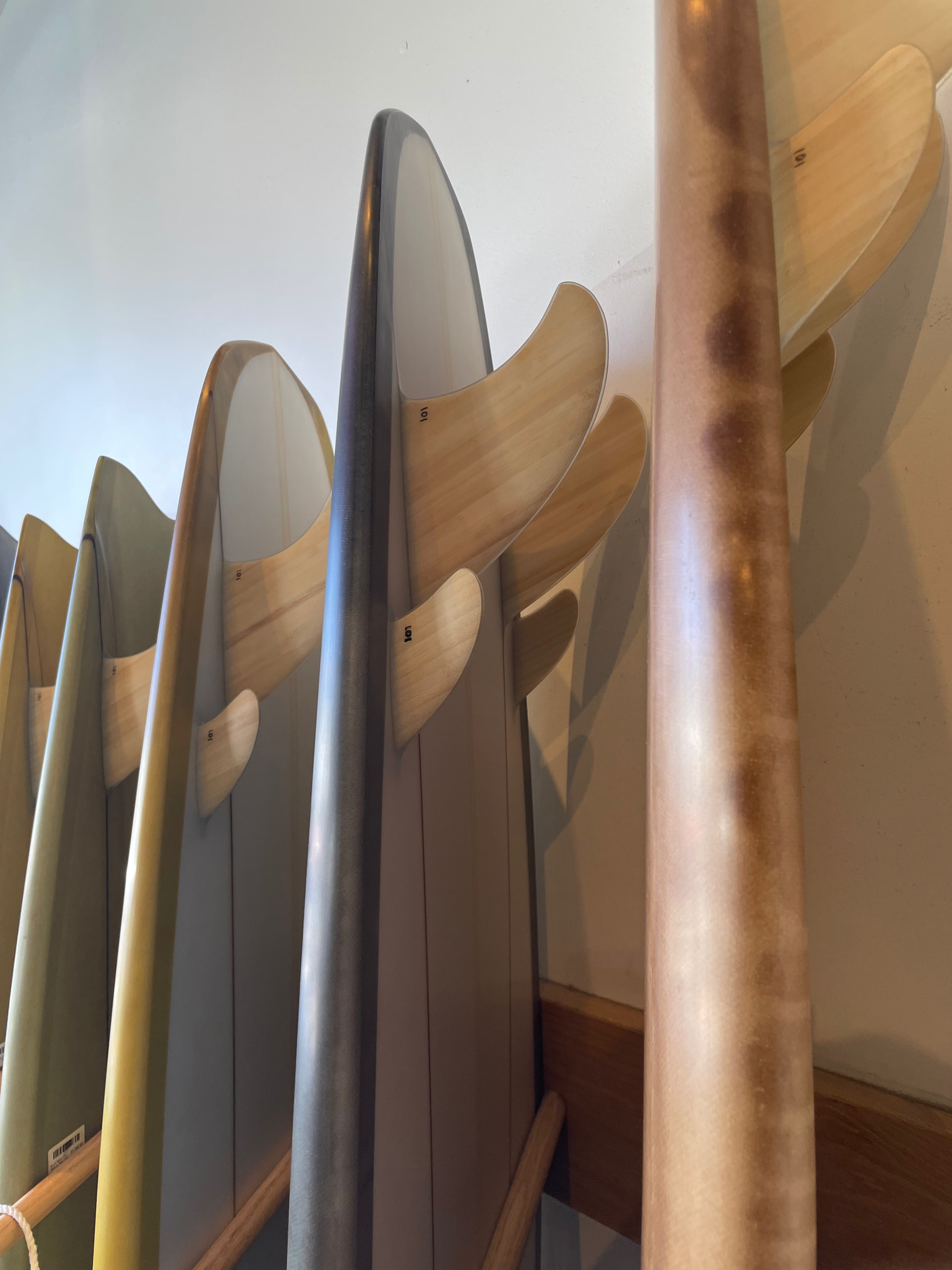
This is a very beautiful board. Congrats! The “arc tail” on the bottom reminded me of a Dane Perlee “frankenspud” style board although I see he uses that tail shape on some of his twinzers as well. I purchased some illuminatesurfcraft twinzer fins a while back and they work really well. Adrian from illuminate works closely with Dane Perlee who was in Santa Cruz when Will Jobson was there shaping (if I understand correctly) and should have a fairly accurate representation of the twinzer templates … see this listing on Adrian’s site for what I suspect is the appropriate template size/shape for the twinzer [ Osprey Twinzer Set RootBeerSmoke | Illuminate ] - seems to be what you would want. The Tru Ames fin catalog seems to have a fair amount of variation for the cannards and the twins - some being more upright and some more raked and some taller and shorter variation between the cannards and the twinnies. Hope this rambling helps. Gonna be a beautiful board!
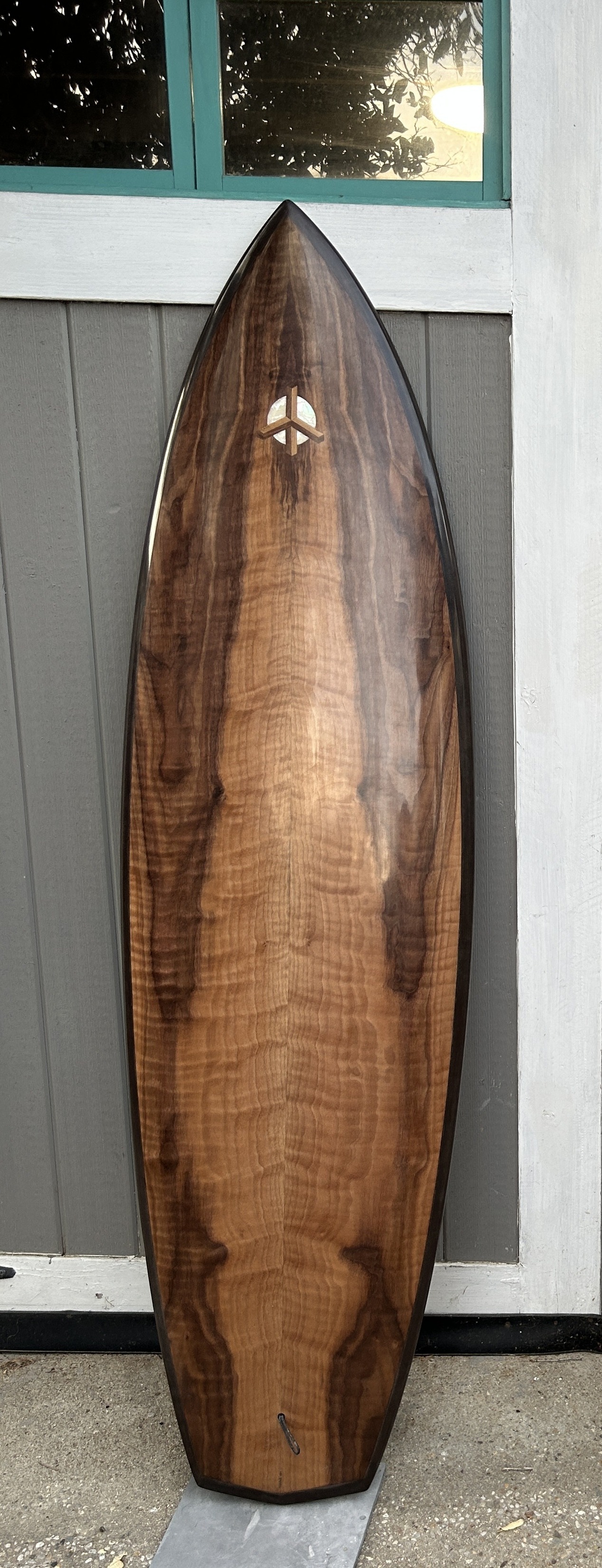
I love twinzers. They are like turbo charged twin fins. Beautiful board. Outline reminds me of this one I made a few years back. It was lost in the Palisades Fire.
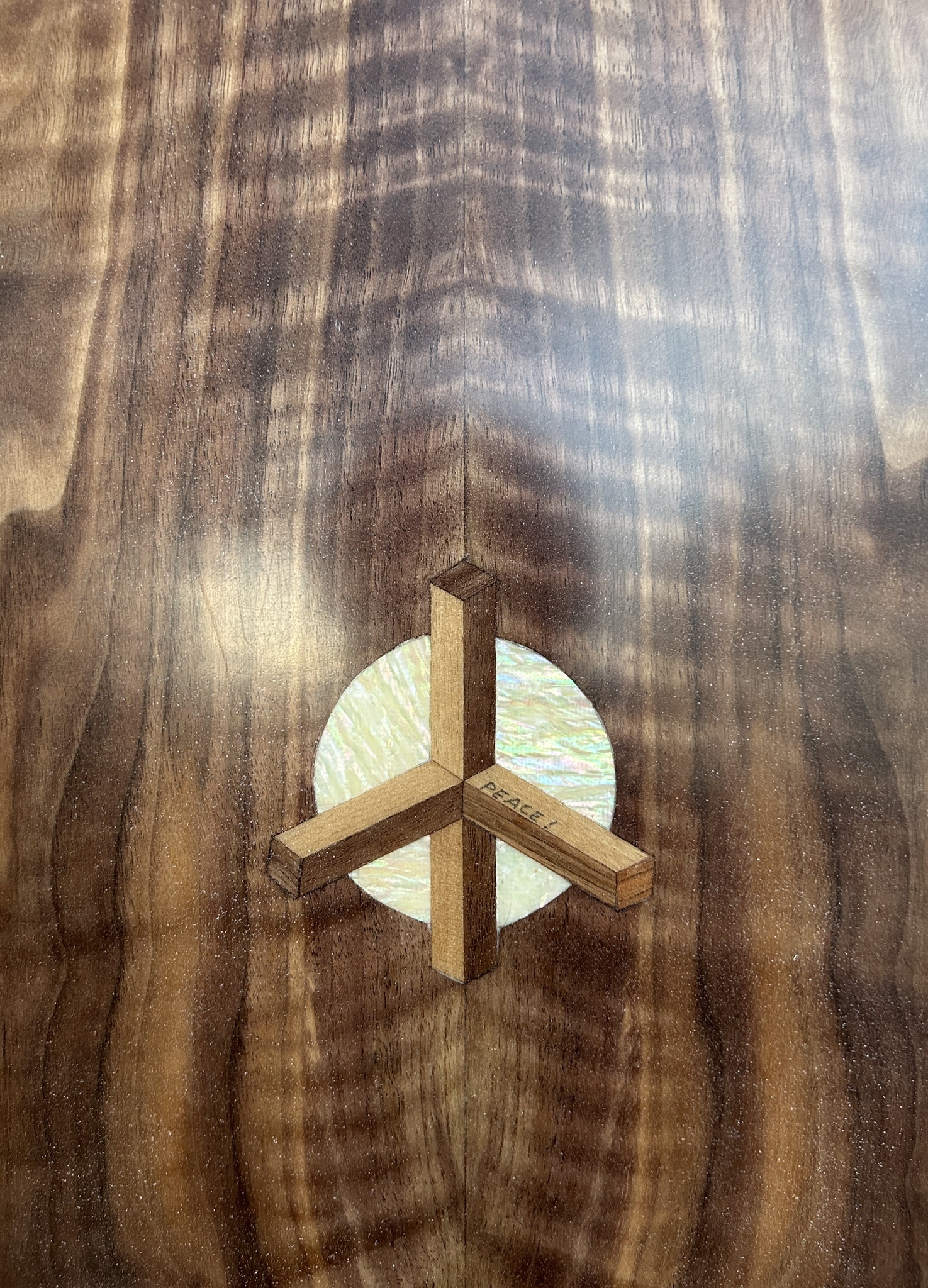
I’m sorry to hear that you lost such a beautiful board in the fire. I have seen your other boards and am sure you will come back with another one that is even better. Maybe an inlay of a phoenix rising?
Thanks to everyone for all of the help and comments so far. I have done a lot of reading and now have a plan to move forward.
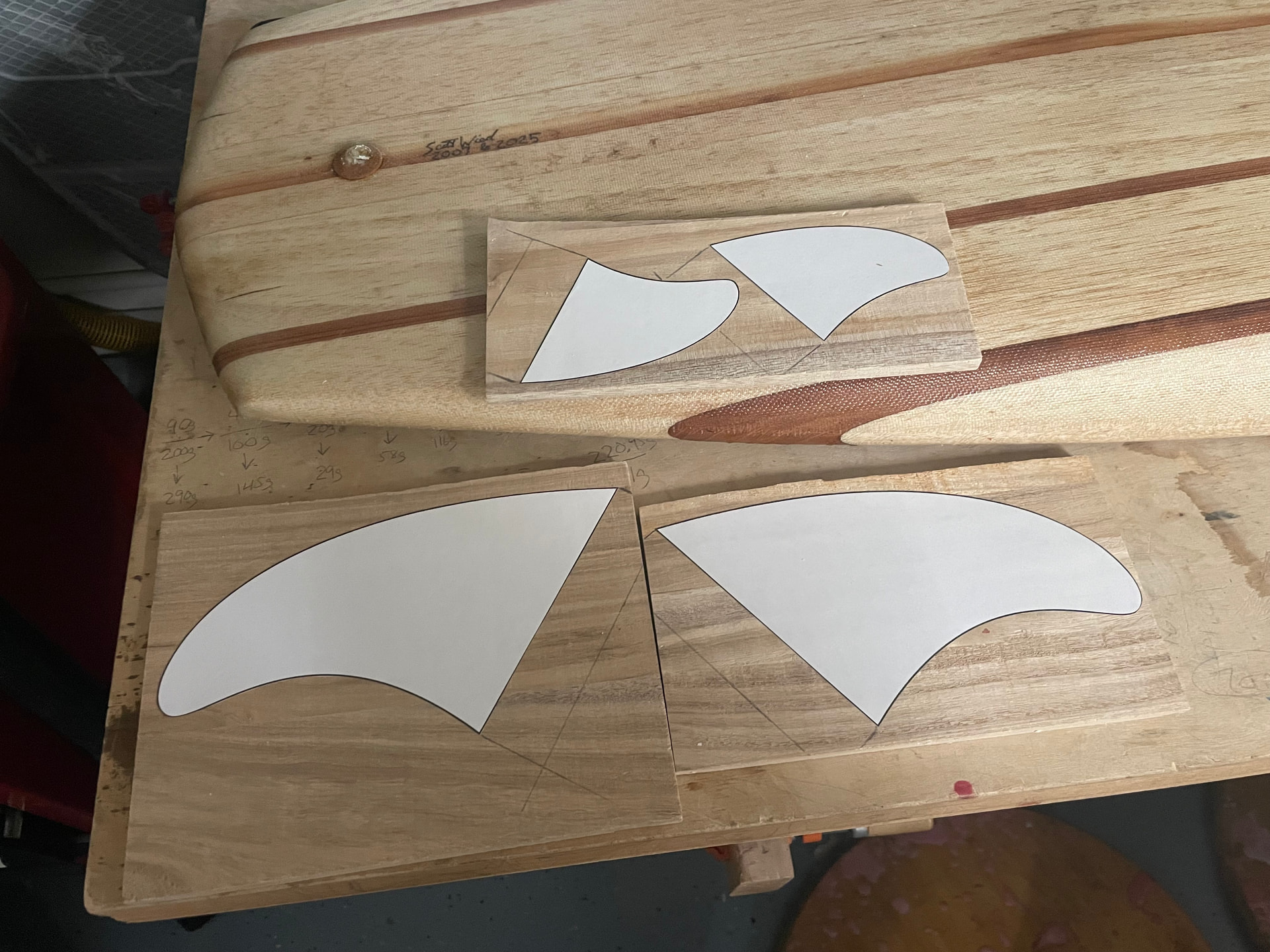
I guess this is a build thread now. Here is the latest photo of my progress. I had some old 1/4” thick balsa planks in my scrap pile. They have been in there for over 10 years. I knew I would use them some day!
I don’t understand how treating the wood will make the fins stronger. My plan was to laminate them with a couple of layers of 6oz glass and epoxy. I’m planning on rotating the weave at a 45 degree angle on the second layer. Then I’ll glass them to the board with some more layers of 6 oz and epoxy. I think that should be plenty strong.
Epoxy resin penetrating deep into the wood’s fibrous matrix (lignins, hemi-cellulose, cellulose), strengthens wood the same way epoxy resin penetrating into composite fiber matrices strengthens fiberglass, carbon fiber, innegra, Kevlar (etc.) does. Especially for a soft, low density wood like balsa.
In addition to strengthening/stiffening the balsa surface, sealing the balsa with the same epoxy used for lamination could make for a good bond with the FG lamination that follows.
This is a cool build. I like the idea of using balsa cores for glass-on fins. I look forward to seeing Swied’s shaped and glassed fins…
Thanks. It was a customer who lost the boards. He actually had two bonzers that I made. As well as many other priceless boards (ie a Brewer gun that he inherited from his father). He was away on vacation when the fires hit and could not save anything.
I think your lamination schedule is fine for the fins. It’s what I do for bonzer runners. You might want to add a layer since balsa is softer than the hardwoods I use. Also, it leaves a little thickness because when you foil the glass 4 layers is not going to give you much glass on the leading edge. One close encounter with a rock could reach the balsa.
ps I do not run the glass (while glassing on the fins) all the way up the fins. If you plan on running it all the way up you won’t need to add glass to the fins…if that makes sense.
As far as sealing the board to prevent bubbles, I learned early on- GLASS ON FALLING TEMPS. I’d had a couple boards have tiny bubbles, but since I learned to glass on falling temps I ‘ve never had any issues (I did have a sand coat develop tiny bubbles, but that could not have been from air releasing from the blank).
I’m not against sealing a blank, balsa or otherwise. But I don’t do it. Normal epoxy does not penetrate deep into wood. I’ve tested it using fast and slow Resin Research. I don’t know anything about the resin Stone burner linked but I’d be interested eventually to hear his results.
Interesting article. He seems very credible — nonetheless, he still represents a commercial epoxy brand. The article still raises questions about penetrating epoxies though. They just caught my attention recently — so I thought I would experiment. Looked like standard West epoxy penetrated through the entire balsa block though.
However, as both Swied and Jrandy commented, they seal balsa to prevent dry laminations. Dry laminations indicate the balsa is absorbing a significant amount of the epoxy resin used to laminate. Even a thin layer of wood fiber penetration has the same effect as it does in FG or carbon cloth. Fiberglass skin thickness is fairly thin at approx. 0.3 mm for 6-oz FG.
I have sealed Baltic birch plywood and pine with epoxy with SB epoxy (not used for Surfcraft). I do it because the wood absorbs epoxy resin. I seal so I can get a smooth, glassy epoxy surface with a second coat (no FG added). Hemp and linen cloth used for SB laminations are composed of the same type of fibers in wood.
So, I see pre-sealing balsa with the same epoxy resin used to laminate the FG added as a benefit/advantage. Reduces amount of epoxy needed to laminate. Also, if epoxy sealed balsa is laminated while the seal coat is green/uncured, the bond should be chemical rather than mechanical.
BTW Gene recommended pre-sealing blanks with resin before glassing.
“6. Sealing- Sealing the blank makes for a better bond to the foam by reducing the chance of a plural space developing between the foam and glass as the resin soaks into the foam during the drying process, especially when tight weave (ie: 4oz or flat weave) is used next to the foam. With proper application sealing shouldn’t add weight and net resin use should remain the same since sealed blanks require less resin to lam. Note that squeegee technique and faster cure times are are always big factors to achieve a good bond, especially if the blank isn’t sealed.”