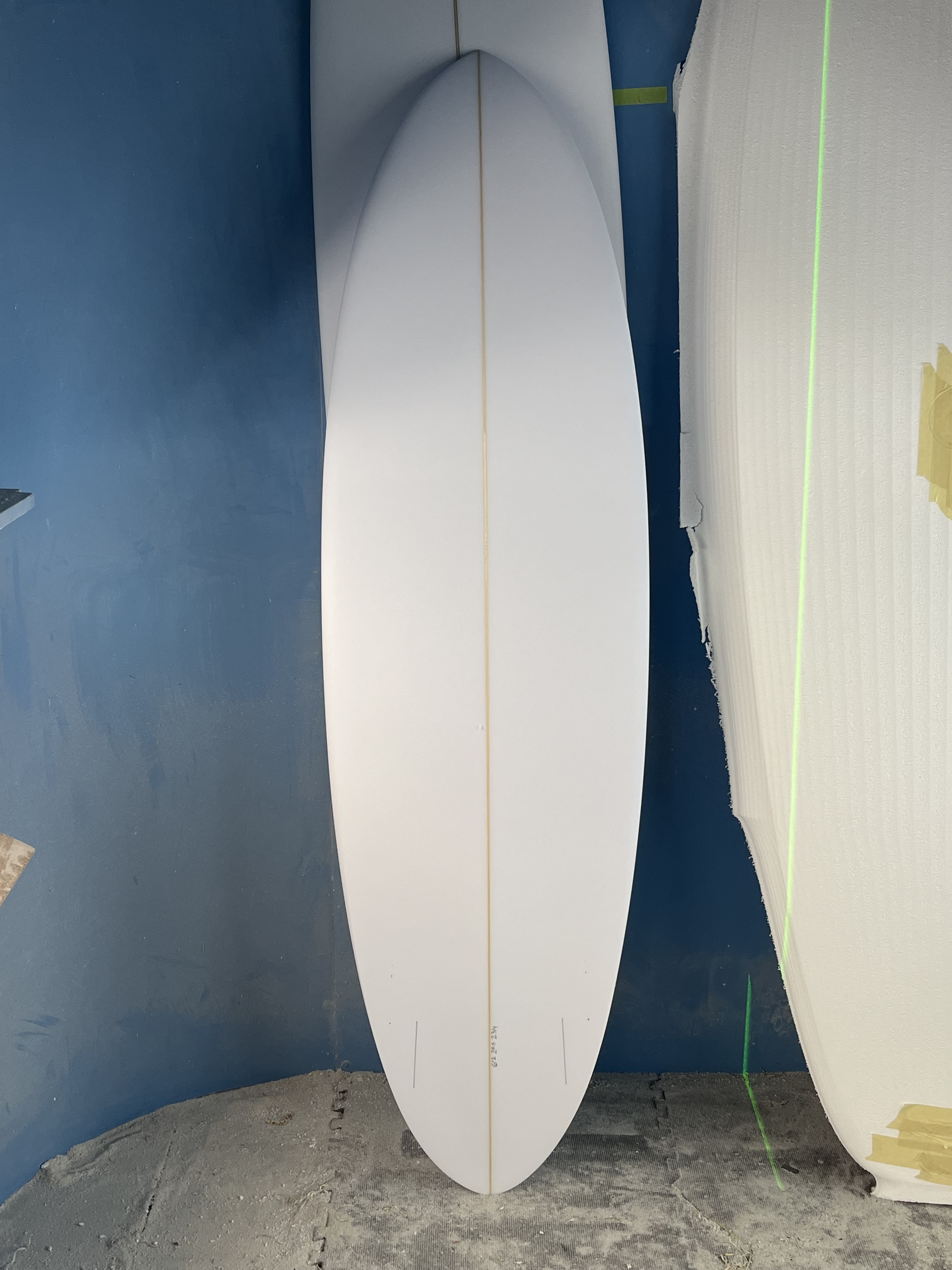
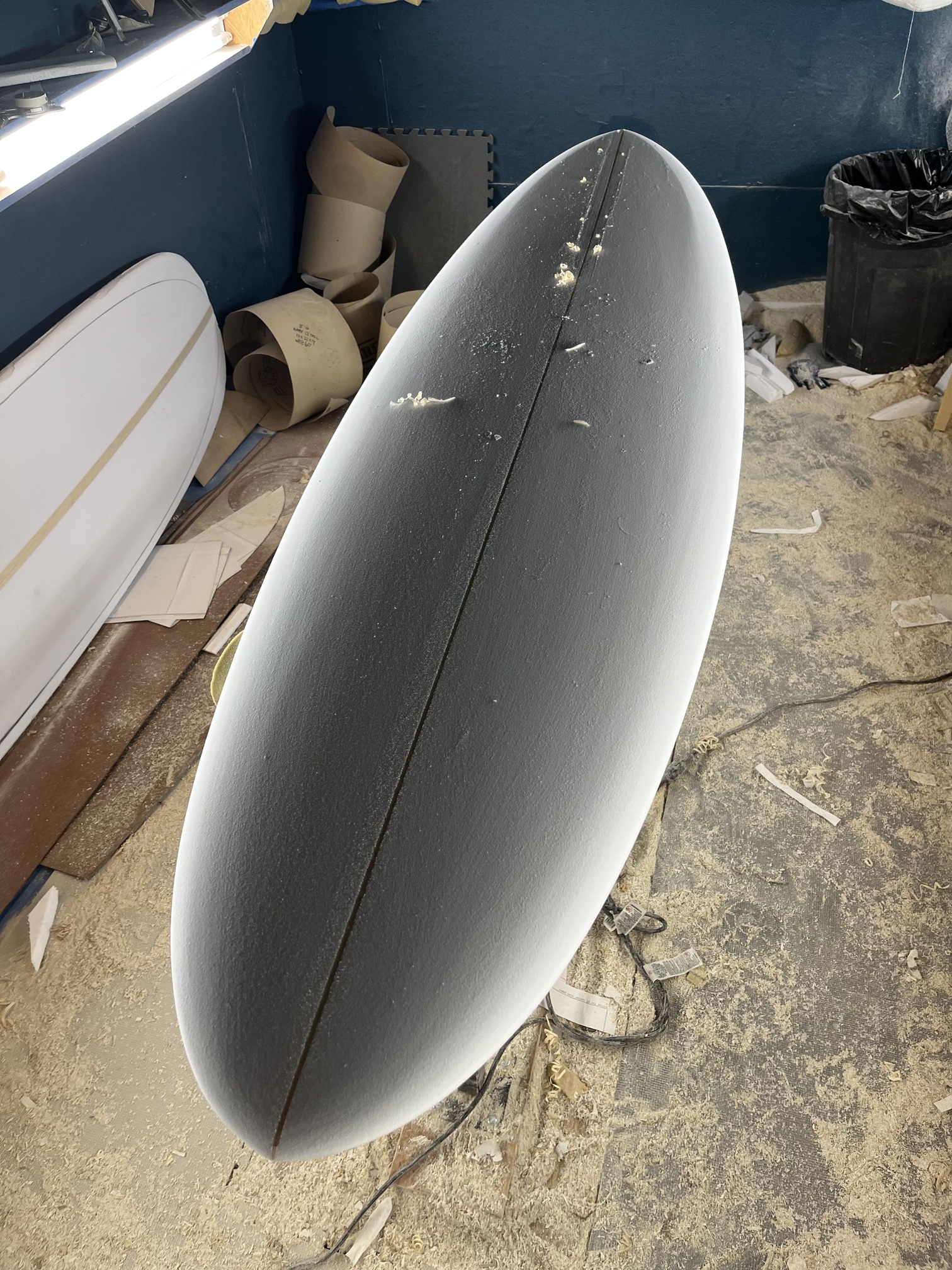
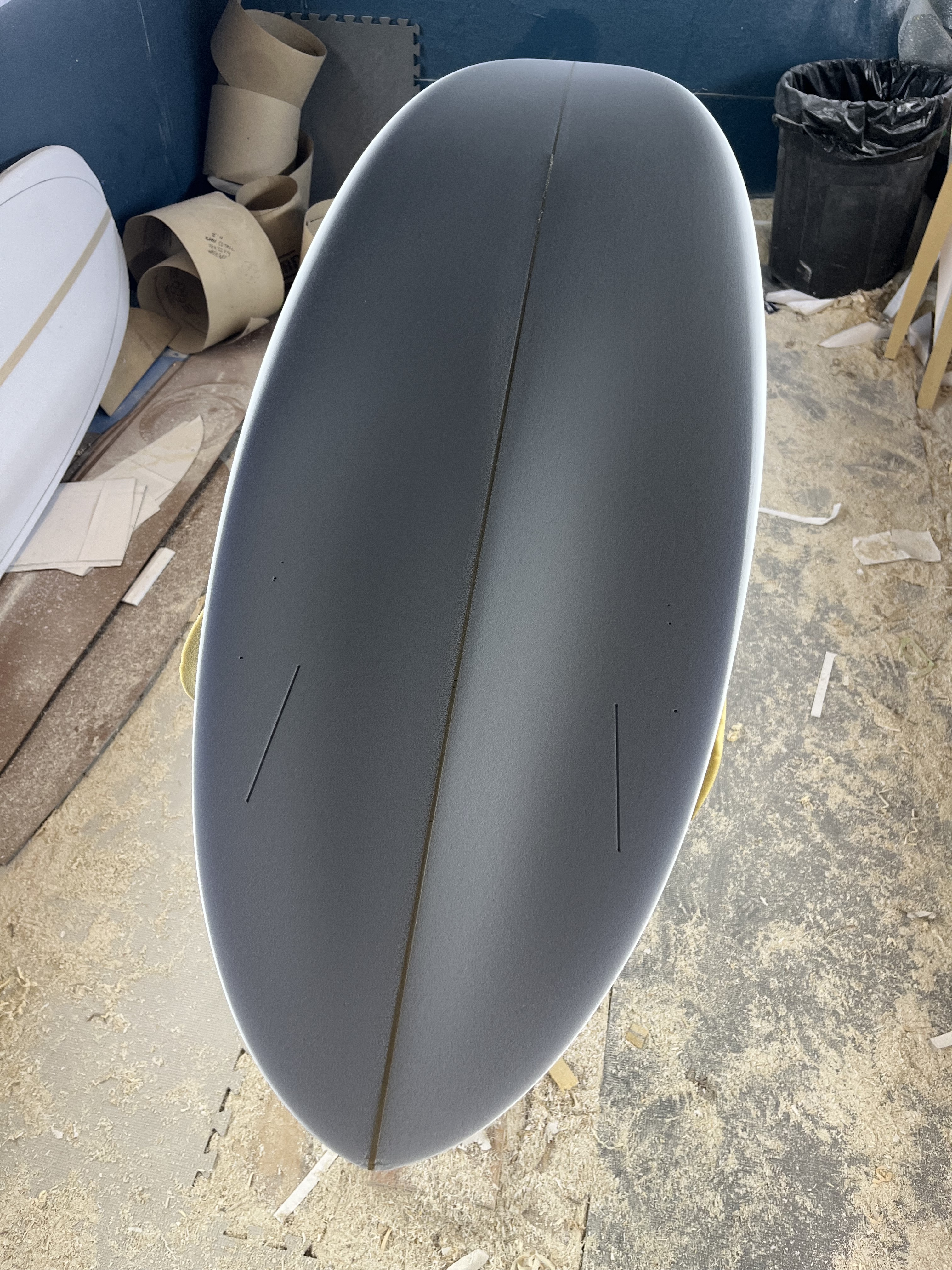
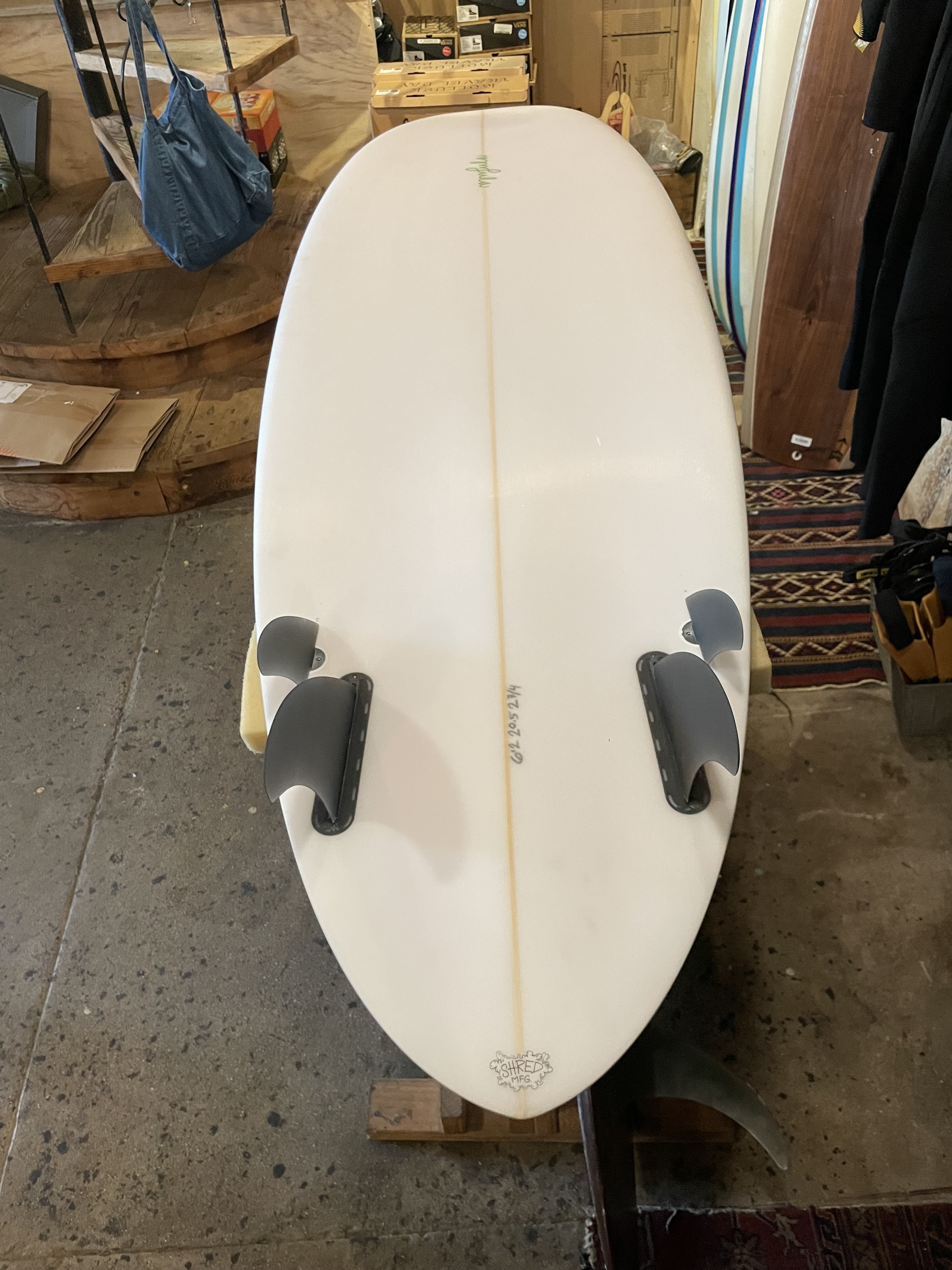
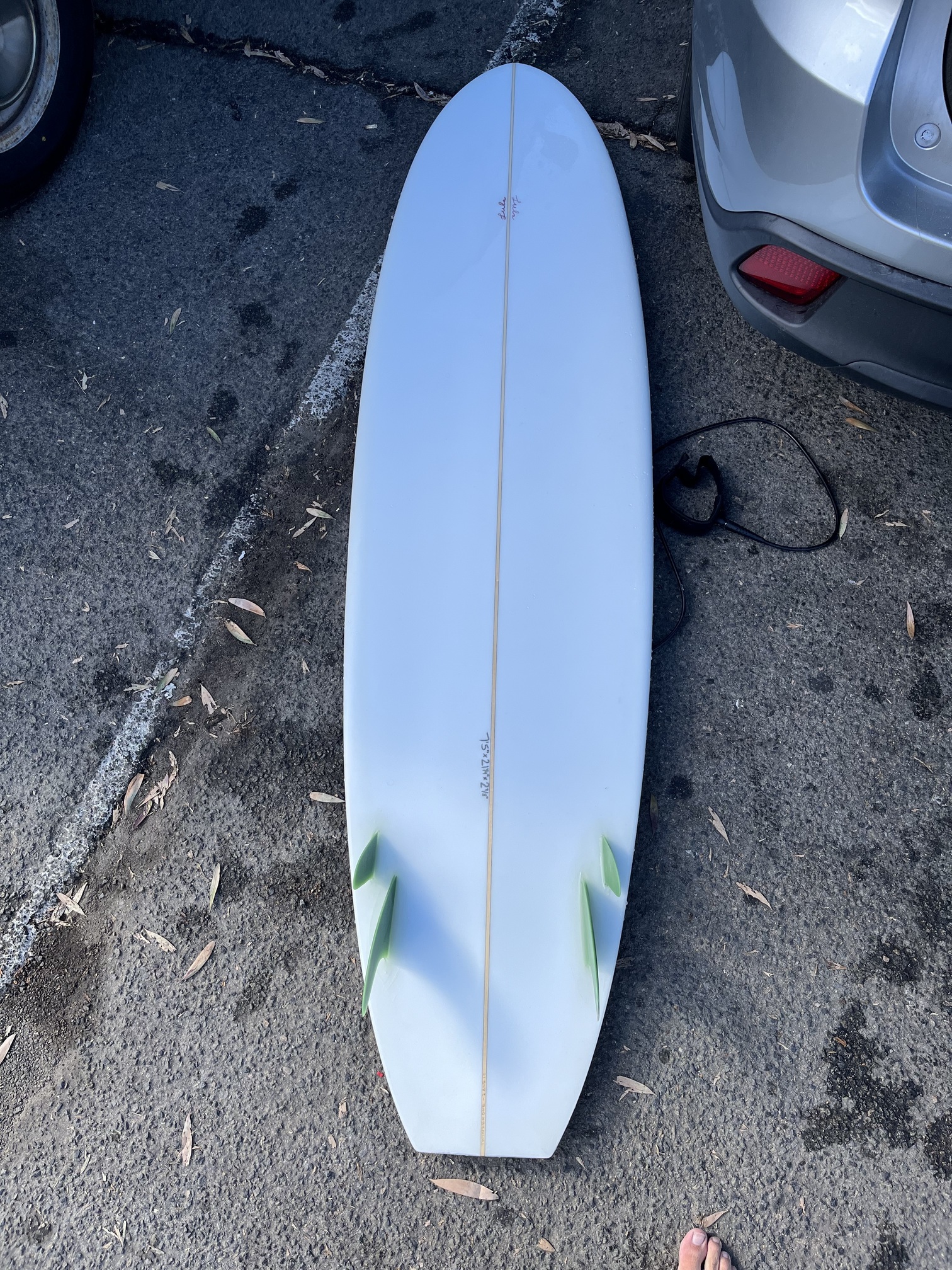
Wondering what some of the merits are when considering offsetting the toe in on quads and twinzers.
Somehow it got in my head to offset quads and I’ve always done that, 1/4” main 1/8” rears.
It makes sense I feel to add more “bite” or grip in a turn or driving off the fins at all. This relationship makes sense to me , the main larger fins are driving and initiating so they are the most toed in.
On a twinzer the relationship of which fin should be offset is less obvious to me, as the relationship the fins have on each other is completely different. I’ve done mostly matching 1/4” which just feels fast and loose and twinzer-like, but I wonder is that same bite attainable as with quads? I know some swear by offsetting them, and I’ve seen this, and tried it once with the canard shallower at 1/8” but I don’t really understand if that’s right or why it would be. Seems like whatever water is funneled between the two fins would have a smaller gap to shoot through if the canard was set at 1/8”.
What’s the goal when doing this on a twinzer? Is it to make sure the boards not too loose? Would it make sense to have the main be 1/8” for drive and the canard set at 1/4”?
I just did parallel since I know it feels good. Was really hoping to hear anyone’s take on why one would offset them. Like I said before I’ve done both…
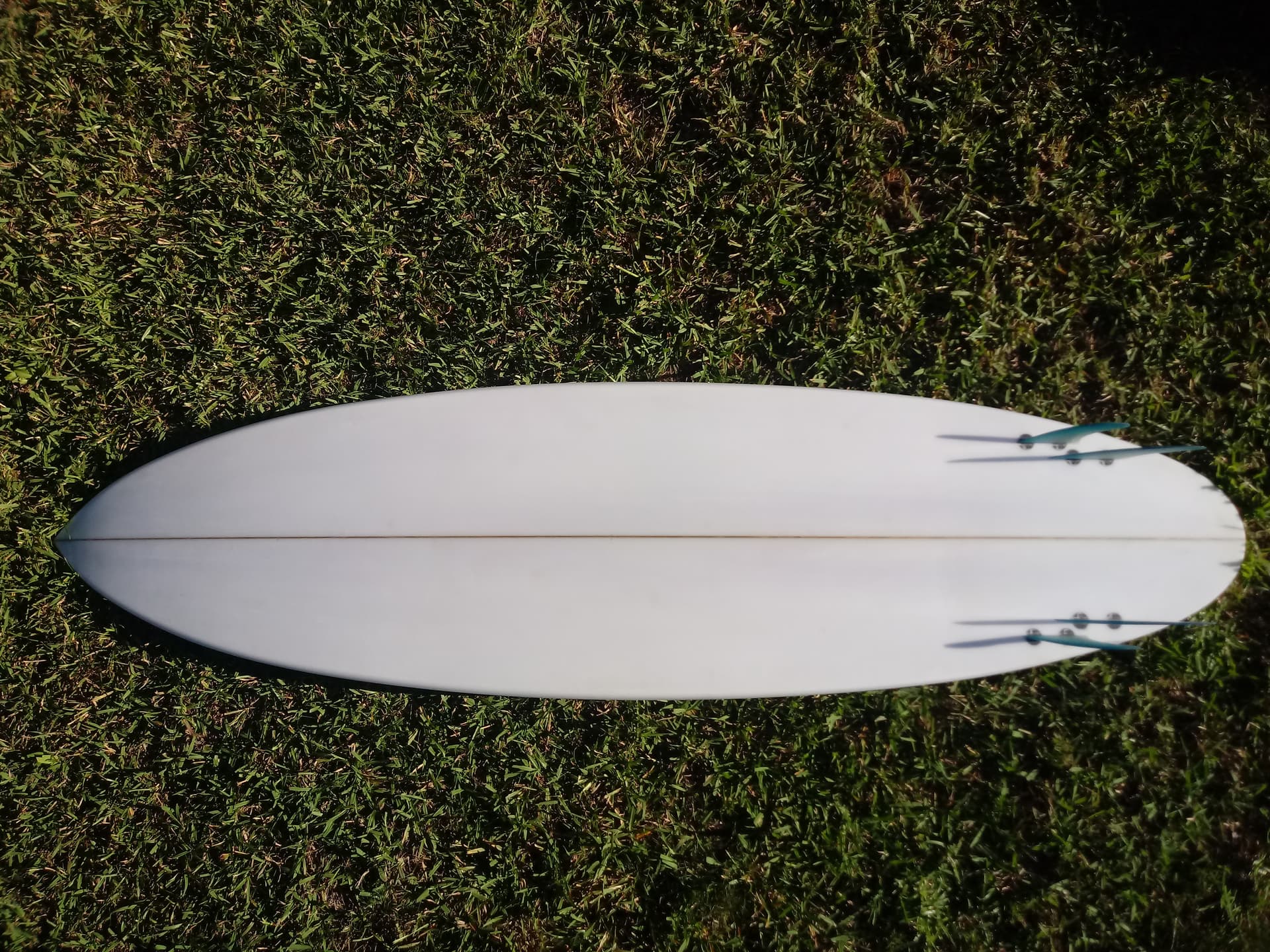
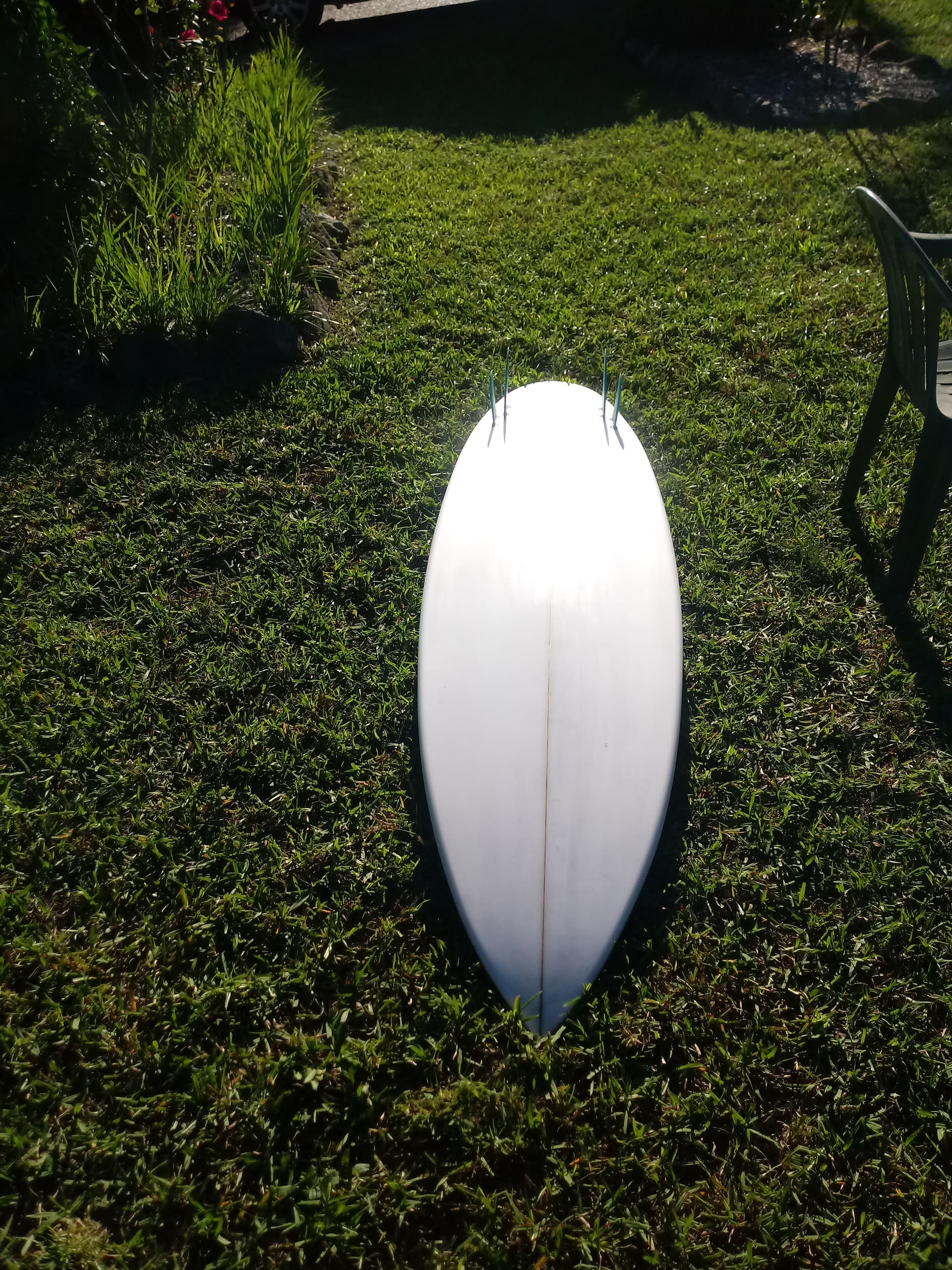
. However it easily went out of control like a skateboard on wet cement. I’m doing another soon. The fins will be angled towards the stringer and canards will be parallel to main cants at 5 and 9.
thanks for making this post this is good info for me. Interesting.
Rad, that’s a nice looking board, and I like the fin colors. 5 and 9 is interesting, will be very loose and responsive I would imagine.
A lot of the sets now from true Ames for example the mains are set at 6.5 degrees. The one I posted ended up using those so I set the canard to 9 to compliment.
Yeah that was the first one I made, since passed on to a friend. Felt insane on rail and off the bottom. Definitely got me stoked on the fin setup.
There’s 1/4” overlap, but it’s mostly just the trailing edge bit and less so the actual meat of the fin. Sometimes 3/8” just with variability of glassing and using boxes and different fins. I’ve never done 0 overlap but I know some that do that. Not sure if that’s still the same design at that point.
Main fin 1 3/4 from rail. Rear of canard in line or slightly overlapping your main fins leading edge and 1 1/4” spacing from inside leading edge of the main fin to the rear of canard. Canard toed slightly more than main fin and slightly more cant than main fin.
I don’t know a scientific answer but that combo for the canards is what apparently works best so far as to feeding your main twins and mitigating cavitation. I didn’t do any exploration just got the info passed on from a trustworthy source
I suspect the twin positioning is related to the delayed stall of the bi-plane wing effect. I would speculate that the stagger is related to keeping both fins close to the rail while separating them.
Googles AI summary of past Sways threads about the bi-wing effect.
(Mostly the result of Hans input.)
“Swaylocks, an online forum for surfboard shapers and enthusiasts, has discussed the “biplane effect” in the context of surfboard fin design, particularly in relation to twin fin setups
Here’s a breakdown of what the “biplane effect” means on Swaylocks, especially in relation to twin fins:
Stall Delay & Softer Stall: Discussions on Swaylocks mention that the biplane effect can soften the stall characteristic of fins, meaning one fin stalls later than the other. This allows for thinner and stiffer upright fins while still providing forgiveness.
*Another thread on Swaylocks further elaborates, stating that the top wing reduces the lift of the bottom wing, while the stall angle of the bottom wing is higher than the top wing, resulting in a softer stall when both are combined.
Fin Interaction & Stall Angle: When fins are close to each other, they have a positive effect on the combined stall angle, meaning the setup is less prone to stalling. This allows for the use of more upright fins, as the interaction between them softens the stall, reducing the need for sweep (which typically softens the stall by twisting the fin).
Potential for Reduced Fin Size (with qualifications): Discussions on Swaylocks suggest that while fins close together might need to be roughly the same size as a single fin, twin fins placed further apart (closer to the rails) might allow for a reduction in individual fin size (potentially almost half the size). However, this effect is less pronounced the further apart the fins are.
Flow Control and Stall Delay: The biplane configuration is recognized as a stall-delaying, passive flow control method. Scientific studies, referenced on Swaylocks, confirm that biplane configurations can significantly delay stall angles for certain setups.
In essence, the discussions on Swaylocks indicate that the biplane effect in twin fin setups can enhance surfboard performance by providing:
Increased Forgiveness: Due to the softer stall characteristics.
Potential for Different Fin Designs: Allowing for thinner, stiffer, and more upright fins.
Improved Flow Control: Delaying stall and potentially allowing for smaller fin sizes.“
I think the one I did was maybe less in the canard, but without the boards being identical designs it’s pretty hard to feel something that minute when comparing. More toe felt wrong to me on paper.
I spoke to Larry Allison yesterday, and he was talking Twinzers already. I didn’t even ask but he said that the more toed in canard was wrong because it creates drag and that they have to be parallel. I have thought about this too because now at some point the fin trajectory would cross if you went out in a straight line. Maybe you would have to move the canard closer to the rail or just create more of a gap for it to work.
He also said anything less than 14° in tha canard is also “wrong”.
I personally don’t like to speak in absolutes about surfboards, but I’m sure there are certain ratios that make the board feel the most pure to the design principle.
To the point about stall I think this relates to the fin template, where the canard has to have that straight vertical trailing edge and not be raked at all so that the water all releases simultaneously and not off the tip
I’m no engineer like Hans, but my take is/was the bi-wing effect affects angle of attack. It was not really about fin shape. However, I won’t discount foil shape as a factor.
As I recall, Hans did work with wind turbine blades as well as creating the FinFoil software.
It’s been awhile since I read all of Hans’ explanations.
I guess that’s what this platform is all about. Different sources with different answers. gotta just pick and chose based off who you respect and think is aligned with your style And to clear up the toe I’m talking 3/16 on the upright and 1/4 on canards. Just passing info on that I would trust . Cool to hear what others are doing though also