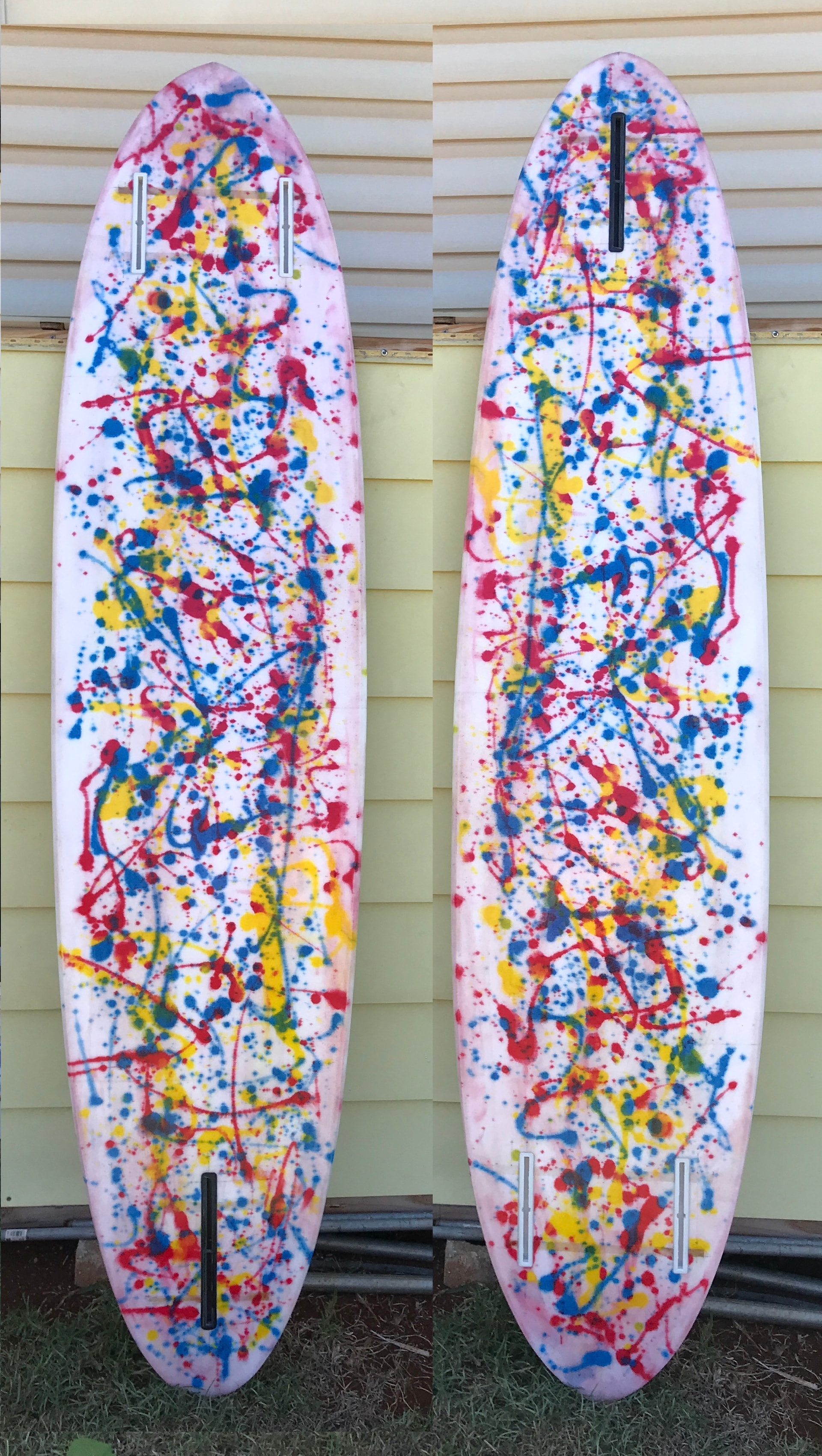
Length: 7’ 6 1/2" (2297.4)
Width: 21 1/2" (546.1)
Thickness: 2 5/16" (58.0)
Tail Stop: 31 1/2" (800.0)
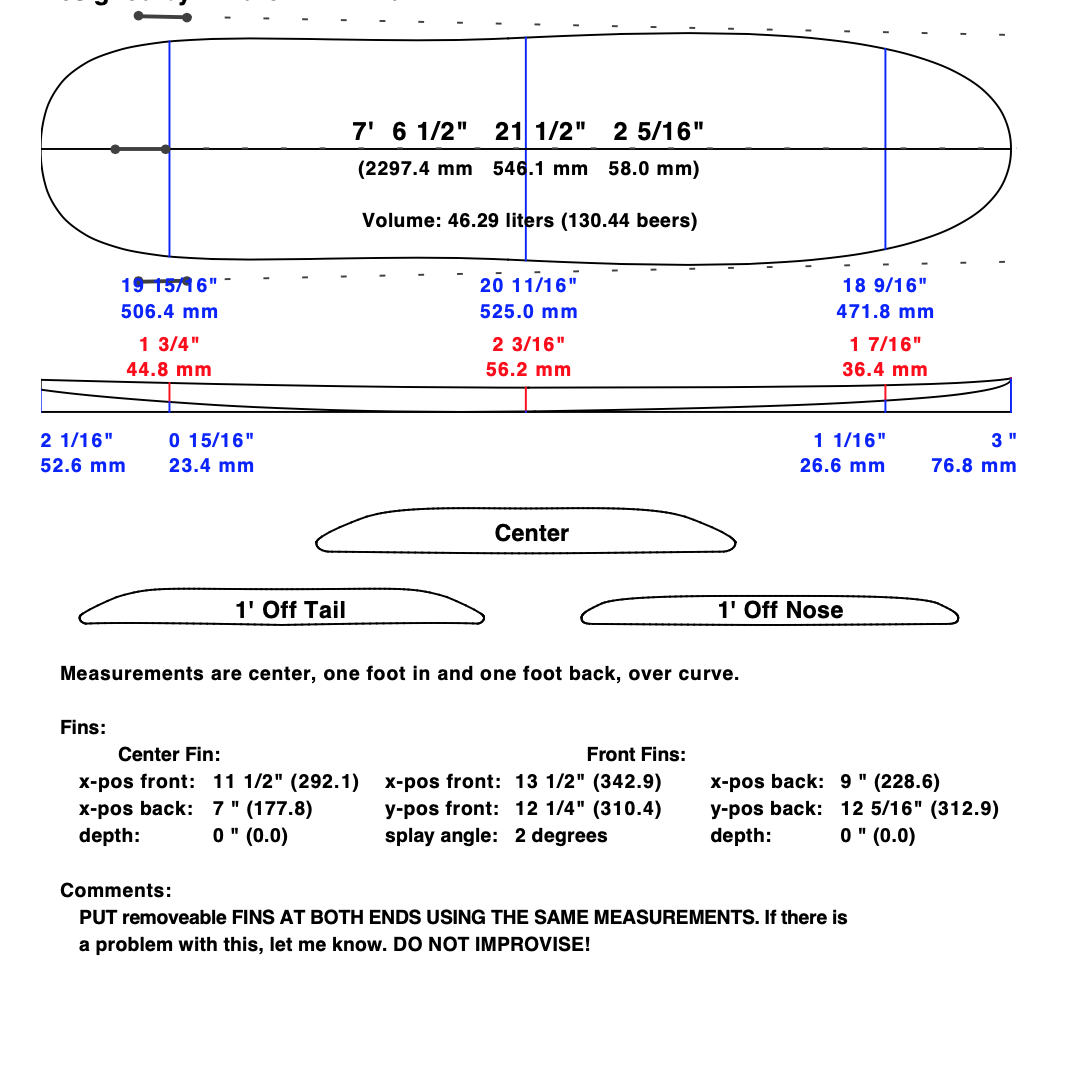
Design:
The goals for this board were to glide like a longboard, but be survivable when caught inside.
To this end, I chose a bunch of low drag choices:
- very low rocker
- Pinched rails
- Straight, slightly parabolic outline ala Trinity
- Fat tail
- Twin fin (wanted Twinzer really)
I’ve been waiting for somewhere to build this board for nearly a decade. But rent is far too expensive, and I couldn’t find anywhere. So in the end I’ve just paid someone else to make it now.
I then went to a double ender not for swapping for changing conditions, but more for getting a second chance at getting this right.
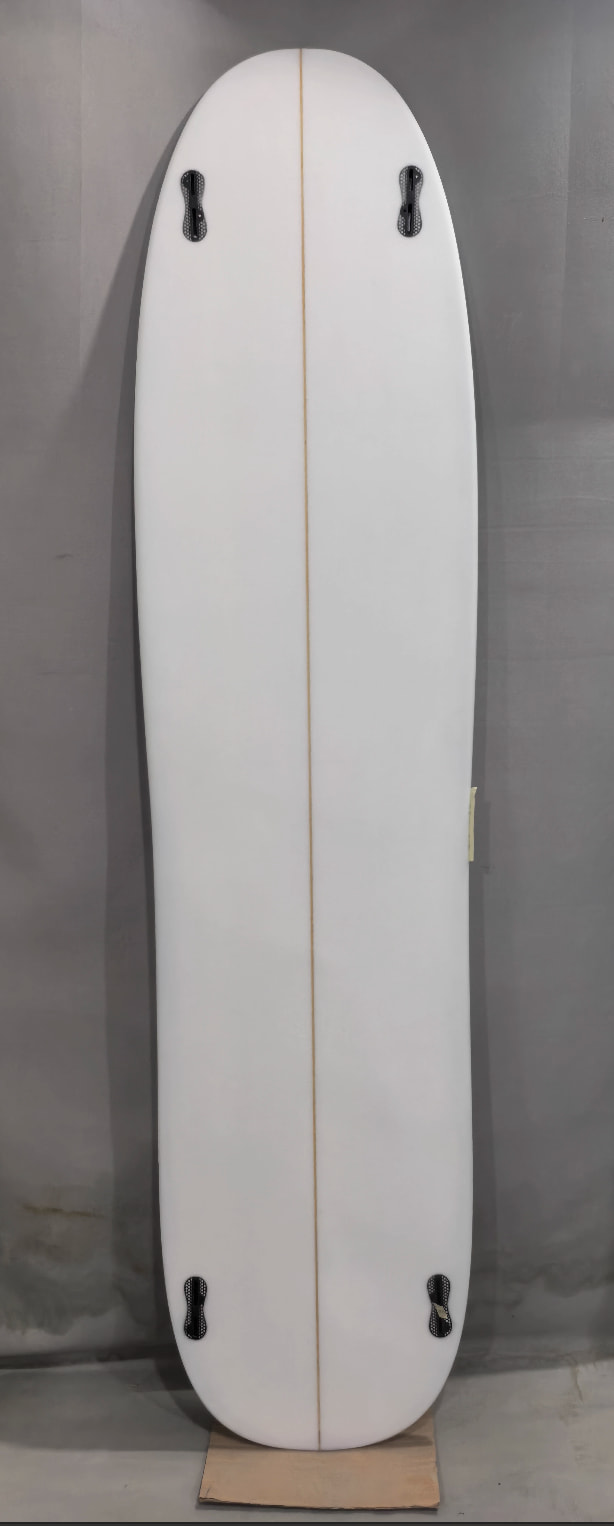
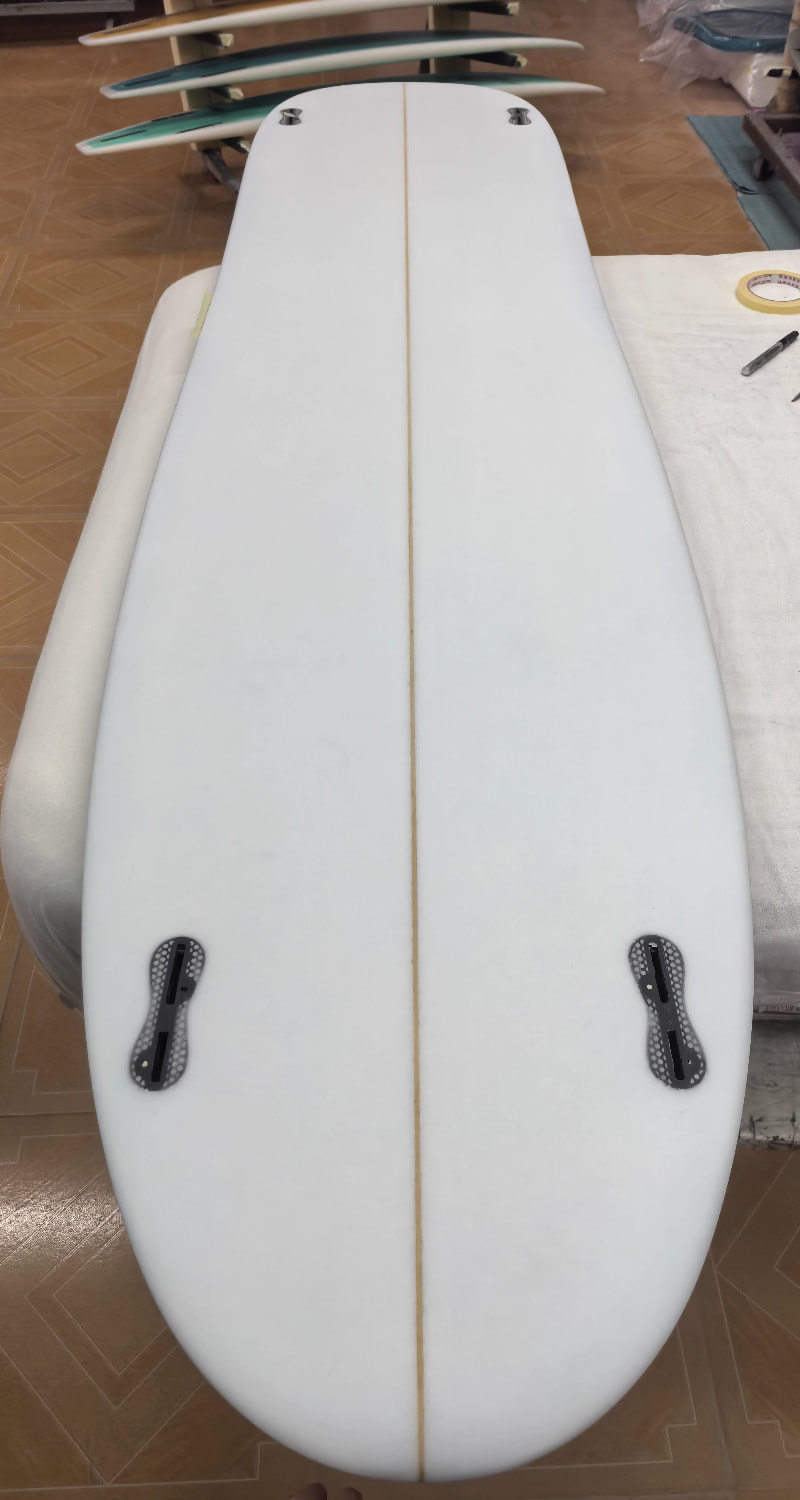
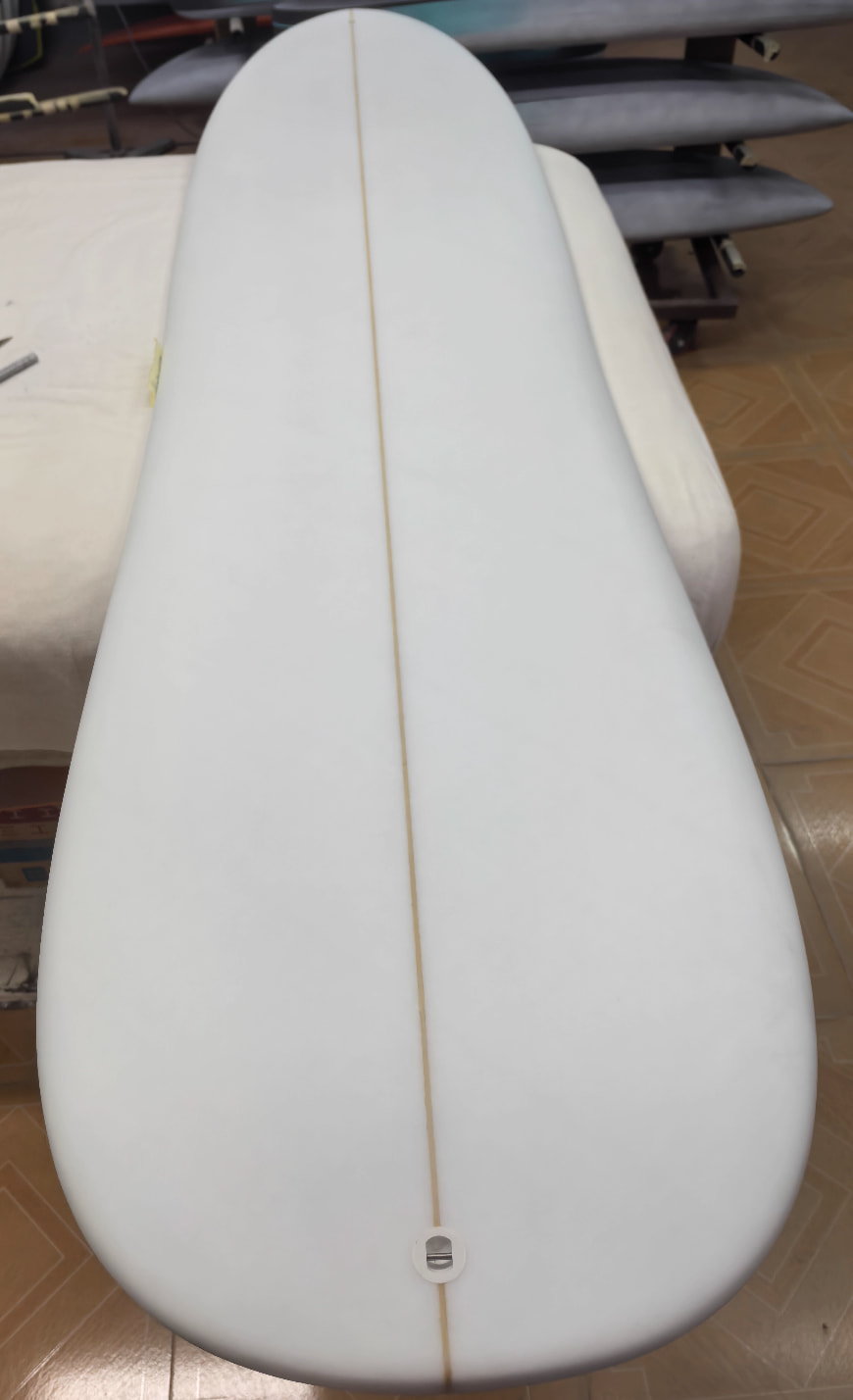
A big package outside the door:
When I opened it, I instantly knew it wasn’t quite as I planned. It’s just really hard to visualise on the screen vs in the hand. It seemed a bit wider and also the rails weren’t as pinched as I envisioned.
I then opened the boat decking I ordered to use as a full length deck pad. I found that the sticky layer was peeling off already. On seeing that I planned to just peel it off. However,
After cutting to size, I found that I couldn’t peel off the layer. So, I gave up and stuck it down anyway. (later on this decking seemed to work fantastic - so it’s just a matter of getting the decking without that sticky layer and gluing it down yourself. I tried cork before and it was a lot heavier)
Next time when cutting the EVA foam, I’ll cut in straight lines for the length of the board and then cut rounded from measured points. I screwed up the cutting a bit.
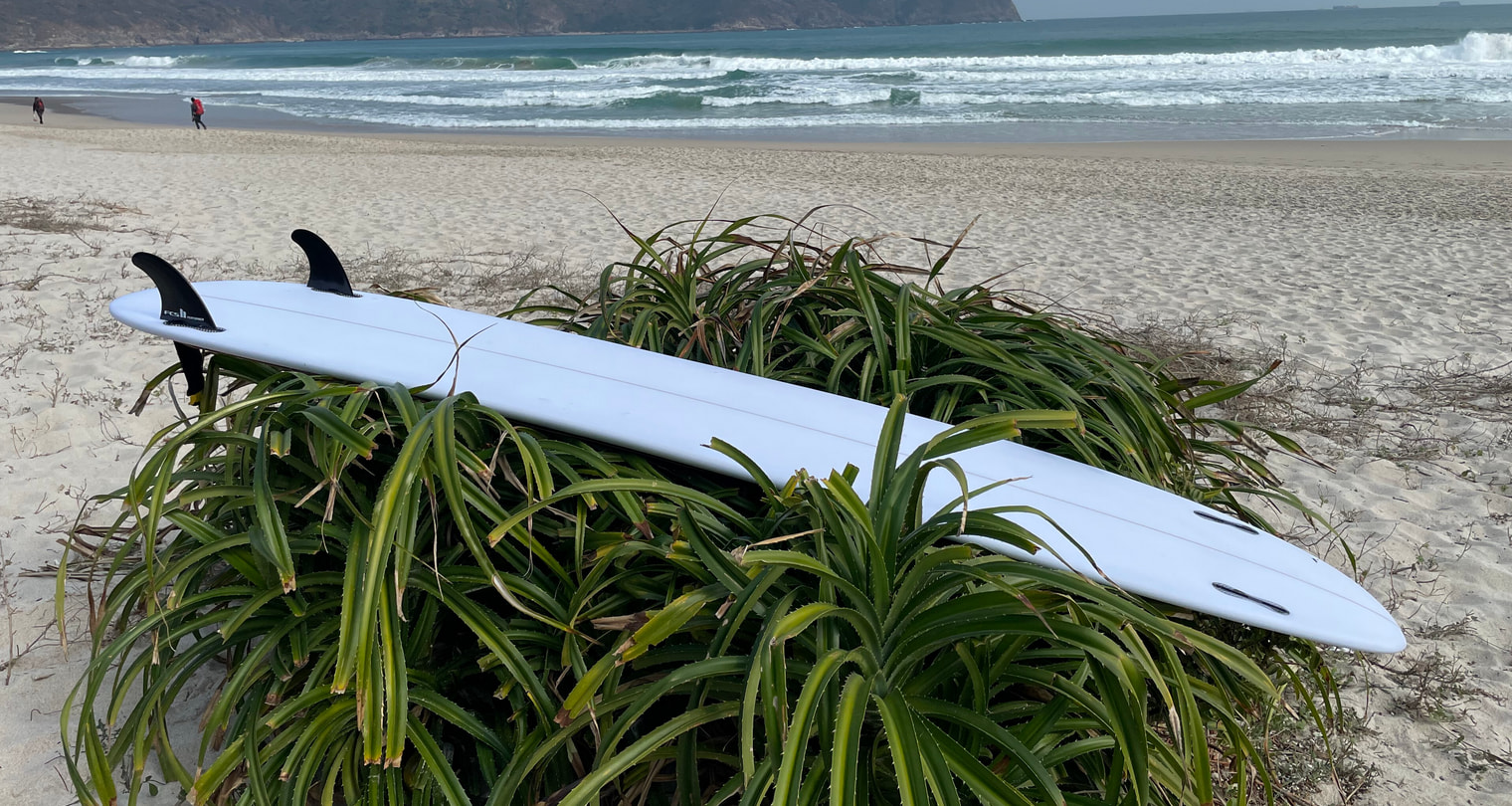
Ride test 1:
Getting the board to the beach wasn’t that easy. I had to order a private goods vehicle. Surfing is particularly difficult here.
The area I am aiming this board at is mushy, but often goes hollow most days. However, there are some days where you need a longboard and that’s what this board is supposed to be for. There is also a smaller wave spot around the corner. This should pair the board with my normal board. That was the plan.
Initially it looked like small waves. Perfect. I started off with the narrower end.
COULDN’T catch a thing! Just doesn’t glide! Shocked.
Never mind, try the other end; the fat soap bar.
Fortunately this worked a lot better.
I think there’s a slight pin effect on the narrower tail and some how this really, really drags the board back. Maybe there’s more to it than this.
However, while the fat end is functional, the board isn’t CATCHING waves like a longboard. It just doesn’t get up and glide easily. It’s probably similar to a normal HPSB in that regard. This is a total failure.
However, when after you’ve caught a wave, it’s fantastic and glides amazingly well. It’s very fast. It works. It’s even possible to turn.
How well does it turn though?
Hard to say because that’s when my leash, which I’ve had for many years, decided to break. Twice. At different ends.
So I wasn’t able to test the board properly today.
Conclusions:
It seems to fail in its goal of catching like a longboard, but it works OK. It’s still better than a shortboard in small waves.
Er… Swaylocks please help? I don’t know what’s going on here. Why doesn’t it catch waves as well as I’d hoped… yet it’s fast once up to speed.
I’ve already tested low rocker 6-7’ boards, so this isn’t anything new for me.
The pinched rails I’ve also tested before, but these are less pinched. I’m not sure what to think of that.
The wide aspect is confusing. I like the stability. I just thought that was supposed to help early planing? Maybe I can contribute to the forum that that is not correct?
Maybe my error was not going higher volume, thicker…
But that was the primary objective.