Dead, thanks, this and what Wouter is asking about is what I want to know.
Wouter, what is that very curved line on your first dwg file? I see that when I use BoardCadd. thx
oooh, this just gets better and better... very interested. thanks to everyone contributing
Wouter,
I know you and the rest of the crew are waiting for Deadshaper or Mike to respond (me too!).
From where I stand those top rockers look very flat. One of the benefits of curving it more is that you can keep the same thickness in 2/3 of the board, so the thickness is not so concentrated around the bottom rocker low point. You can also shed a bit of thickness because the volume is distributed over more area. Another benefit is that you can move the thickest area away from the bottom rocker low point. Think of this as a way of playing with board width without messing with the outline.
Take 2 full size bottom rocker templates (use a longer one for the top rocker) and move them over each other and you’ll see elegant “Turkish Slippers” pop out.
In your shaping software get rid of the middle point in top and bottom rockers - use only endpoints.
PS forget all the above if you are shaping boards thicker than your tail rocker height. Then you’re into S decks and a world of pain.
Everyone (who hasn't) should read the ''deck rocker standard'' section in the Clark Foam catalog. For DS and surfding and BB, etc., this is old news: PU blank manufacturers much prefer to reference custom rockers off the deck side. A blank has a set foil; when you cut it and re-glue it to a rocker different than its ''natural'' curve, translation of that rocker to deckside can distort the deck. Indexing off deck avoids this. Desired bottom rocker is then shaped in to yield foil (which is relationship of top and bottom curves).
For CNC shapes, and handshapes where you're trying to stay in hard foam (PU has that density gradient), getting the deck curve as close to finish as possible really helps. And of course in CNC its an even bigger consideration. as you have to ''index'' the blank properly for the cut. Having a deck curve that's very different from the end product is both difficult to use and weaker when finished. There's a few other tricks too, but I can't tell you everything.
Very well put Mike!
Wouter be careful with CAD programs they can be very deceiving. You still need the fundamental principles and theory when designing. A CAD program will not make you a board designer. It is only a tool. Regardless of how you developed your designs (Battens, Rocker Sticks and rail jigs) or Cad you need to start with a good deck curve. Having feed back is a big plus and believe me I have took some brutal criticisms on some boards that when on some boat trips. However I was lucky and had some honest feed back and was able to improve my design. Fortunately Tom Rezvan did not give up on me and gave me a second chance to improve my design. It was all in the Deck line and rocker curve. It has to be continuous. When your surfing reef breaks you need your board to respond to your every whim. I found that your rocker apex is different from a beach break to reef break. Here is some family photo of get some work done in the bay as well as R&D in the Mentawais with Tom Rezvan:
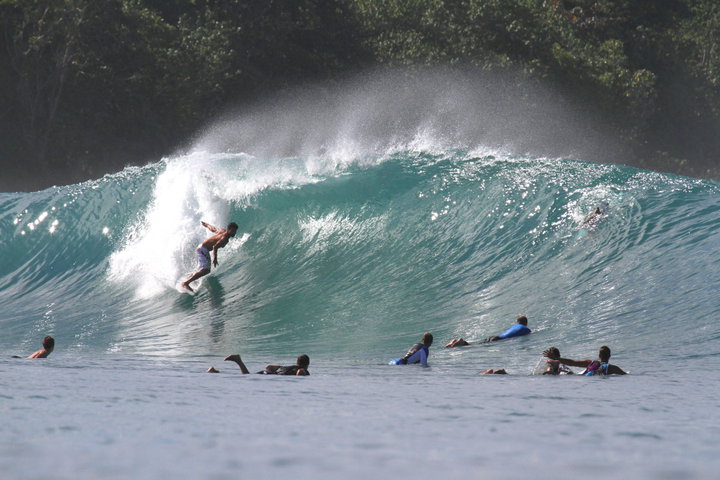
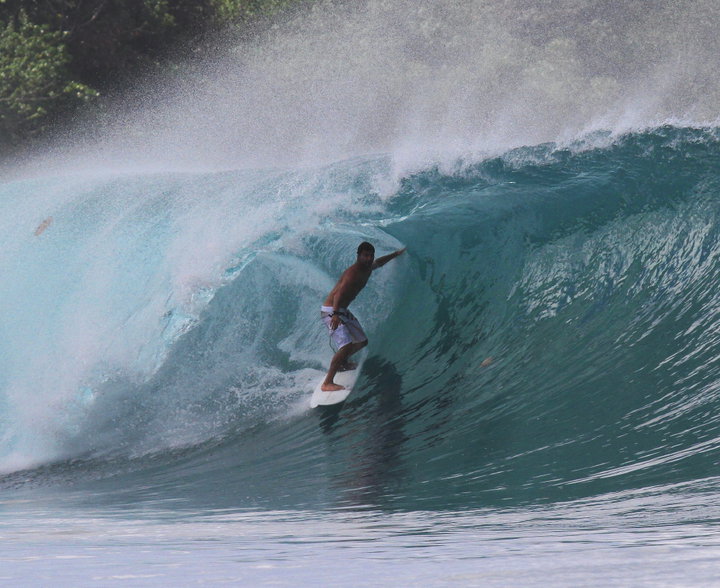
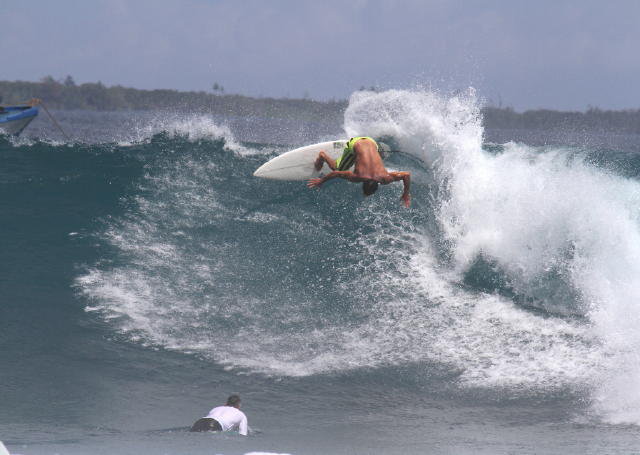
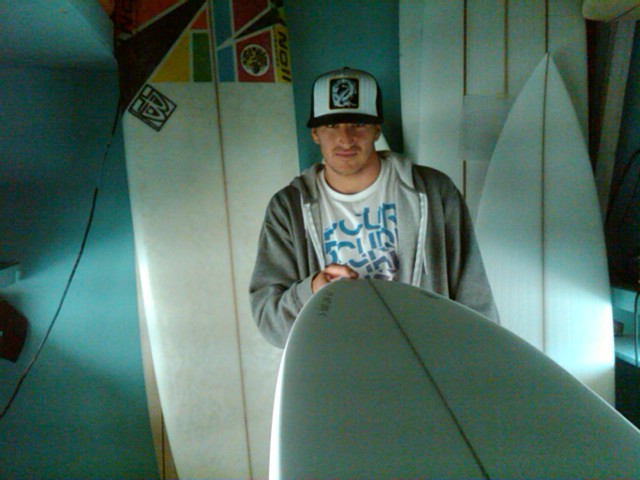
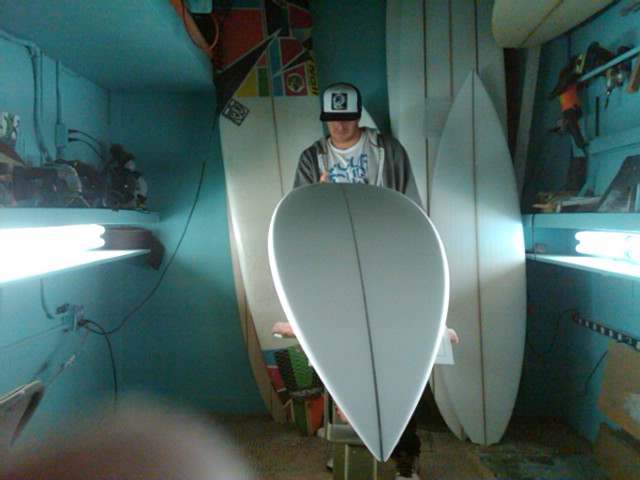
I was told to destroy previous rocker apex on the boards for INDO. The second round with hit it. I will take photo’s of the first round rocker and compare it to the second round of boards for INDO. We finally got the rocker dialed for the Mentawais. Here’s a few more photo’s from the resent R&D trials:
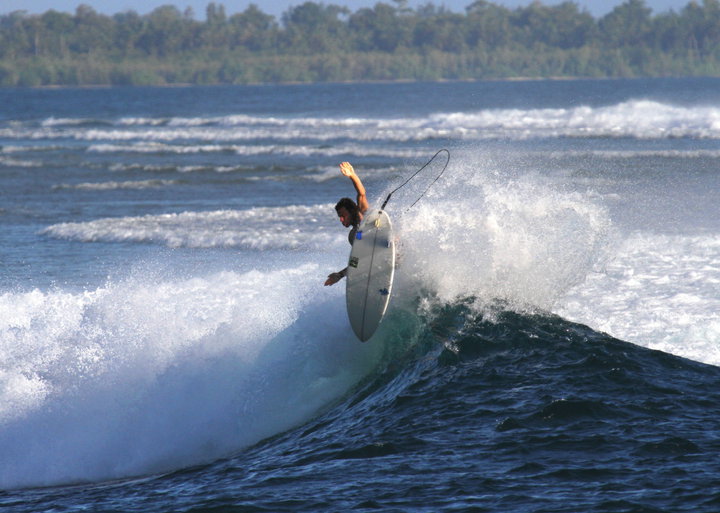

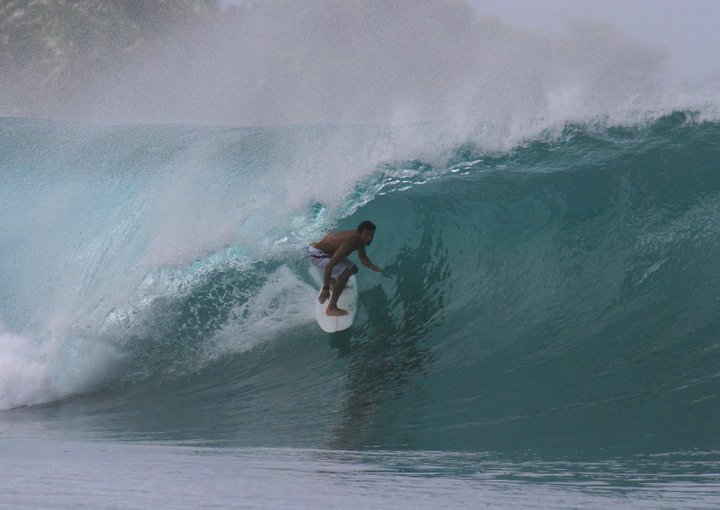
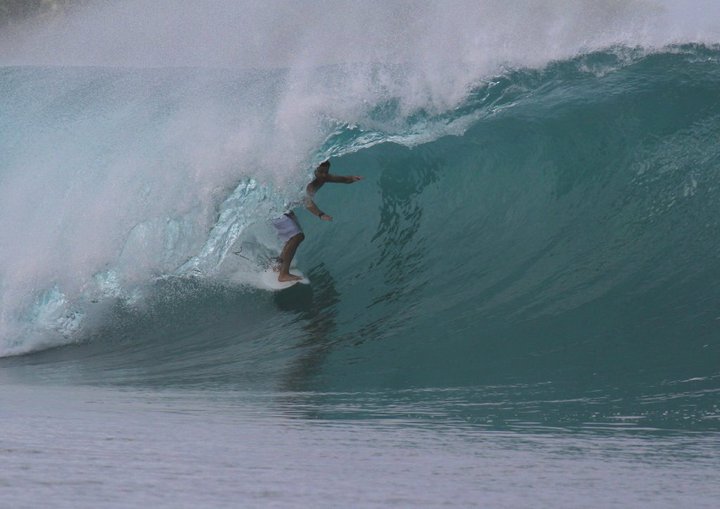
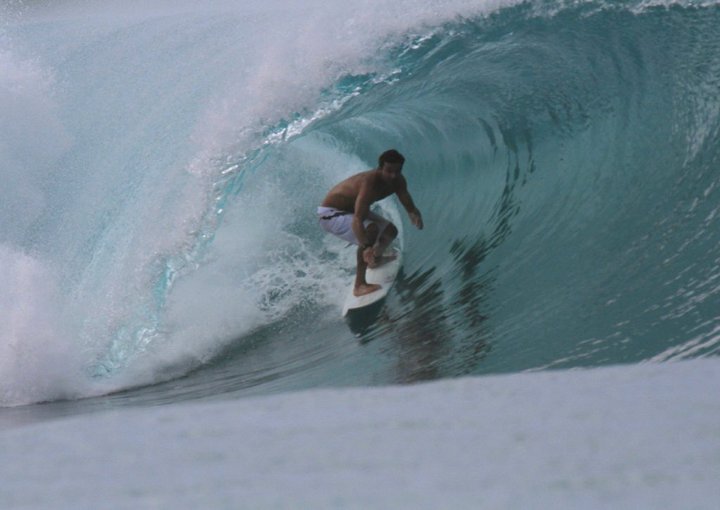
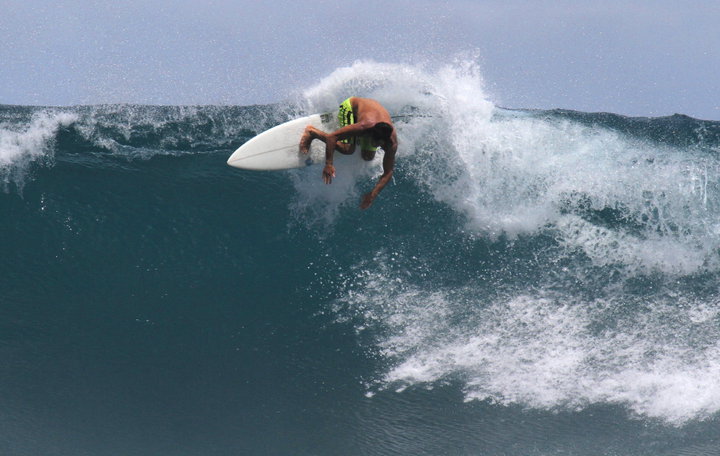
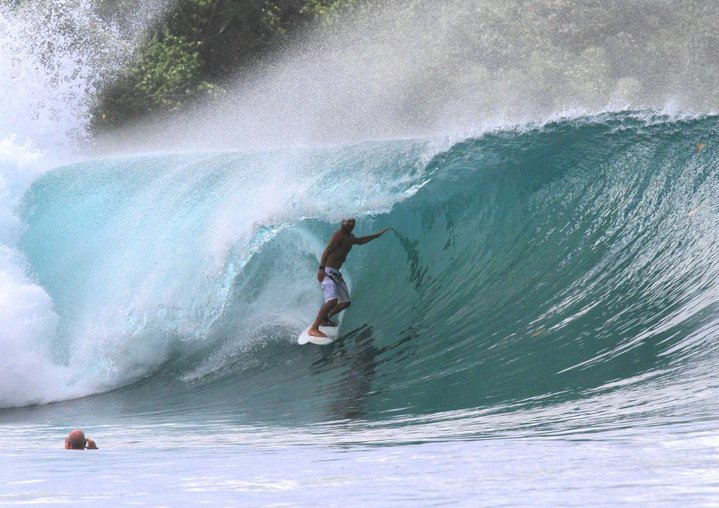
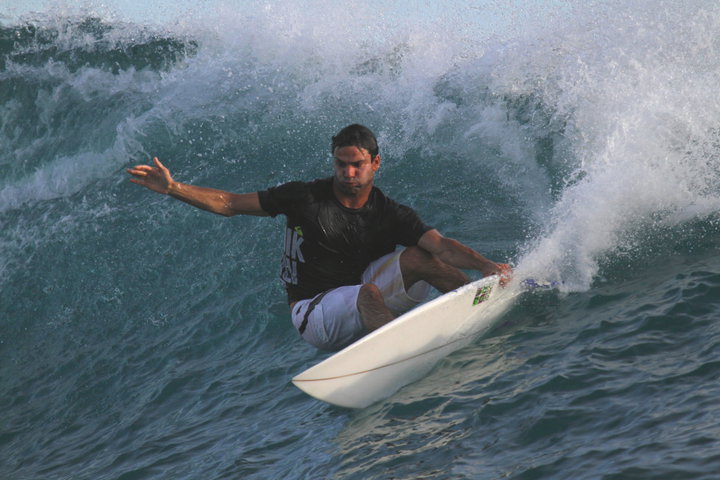
DECK ROCKER STANDARD
At CLARK FOAM we use the deck for all final measurements and glue all boards by indexing the deck of the blank to a precut stringer.
There are several reasons for this method but probably the most important reason is the need to have the deck as close to shape as possible for strength.
Blanks are molded deck down. Gravity and mold temperature makes a strong, high-density layer of foam on the deck side of the blank.
If one shapes through this area the final board is significantly weaker.
in·dex - in decks?
. in·dex·es or in·di·ces (-d -s
-s z
z )
)
**1. **Something that serves to guide, point out, or otherwise facilitate reference, especially:
**a. **An alphabetized list of names, places, and subjects treated in a printed work, giving the page or pages on which each item is mentioned.
**b. **A thumb index.
**c. **A table, file, or catalog.
**d. **Computer Science A list of keywords associated with a record or document, used especially as an aid in searching for information.
**2. **Something that reveals or indicates; a sign: "Her face . . . was a fair index to her disposition" (Samuel Butler).
**3. **A character ( ) used in printing to call attention to a particular paragraph or section. Also called fist, hand.
) used in printing to call attention to a particular paragraph or section. Also called fist, hand.**4. **An indicator or pointer, as on a scientific instrument.
**5.**
**a. **Mathematics A number or symbol, often written as a subscript or superscript to a mathematical expression, that indicates an operation to be performed, an ordering relation, or a use of the associated expression.
**b. **A number derived from a formula, used to characterize a set of data.
**6. **A number that represents the change in price or value of an aggregate of goods, services, wages, or other measurable quantity in comparison with a reference number for a previous period of time.
**7. ****Index** Roman Catholic Church A list formerly published by Church authority, restricting or forbidding the reading of certain books.
+++++
SO BASICALLY, IF THE DECK ROCKER IS DIFFERENT FROM THE BOTTOM ROCKER, YOU GET DISTORTIONS, WOBBLES, BOBBLES AND KOOKY LUMPS.
FOR NEWBIE EPS SHAPERS WHO MAKE THEIR OWN BLANKS, I GUESS YOU SHOULD DESIGN A BOTTOM ROCKER FIRST, THAT YOU THEN USE AS AN INDEX TO MAKE THE DECK ROCKER.
CONTINUOUS CURVES BEING EASIEST TO START WITH?
[img_assist|nid=1053605|title=clark foam|desc=|link=none|align=left|width=474|height=640]
P.S. I HAVE JUST BOOKED A STAY IN ALOITA RESORT, MENTAWAII!! NO MORE HAWAII
WOOHEEEE
GREG TATE: THAT IS THE CURVATURE LINE [OR TANGENT ANGLE LINE] THAT HAVARD SPOKE ABOUT ON THE THREAD OF EVERYSURFER HIS STRINGERLESS HOME BUILT THREAD
Ding wrote ’ I was told to destroy previous rocker apex on the boards for INDO’.
Rocker apex word has come back? I’m confused…
Fuk it, I’m just going to dream about being a Goofy footer in the land of Lefts…
do dodo do do do dodo…
Wouter:
I still design my boards from the deck even for XPS or EPS.
Do you want to surf good or average?
Kind regards,
Surfding
Wouter:
I still design my boards from the deck even for XPS or EPS.
Do you want to surf good or average?
Kind regards,
Surfding
Hey Ding,
I surf average waves.
So how do you design an average wave board? Say 6ft0 *19.5 * 2.xx
We all want to understand how to design a board, starting with the deck.
Isn’t it crazy early in Cali?
Wouter
Wouter said ‘So how do you design an average wave board’…I guess thats the eternal question…
I’m not contributing to this debate constructivly at all but surfdings photo’s got me frothing out on barrels. Thanks ding! This dude blew me away riding a 5’8’'x 18 1/4 x 2 1/2 round pin tail. Middle picture looks like he nose riding it’s so small. Enjoy…
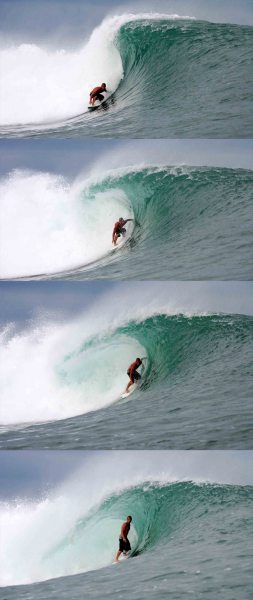
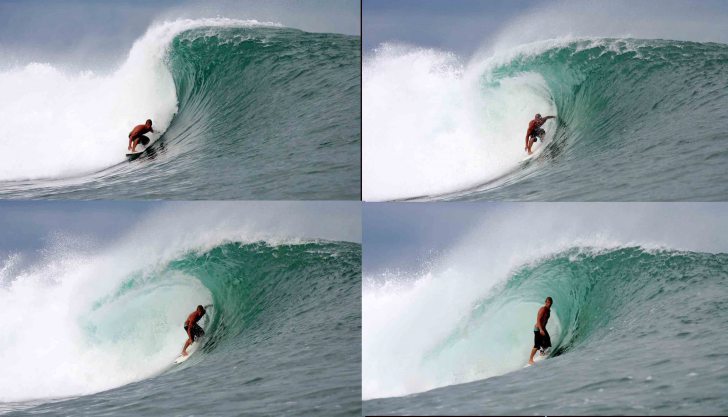
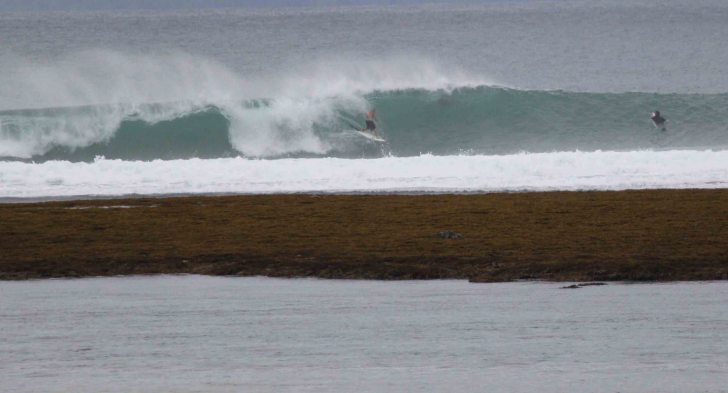
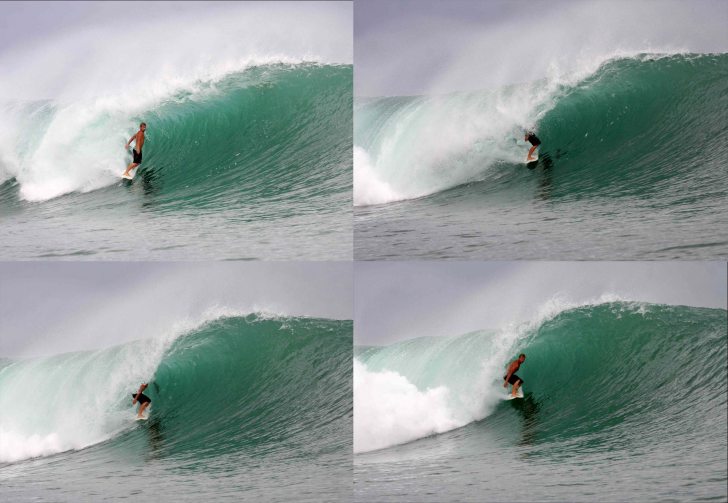
Nice pix… but I can’t tell if the boards are working unless you Photoshop big white teeth smiling on each guy…or at least run big ads in da magazines… LOL!
All kidding aside… man you have been busy working with those Pro Joes. Good work.
Greg… Wouter… now you want the secret to the magic deck?
Aye, there’s the rub!
A lot of that goes into the subjective file, sorry to say. Yes, flowing pretty looking decklines are pleasing to the eye but Greg Liddle, Tom Morey and some others would tell you that’s bunk for certain designs… which Ding dutifully noted.
Part of the beauty in what we do is that individual approaches by unknown folks thinking outside the box can stumble upon something that garners attention… if no where else, at least here on Sway’s. Thank god for this venue, because without it the rest of the surfing world relies on the media whores to announce their genius in design only after they have branded and signature marked it. Although that approach has merit in a greedy corporate world gone wrong, it runs counter intuitive to creating a design rich platform.
More on what you asked about later… like good sex, it’s the anticipation that sweetens the honey.
INDO Rocker is different than Huntington Beach Rocker.
I will post some differences when I get home.
In Catalina Island on a boat for the week-end.
Up early.
[quote="$1"]
Not sure I totally agree with this statement (or maybe I'm misunderstanding it). Liddle's deck shapes are unbelievably sensual and are certainly pleasing to my eye as well as others. Greg's decks are designed for controlled flex over portions of the board and stiffness in others. The thickness flow also reinforces the trim/sweet spot. Perhaps the secret ingredient in Greg's hulls is, in fact, the deck design. It may be the feature that gives his boards a unique feel, even among really nice "hulls" shaped by others.
Part of the problem in analyzing Greg's boards from a design standpoint is that all of the curves are so blended that 1/4 to 1/2 inch changes don't show up readily but make a huge difference in how they work. That's been my only complaint about some of his boards is that the shorter boards (<6'10") don't have the liveliness of the longer boards and that is probably due to the scrunching-up of the curves to fit the shorter length.
The first two things that come to mind regarding deck rocker here are 1, angle of attack and 2, turning radius on rail.
Doh...
Meh...
[quote="$1"]
Yes, flowing pretty looking decklines are pleasing to the eye but Greg Liddle, Tom Morey and some others would tell you that's bunk for certain designs.........
[/quote]
Not sure I totally agree with this statement (or maybe I'm misunderstanding it). Liddle's deck shapes are unbelievably sensual and are certainly pleasing to my eye as well as others. Greg's decks are designed for controlled flex over portions of the board and stiffness in others. The thickness flow also reinforces the trim/sweet spot. Perhaps the secret ingredient in Greg's hulls is, in fact, the deck design. It may be the feature that gives his boards a unique feel, even among really nice "hulls" shaped by others.
Part of the problem in analyzing Greg's boards from a design standpoint is that all of the curves are so blended that 1/4 to 1/2 inch changes don't show up readily but make a huge difference in how they work. That's been my only complaint about some of his boards is that the shorter boards (<6'10") don't have the liveliness of the longer boards and that is probably due to the scrunching-up of the curves to fit the shorter length.