The broken images are on pages 4, 7, and 10. I have seen this kind of thing happen on the posts of others as well. I am just curious to know the reason why this happens. My theory is that you uploaded the files a while back and have since uploaded many other pictures. Eventually these pictures moved off of the horizon of your current image set as a free user, and the links become broken. I could be wrong, though. I am just trying to rationalize what seems to be a widespread problem on Swaylocks’s.
I will go back and have a look to figure out what’s missing. More than likely it was important at that time but not so much now.
I’m keen to help in any way, but with you 3 guys doing your own thing you’ll be able to look at it with fresh eyes and new ideas and fly past what I’m doing.
[quote="$1"]
I'm keen to help in any way, but with you 3 guys doing your own thing you'll be able to look at it with fresh eyes and new ideas and fly past what I'm doing.
[/quote]
[quote="$1"]
I am operating on Brett's 8-9 years of empirical observations that at walking speed (~ 3 mph) 2.5 sq. in. of foil will lift 1.0 kg of weight (including surfboard). He also discovered early on that NACA profiles were not needed to get his results. His final rule being as speed doubles lift quadruples.
... I think I should be able to generate enough information to build a functional hydrofoil with Brett's observations and a little right triangle geometry/math.
[/quote]
[quote="$1"]
I think Brett's empirical results have given us enough to start designing and building paddle-in hydrofoil refinements.
[/quote]
**Surffoils**,
Anything I might accomplish related to PIH (Paddle-In Hydrofoils) has been catalyzed by your innovative trailblazing.
And while Ive made about 90 versions of the foils, Ive needed people like Alex Budlevskis to ride the foilboard and supply feedback.
Id like to be Alex Budlevskis as he’s the first person to ride a PIH , that’s trailblazing !!!
…from this day forward , shall we call him ’ Alex Armstrong ’ ?? …‘alex , that’s one small step for man , and …one giant [foil] for mankind’ bwahaha
[ …‘foil’ … in no way referring to the … er …‘other’ variety , prevalent through the sixties and seventies  ]
]
.
Hand layup or vacuum? And 2 layers of 10-oz between sheets of plywood?
By hand , and there’s 2X 6 and one of innegra between the ply. The ply is only ~2.5 mm thick each.
SO whats your recommendations if I want to make a foil
re: foil size/ strut length/ finbox or not? What sort of materials? And costs?
I think what you build is more about why you’re building it…
Foiling is an intense ride, even on an average wave its a totally different experience…if the look on Alex’s face is to be believed.
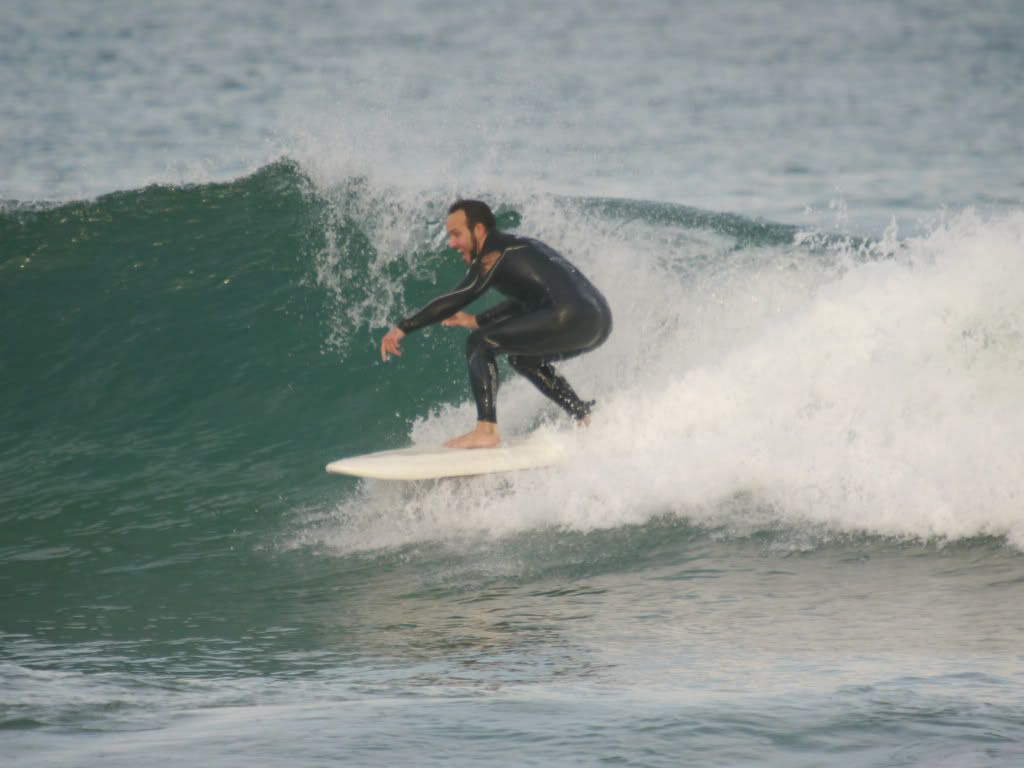
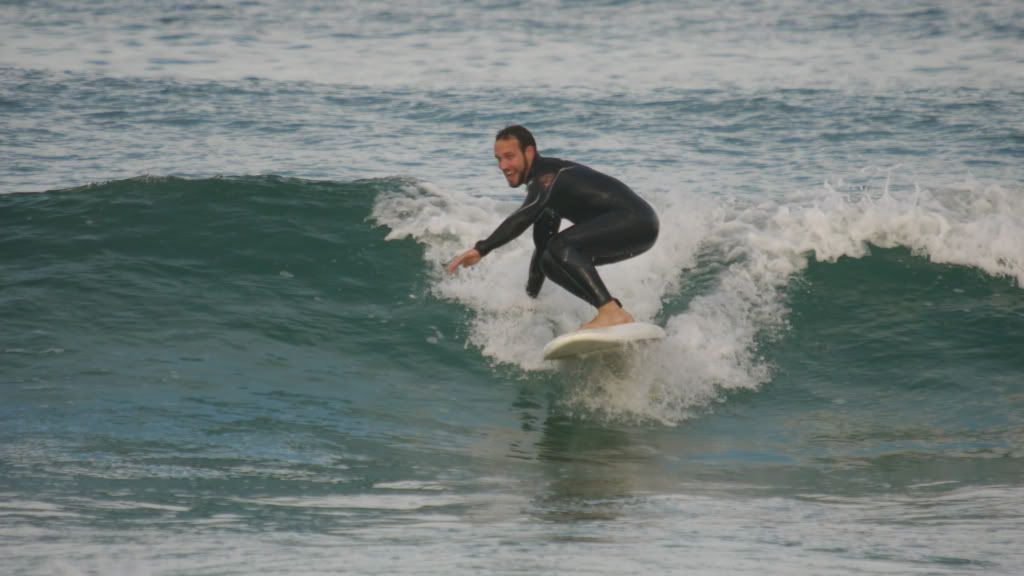
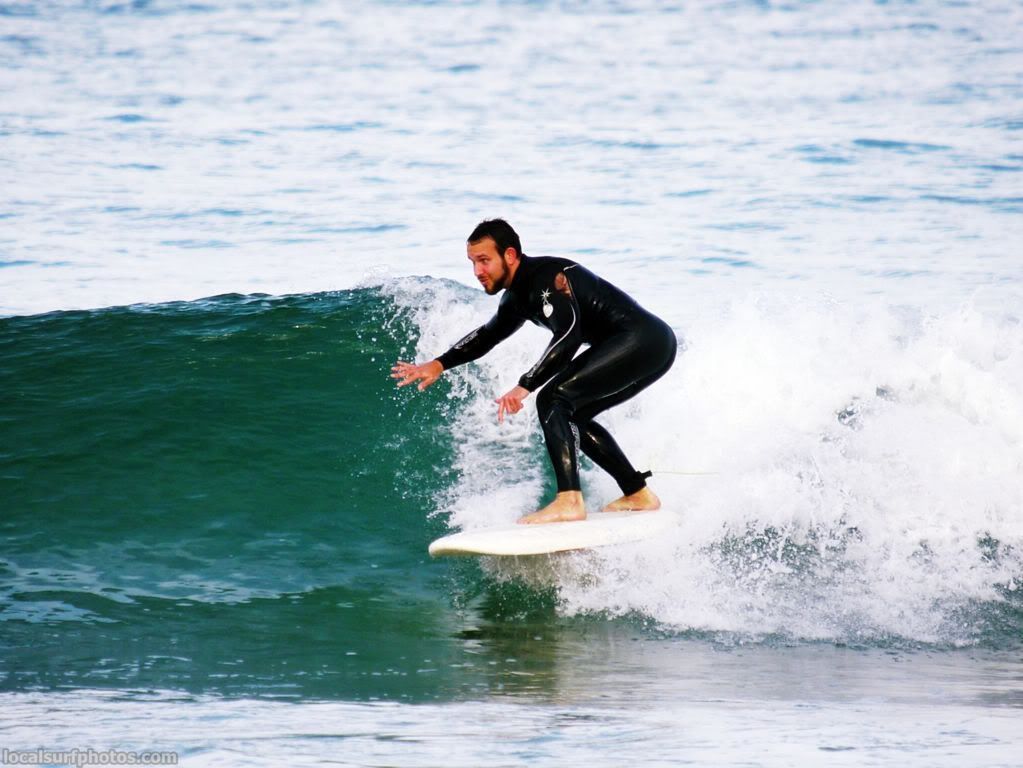
Ive put out all the dims and theories here so if you’re keen to make a Hydrofoil Surfboard, just pick one and go with that.
I can’t do it for you, but if you start building I’m here to guide you with what I know.
I think it is great you are going to try two foils with some backward sweep and mild dihedral at the tips…
I’ve been away for a while, but this thread is amazing. Lots going on here…
Thanks, surfoils.
JSS
Thanks maxmercy, I think you were in on the original thread with kcasey and Roy too ?
As Stoneburner pointed out, its all been empirical research because the established theories of low aspect , highly accurate foils don’t seem to function any better, and in some cases are worse than flat plate foils. It’s amazing that my first combination of foil and board resulted in a successful hydrofoil surfing display.
So many intelligent hydrodynamic ideas gleaned from surfboard, powerboat and sailboat design as well as various inspirations from nature and established aircraft theories all proved quite useless for surfing hydrofoil design so its a bit of a free for all when it comes to creating a design theory to work with.
There are a lot of variables to test with foil dimensions, positioning, height and foil profiles and lots of shapes work, some better than others and some are just magic to ride.
Well last Sunday I scrapped 4 weeks of ideas and designs that brought me to what I thought was a buildable twin-foil design (front wing + rear stabilizer foils). The combined foils came out over 3 feet long when scaled up.
But yesterday, I finally dimmed out – with right triangle geometry/math – a new twin-foil design that is much more compact. It is very simplistic but still has the same basic concepts I wanted to include before. I am happy with it.
I think I am going to go with foam core + wood base foils. I think part of the anchor feeling that Alex describes when paddling may come from the lack of foil buoyancy (dead weight). Besides I want to keep these foils as light as possible.
Also, I am beginning to think a center fin on or just behind the rear stabilizer foil may be in order (like an inverted tail rudder on an airplane).
Just some thoughts.
Design, contemplate, re-evaluate, re-design, ponder some more, refine then build: saves me a lot of materials. Now I must motivate …
Empirical is right! You are basically trying to design a plane that is meant to fly in a half-tornado (wave when looked at on the horizontal). There is no specific and constant ‘waterflow direction’…for that, you have found that some sweepback works (larger stall angle), and delta shapes, while less efficient, probably work better on smaller waves (greatest stall angle). Bigger waves, where the waterflow will be better defined, will tend to want to use smaller, less swept back foils. There is a huge difference in speeds to design for depending on the waves that will be ridden…surface piercing foils area compromise for various wave sizes, but probably can be made to work. I really enjoy reading this thread.
JSS
I believe this may be the solution for a general purpose PIH surfboard, for a number of reasons. It is one of the components for the twin foil design I am working on currently.
I am thinking more swept back for higher speeds though.
The real trick is how to use weight shifts as the control impetus in a two foil system, as one foil essentially is only there to stabilize the angle of attack of the main lifting foil. Sweep back will not help with velocity until you hit speeds approaching that of the speed of sound. It helps with a more forgiving stall picture, you can hit very large angles of attack before stall, with only an increased induced drag penalty. Sweep also widens the area being ‘lifted’ under the board. Combining a surface piercing foil with sweep and polyhedral will make for some interesting 3D geometric shapes. I am interested in how you guys proceed…
JSS
I am not an engineer. But it seems like the density and viscosity of water relative to air simulate fairly high air velocities.
Also, assuming we can extrapolate from the quadrupling of lift as velocity doubles relative to surffoil’s empirical lift area requirement that 250 sq. in. will lift 100 kg at 3 mph, 62.5 sq. in. will lift 100 kg at 6 mph. This presents some potentially interesting design and performance parameters as velocity increases.
I think the rear stabilizer foil may become a planing surface rather than a foil as velocity climbs past 6 mph.
This is what I am currently designing around …
.
I want to mention that smaller foils DO NOT induce less drag by definition. You should only consider the wetted area for planing surfaces, the effect on submerged foils is neglectable.
If you’d like to reduce the drag, consider high aspect ratio foils. Due to relatively small tip vortices, high aspect ratio foils induce less drag. (think of gliders http://en.wikipedia.org/wiki/Glider_(sailplane) and formula windsurfing fins).

No question we are working on low velocity foils. But what would be the equivalent air foil velocity be relative to a velocity of 40 kph for a foil in water?
The design concept I working on attempts to deal with reduced area for lift as the board rises and velocity increases. One thing I saw years ago when I researching foils showed when the foil left the water, lift was lost and the hydrofoil sank back down again – moving up and down. Surffoils angled 4-strut, two horizontal foil design clearly addresses increasing speeds.
Regarding drag, my objective is not to reduce drag with smaller “surface areas” but to more closely match lift with foil area and velocity, to help limit the whole foil from breaching the water surface – reduce surface area as the foil rises but still keep the foil in the water. I think what I am currently designing might help with this – getting the designed refined properly is another issue altogether. Split level and water piercing foils seems to be the correct solution to me.
I try to visualize the foil as it is moving through the water and as it turns to see how it will respond to various lift victors and potential drag. Perhaps I am wrong, but I find it difficult to believe that a foil with its entire leading edge traveling at a 45 degree angle to the water flow would have the same drag as a foil with its entire leading edge traveling at a 90 degree angle to the water flow – both with the same total surface area.
I believe principal water motion in a wave is limited to up and down, except when the top/crest “falls” due to gravity in shallower water. Propagation direction and velocity is “wave form motion” (water not actually moving forward). The surfboard sliding down the angled wave face due to gravity has a forward velocity vector in the same direction as the wave form movement vector. But the surfboard can also move parallel to the angled wave form face.