Hey folks,
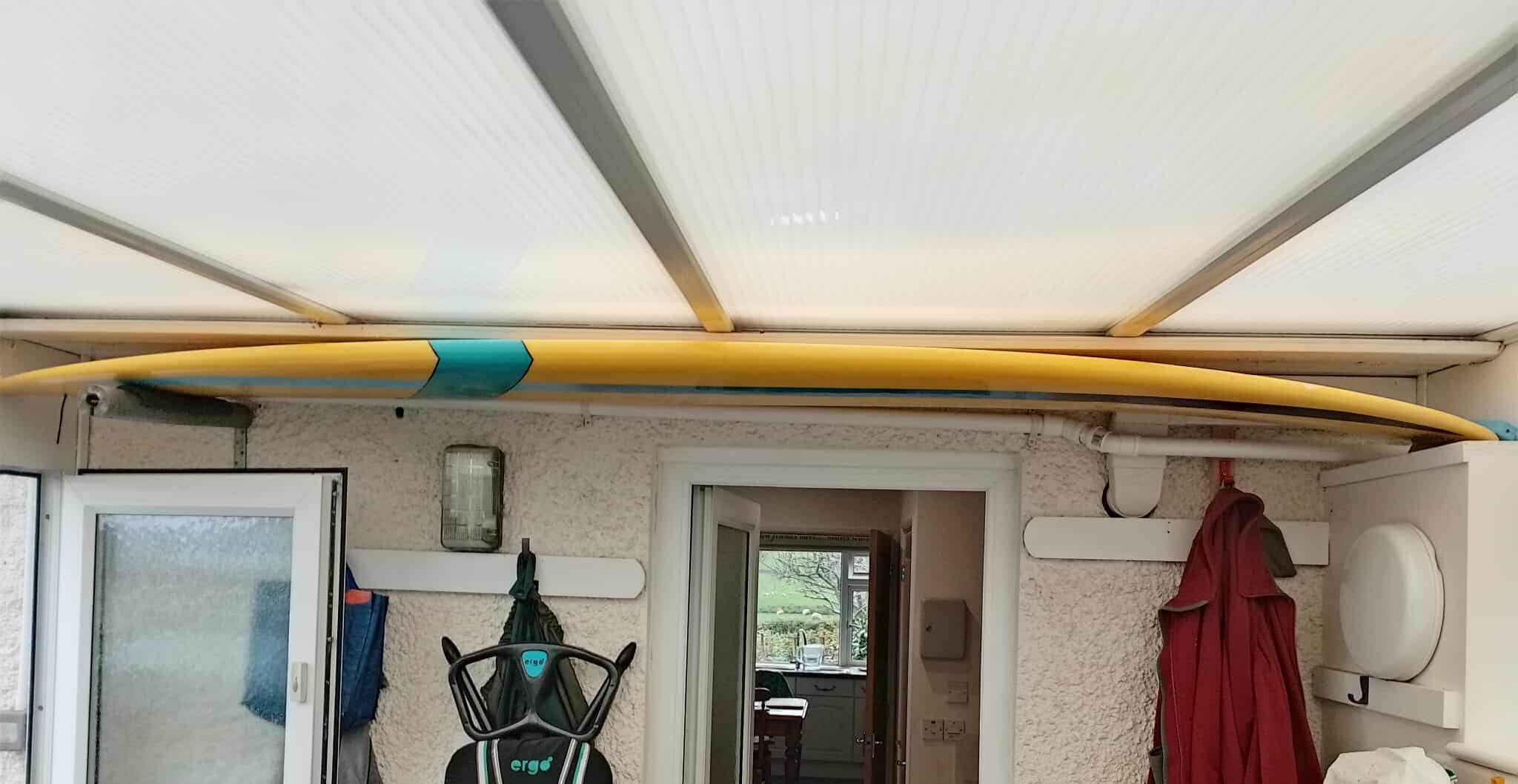
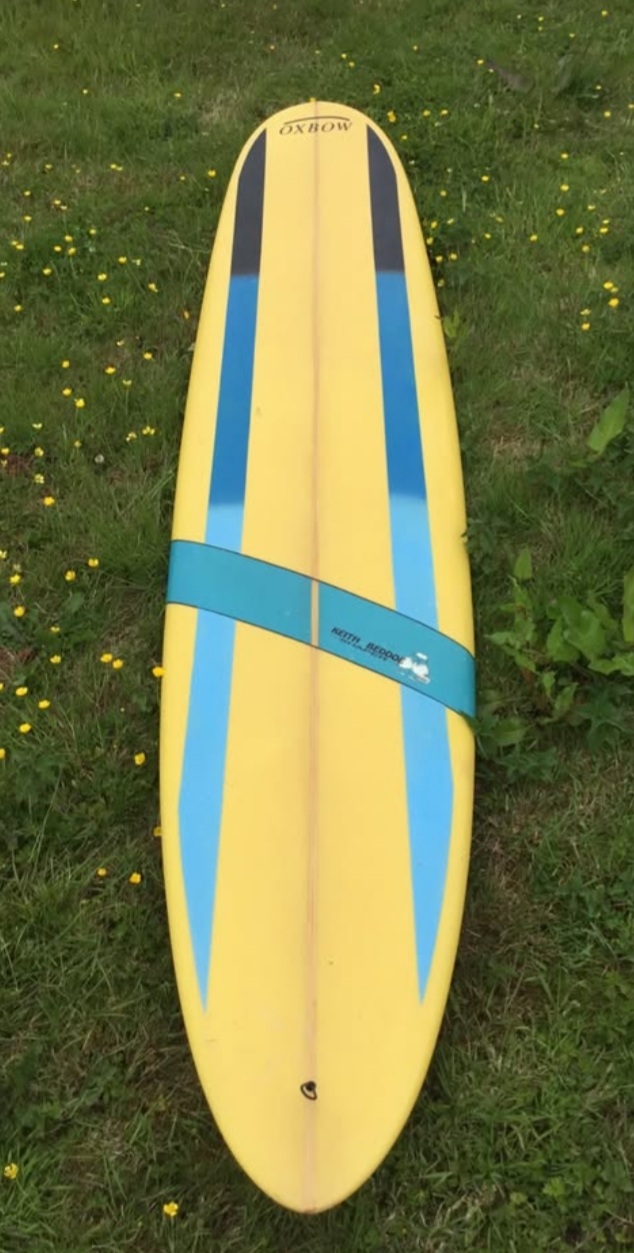
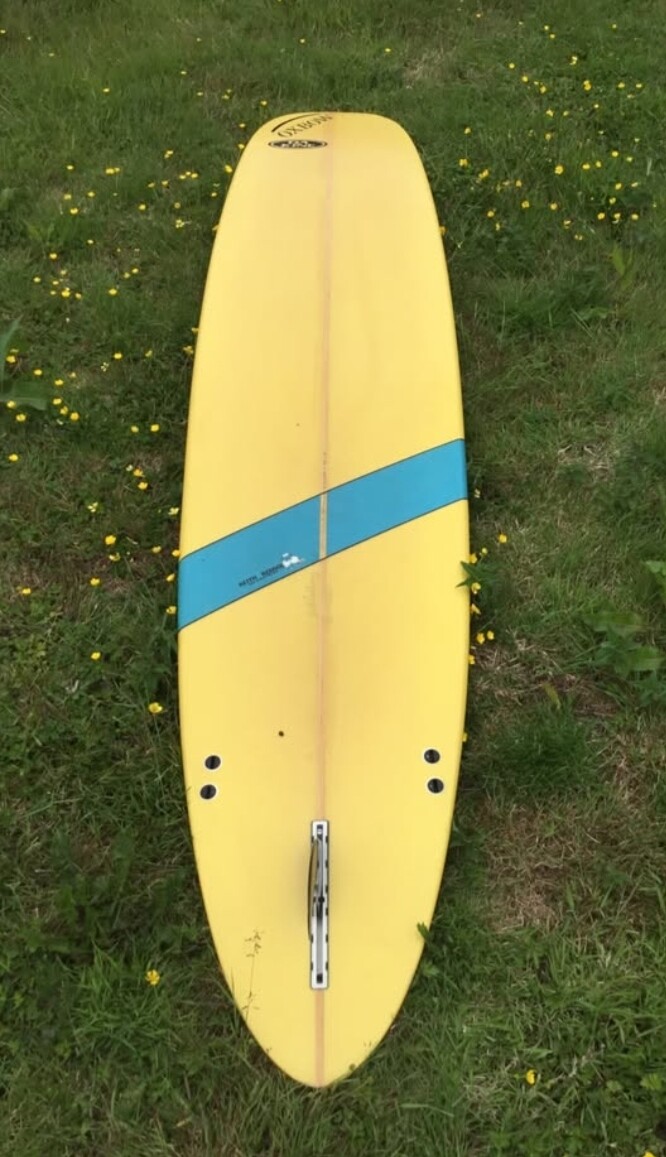
On a longboard I always see folk saying that the rocker should be flat in the nose with a bit of kick in the tail. This one is 10’ x 24” , is that too much rocker?
Hey folks,
On a longboard I always see folk saying that the rocker should be flat in the nose with a bit of kick in the tail. This one is 10’ x 24” , is that too much rocker?
That looks like a lot of rocker.
That’s what I thought @stoneburner
Is the board a custom or a factory model? Seems like a hard photo to use to judge dimensions.
@jrandy its a shaper built board, not factory
Even bottom side up on the ground, that nose still looks like it has a lot of rocker.
If you are considering buying it, you should measure the nose rocker first.
@stoneburner I had been, but after speaking with the shaper (he doesn’t remember the board specifically, it was from over 20 years ago and he has had a sleep since then!) he kind of talked me out of it.
Here are some typical US Bank rockers for 10 foot blanks:
https://usblanks.com/catalog/longboards/
10′ 2″ B Designed by Bruce Jones
NATURAL ROCKER
4 13⁄16“N 3 7⁄16“T
10′ 8″ C Designed by Matt Calvani
NATURAL ROCKER
4 15⁄16“N 3 7⁄8“T
10′ 8″ Y Designed by Rennie Yater
NATURAL ROCKER
5 1⁄4“N 3 5⁄8“T
*&$#@ deleted rather than edited.
That PVC pipe in the picture looks like 1” ID, which would make it 1-5/16” OD.
If so, seems like that NR would be no less than 6”.
Measure it. Rocker also depend a lot of waves shape where board will be use. 10 feet is realy long so need some rocker to be usable in a breaking wave, even more for a beginner who don’t know how to trim a board. For me here rocker is not a problem but 10’ is probably too long for an easy to learn beginner board.
Wolflore is a big fellow at 115 kg.
Apparently this was made from a 10’ 3 Burford blank.
115kg and 6’ 1”
Most folk have been saying 9’ 6 minimum for me…
Unless I can find a much wider, shorter board. Mark me as a complete beginner @lemat though I have been on the water before a long time back.
Harbour Surfboards size recommendation for a “Cruiser” at your weight puts you on a 23.125”-23.75” X 10-6.
IMO you should be looking for a bottom surface area loading rate of 15.32-16.32 lb/ft^2.
So at 10’ 1 x 24” it’s fairly bang on what they say, or am I misreading your message.
How do you work out how to transfer the bottom loading calculation into a real world board size? 
https://www.burfordblanksaustralia.com.au/specifications
It’s great that you have actually had a chat with the shaper.
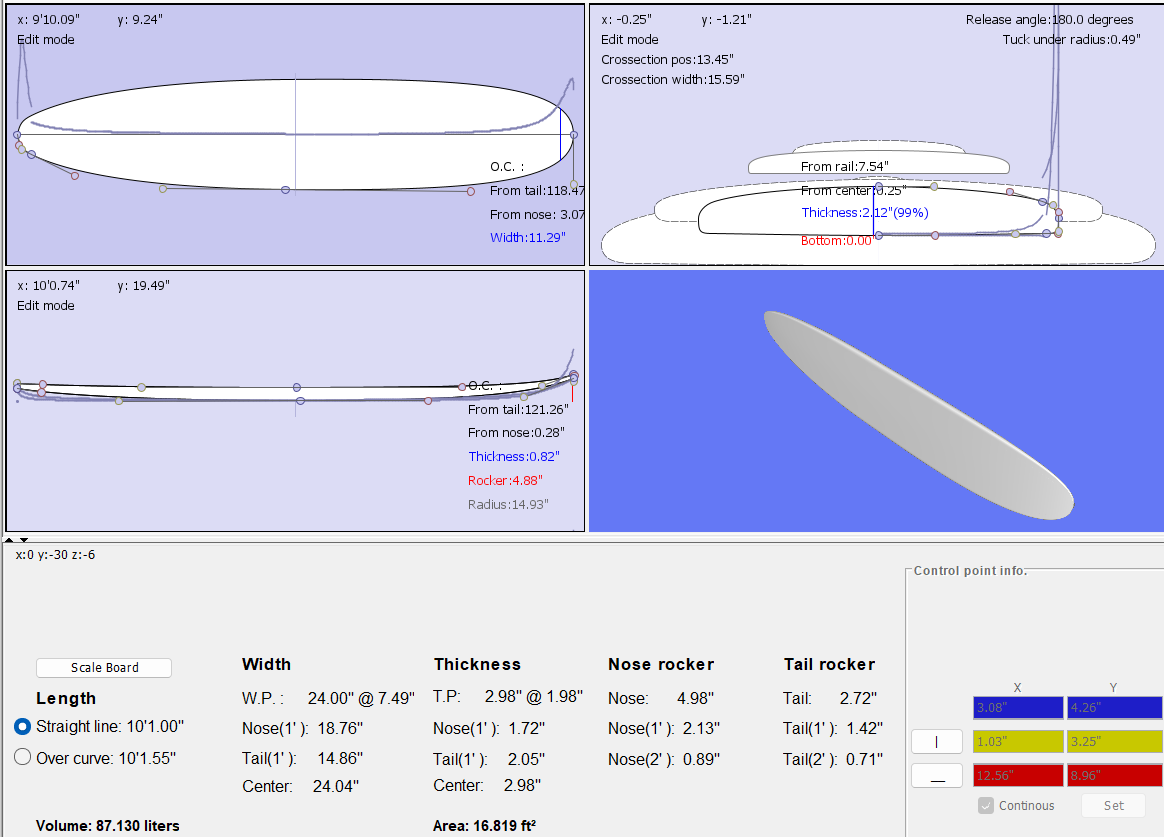
Raw ‘area’ of a 10’-1” x 24” board would be 16.8 (wide point forward) to 17.3 (wide point back) sqft, not discounted for any other factors like nose out of the water while paddling or surfing.
Images courtesy of BoardCAD LE
Looks like one of the “Nose flip” Weber Performers of the ‘60’s. Which could be ridden in the right wave under the feet of the right surfer. Webers nose flip version of the Performer turned out to not be that popular. The nose was too thin and the flip pushed water in average waves. Also an average surfer did not have the waves or ability to ride them. If that board is 20 plus years old; I would bet the it was shaped from a 10’3 Stewart blank from Clark Foam.
What @jrandy did with Board CAD is the most accurate way to estimate surfboard bottom surface area. I think total bottom surface area provides a reasonably accurate approach for determining bottom area loading rates.
I used elliptical surface areas based on Stewart Redline 11 and Harbour Rapier size range dimensions for your weight to calculate elliptical surface areas for bottom loading rates at 250 lb. (Elliptical surface areas will underestimate bottom surface areas for most longboard shapes.) With that in mind, for a beginner longboard I would be looking for a loading rate of no more than 15.32 lb/ft^2 if my weight was 115 kg.
The surface area Jim calculated was 16.82 ft^2. At 250 lb, that would be a loading rate of 14.86 lb/ft^2. That could be a good beginner loading rate for your weight.