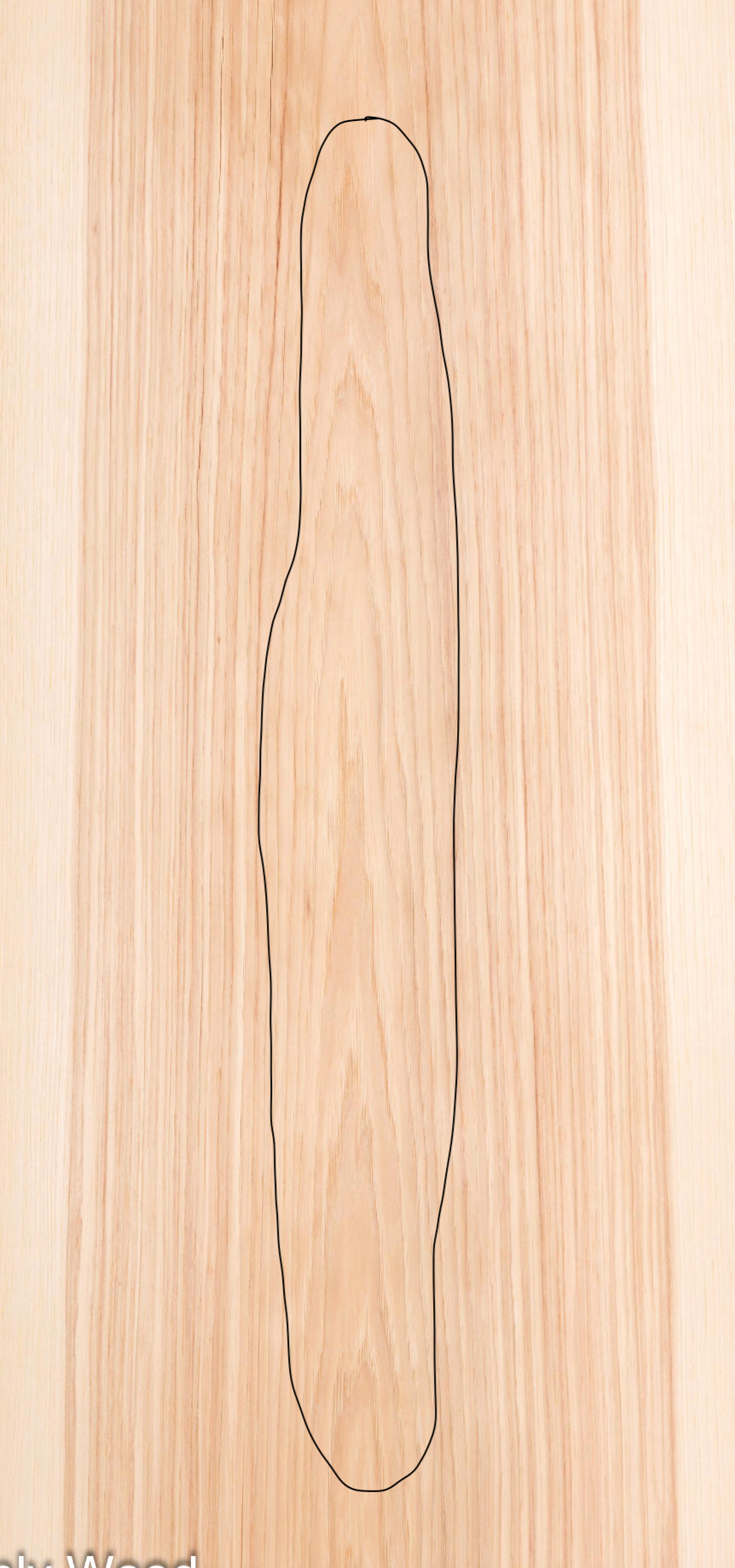
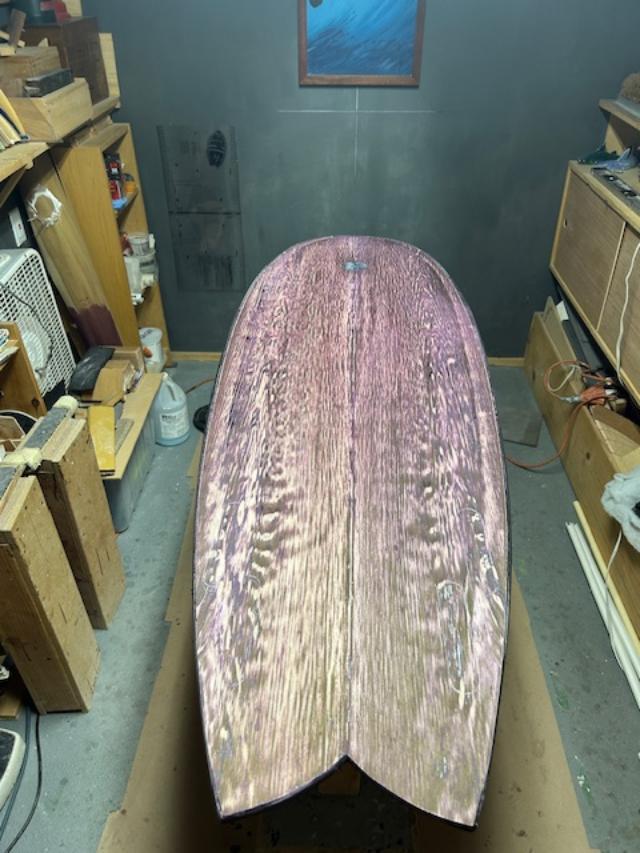
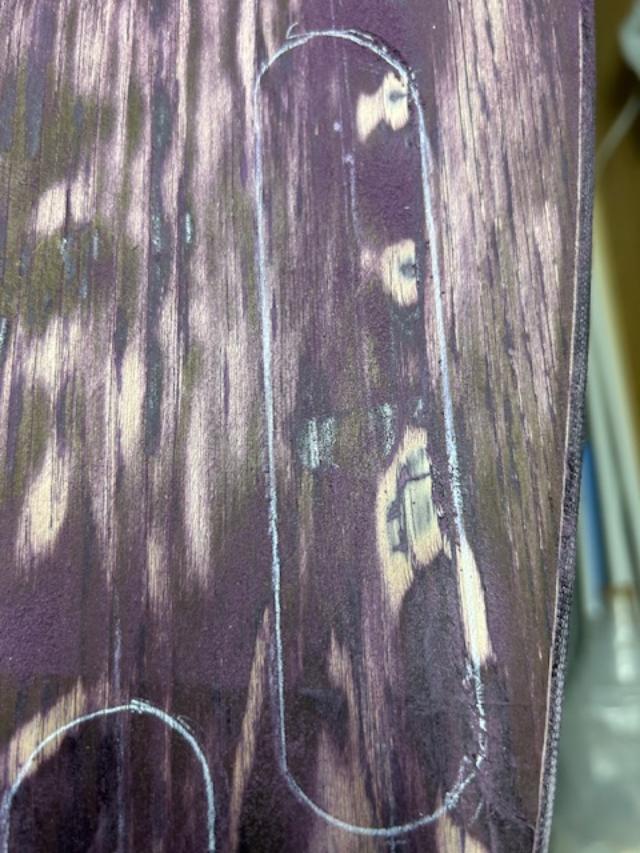
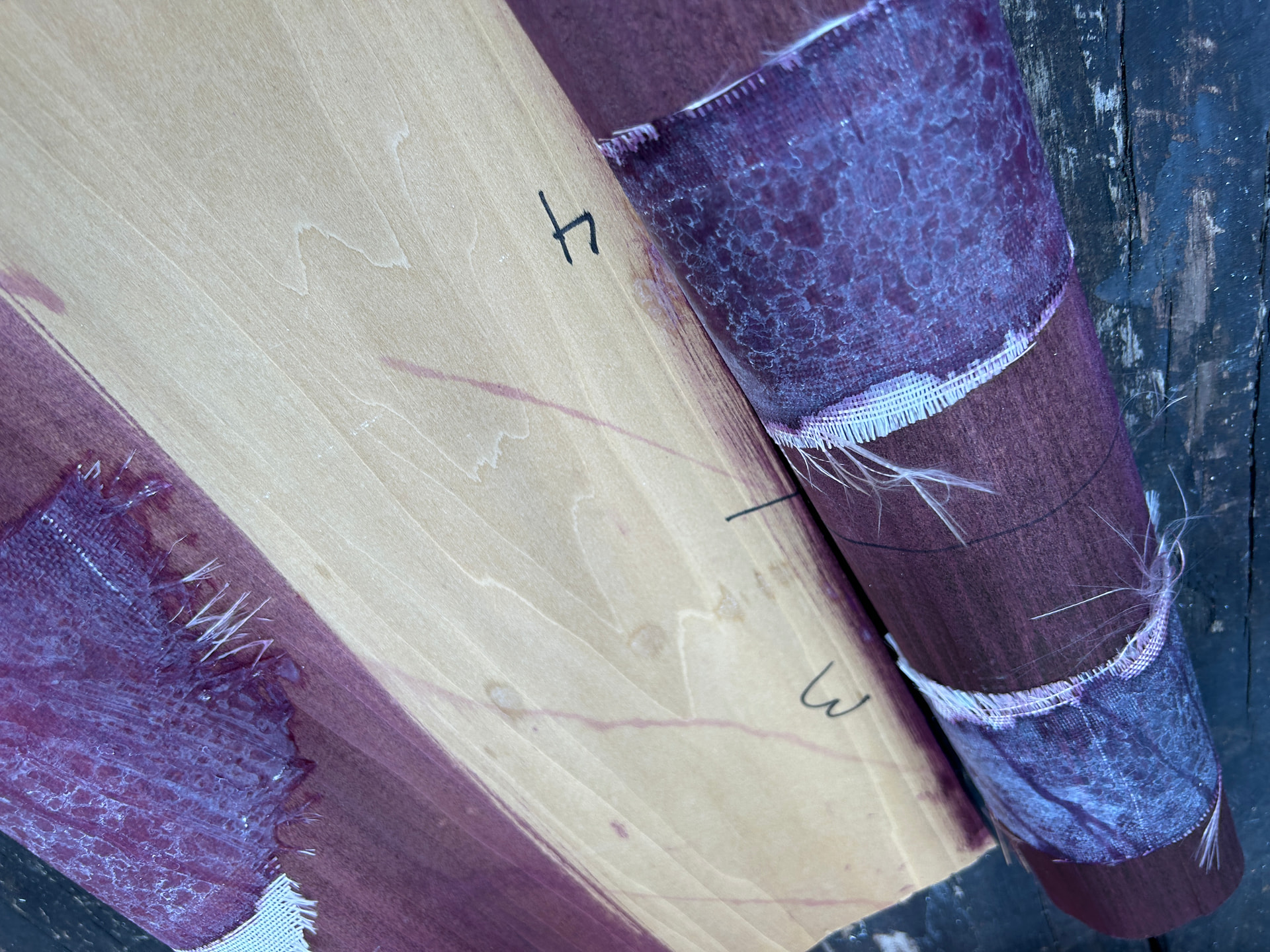
By the way, anybody know the technical woodworking term for the type of grain circled, as opposed to the straight grain at the edges? I noticed it was where that type of grain was that curled the most.
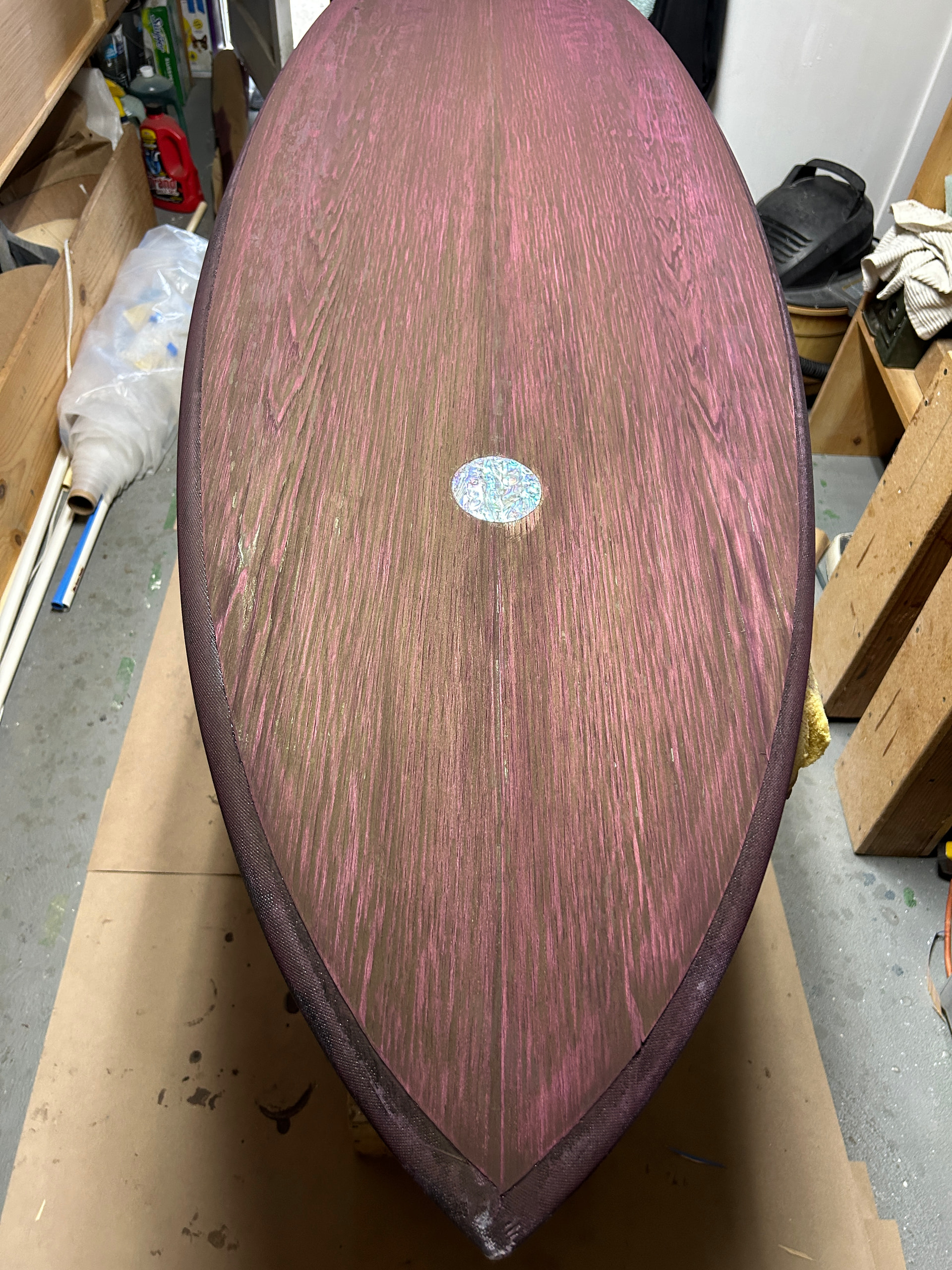
The hits keep on coming. I got the bubbles out by working them with a roller while it the bag, when the resin got sticky. I did that for about an hour. Out of the bag. I sanded the veneer. The worst of the bubbles, or I should call them bumps because they are well adhered to the blank, happened to be right where the fin boxes get routed out. So got lucky there. I put more dye on after sanding and it blended well with the areas where the resin was pulled though while under vacuum.
Everything seemed to be going good. Then I went back to my original test panels to check colors (customer wants it really dark) and I find some kind of blush on all the test patches. Right now I sanded one side of each patch and will try and brush on a “hotcoat’ tomorrow. Dayum! I would always say to my daughter when building stuff- nothing is easy.
I wonder if tinting the wood after you vac bag it on would make a difference. If you didn’t have issues using that type of wood before it might be something to think of for future builds.
Bernie and I made a bunch of skins thinking we would use them for future builds, but then he got sensitized and stopped doing boards. They were thin veneers with 2 oz cloth. He had them stored for years before I took them and when I got around to using them, most were unusable. Lots of warping and cracking of the wood. I still have them, but I haven’t looked at them for a while. I should take a look and see if I can make something.
No. Can’t tint after vacuum bagging because when I vacuum bag some resin pulls through the veneer, but not everywhere. The areas where the resin pulls through would not accept a tint.
I’d thought about just tinting the lamination (cloth), but the color would still not penetrate the wood where the resin pulled through during the vacuum process.
Blush is on the surface. I let the dye dry before putting the glass on. I did, however leave the test panels out over night and there was dew from the marine layer. I think it was a day or two after I did the tests though.
So I did another couple tests. This time on top of the blush. I wiped the blush with a paper towel with denatured alcohol, paint thinner and Additive F. The Add F cleared up the blush the best. Thinner was also good. Alcohol the worst.
Then I glassed over everything with a layer of cloth to check adhesion. To my surprise the paint thinner passed the peel test just fine. I always thought paint thinner and epoxy did not mix. Where the alcohol’s rubbed also adhered but I expected that. The Add F failed miserably. The glass just peeled right off. I guess it’s the wax. I guess in hot coats it is diluted enough not to matter? I question it’s use now though.
I think that blush is soda ash in the Rit dye that is normally washed out of clothing after the dying process. The boards that I used the dye on, I let sit for a couple days and they got a kind of like salt buildup on the surface overtime. I used a ton of dye. so that buildup was pretty big. I just brushed it off before I glassed. But then that blush came back same as you described. I’d be willing to bet it’s even worse for veneer because that thin wood can’t hold it in very well. The last one I did a penetrating epoxy to seal it before glassing and I think that helped a lot with the bubbles and the blushing.
Yeah, I thought about the spots where the resin seeps into the wood. Bernie was buying different kinds of wood veneers to get the different colors. He liked the purple heart. I think that was over a Marko blank. Too bad he got sensitized, we were doing some crazy things experimenting with different materials for the cores, the skins and even resins. It was during the experiments with different resins when he got sensitized.
I’ve nick named this the “board from hell.” I’ve had issues every step of the way.
Two days ago I vacuum bagged the top skin. I mixed the resin at 2:30 pm. I use slow hardener when bagging (40 minutes pot life, 4-6 hours flip time) so I have plenty of time to do the work and get the board in the bag without drama or panic. Everything sucks down nicely. There are some minor “bubbles” because of the veneer’s weird curling during the dye process so I’m monitoring it. I will go back and roll them down when the resin reaches the tacky stage. 4 hours later resin still almost liquid. 5 hours later the resin still hasn’t kicked. I start worrying- did I have a senior moment and mix the wrong ratio? It has gotten cold, so I put a heater in the room. 7 hours later still not kicked. When I touch the left over resin in the bucket with a mixing stick it’s still gummy, and when I lift the stick out, strings of resin form, like melted cheese. Now it’s raining outside. Maybe too humid? Midnight, almost ten hours later and still not kicked. Fuck it. I try to go to sleep imagining scenarios of disaster mitigation, maybe encapsulating the soft resin with another layer of six ounce cloth. I barely fall asleep. I wake at 4:30 am and go out and check. Deo gratias! It kicked and the resin is hard. My blood pressure returns to normal. The skins look really good. Yea!
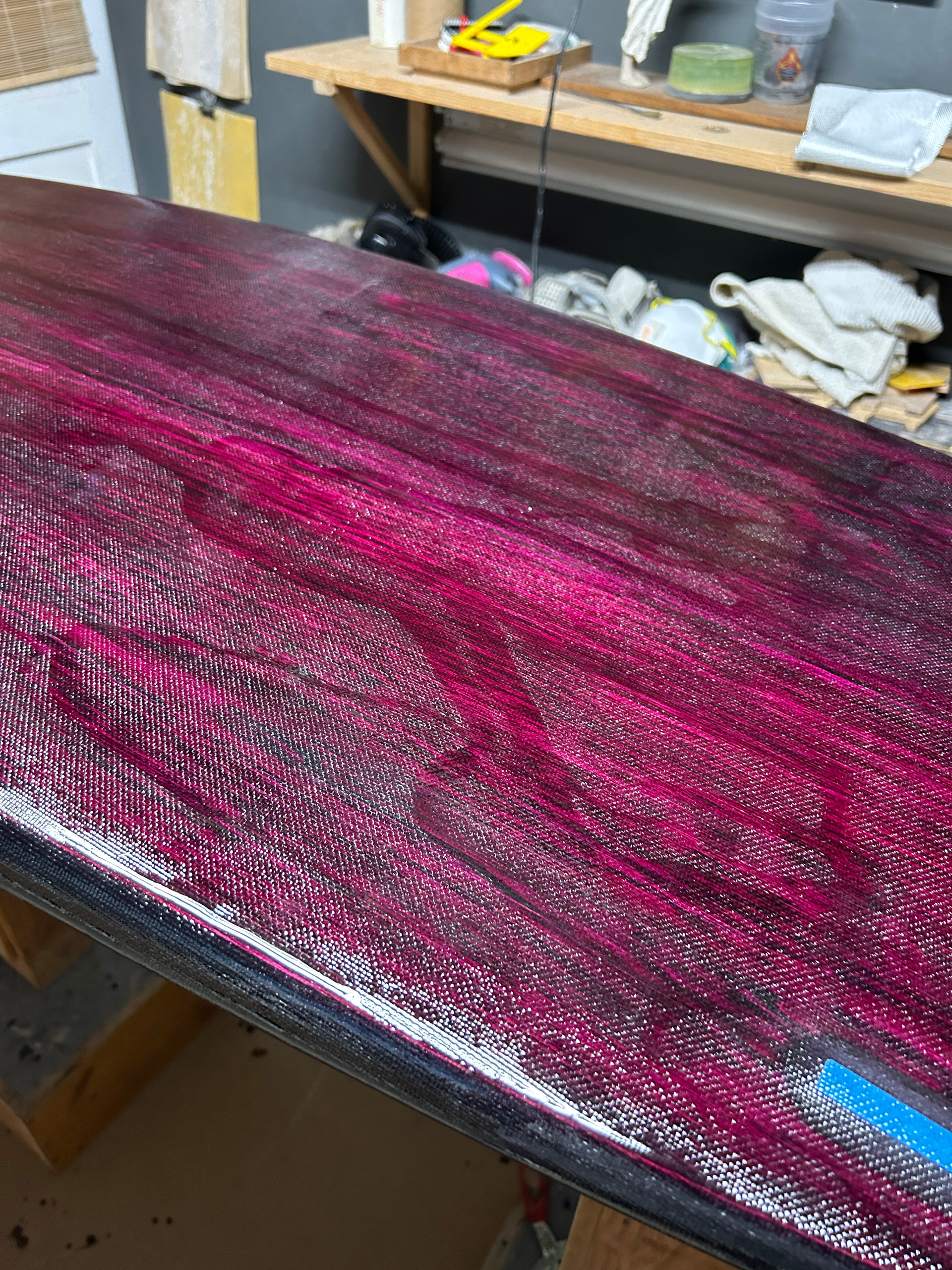
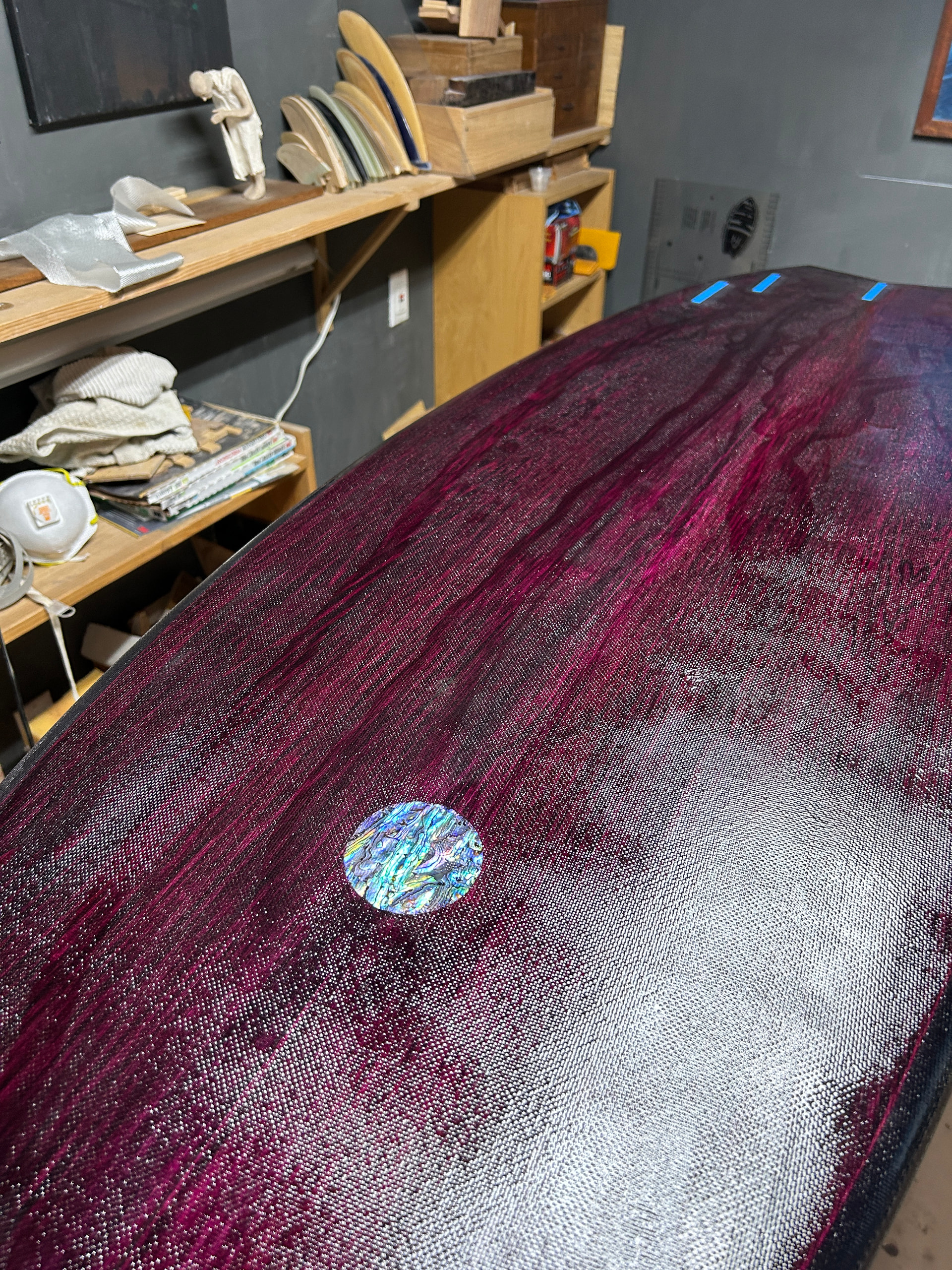
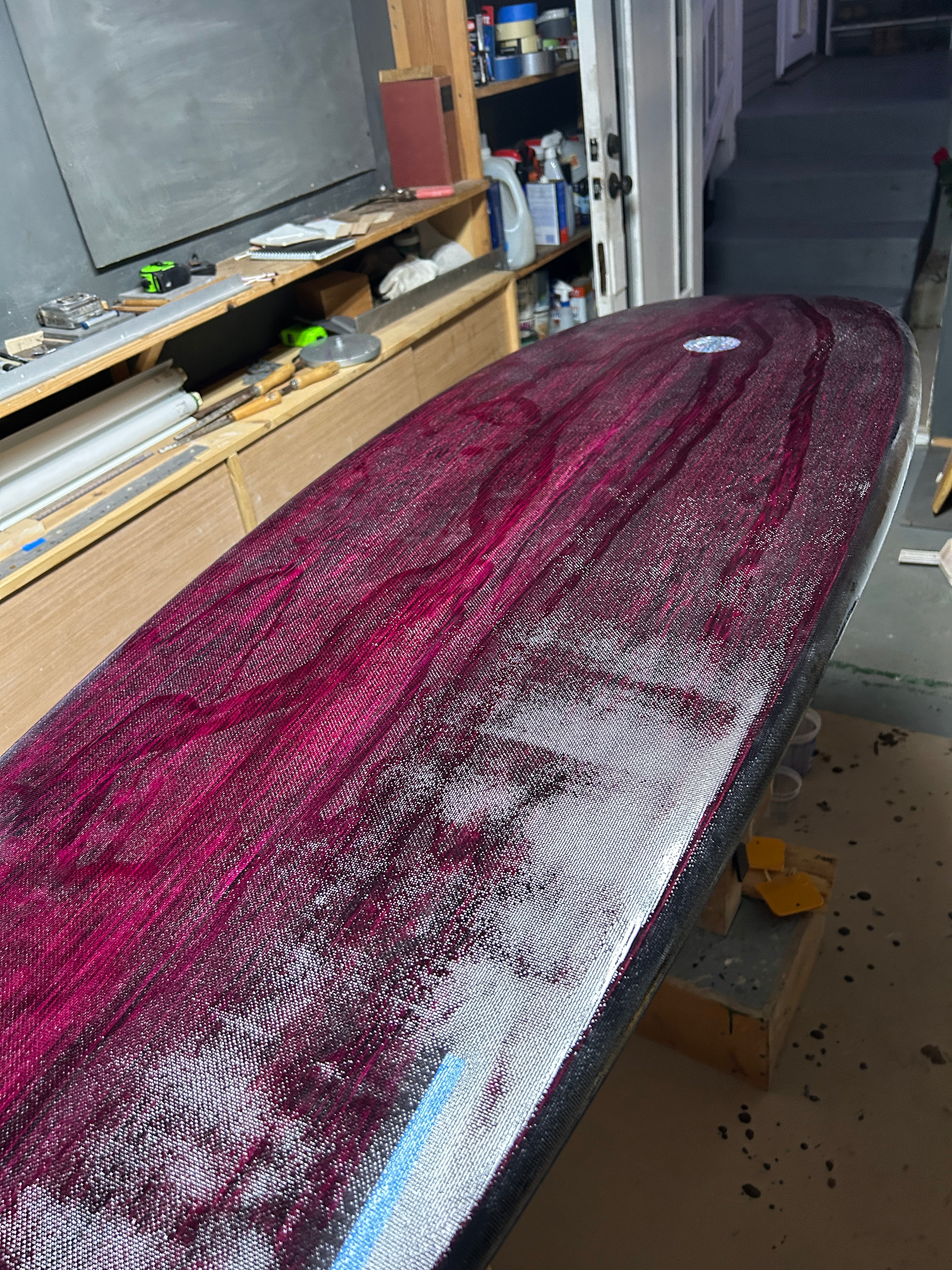
Now all I have to do is just normal glassing., right? I prep everything. Mix my resin. I immediately pour out the resin over the board as I always do to avoid the resin in the bucket from exotherming. I put extra resin back by the fins where there are some subtle “holes” left from the veneer issues. I spread the resin around the fins and then go to spread the rest of the resin But as I do this I notice the area where I initially poured the resin is darker. No problem. I figure the rest of the resin just needs time to “catch up,” to saturate. But the dark areas remain. It looks like when you pour pigment to do a resin swirl- first color to hit the board wins. The resin kicked and the dark areas did not go away.
WTF! Never had this happen in nearly 20 years of making wood boards.
I used to get a lot of guys asking me to do veneers, I always said no. I told them to see Charlie Price, the guy that taught me. Charlie was the master and I still a student. I miss Charlie, he and his wife were really good people. Charlie lives somewhere in Texas now.
Yeah, the last time I had a chance to message him, he said has a cow, so he’s a cattle rancher now. LOL
He talked about moving to Texas long before he did. The Covid BS was the trigger. He had a beautiful property right on the beach. It’s on the opposite side of Ewa Beach where my family had weekend beach houses.
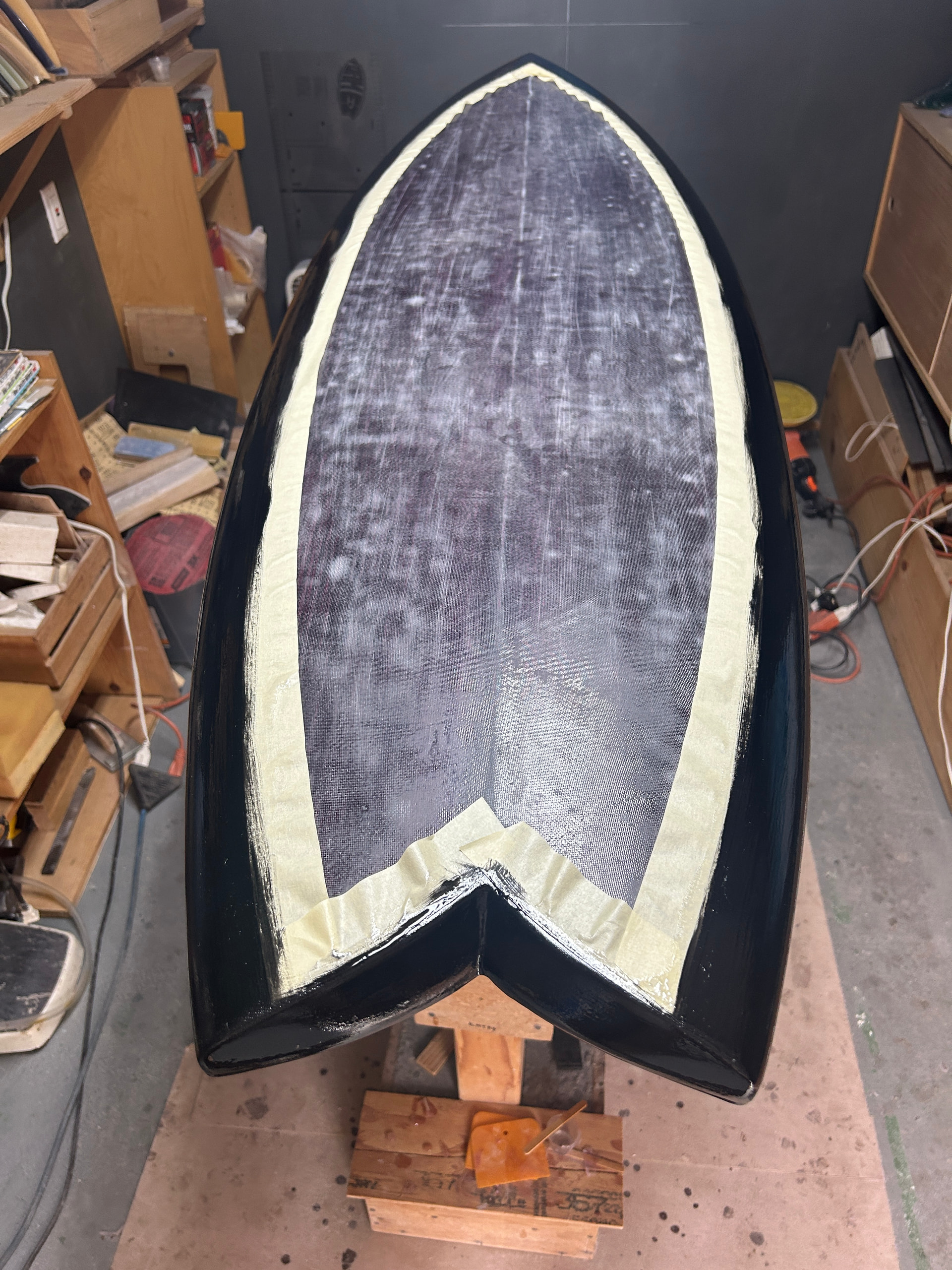
The color bled out onto the black rails so I painted the lightly sanded lam with tempera and put a light coat of epoxy over it. The epoxy started to separate or fish eye, so I wiped it off. Actually the resin left after the wipe seems to have done the job of sealing the color onto the board.